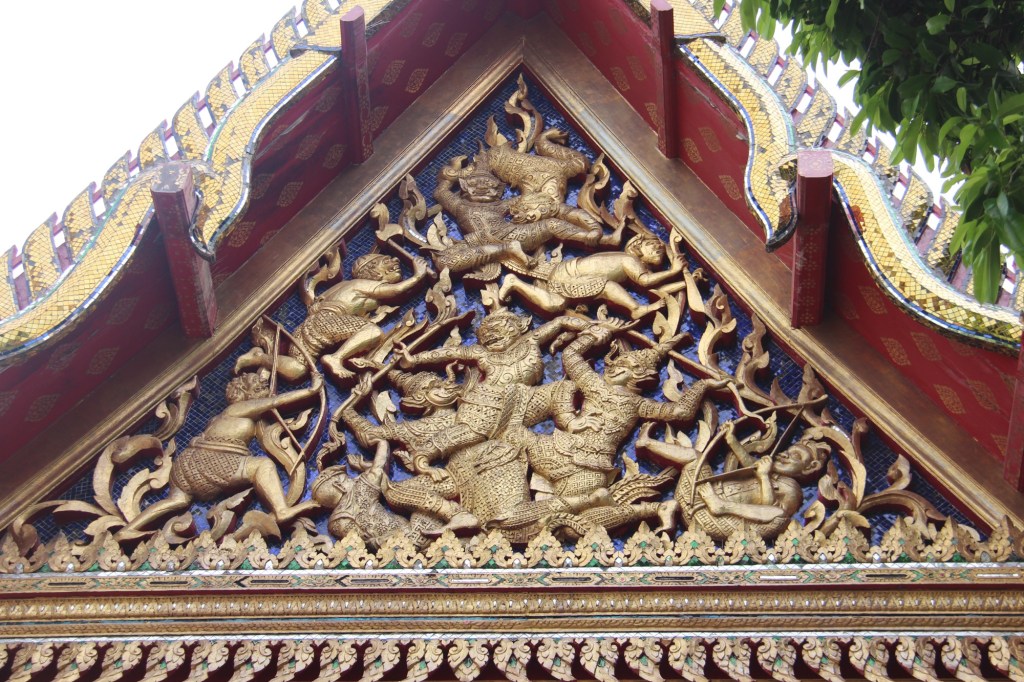
If you’re trying to decipher the title in Thai, it simply translates to “Hello from Bangkok!” For the curious, the pronunciation is “S̄wạs̄dī cāk krungtheph.” I know, it looks much easier than it sounds—or is it the other way around? Either way, we are a bit behind on posting about our first full day in the city on Monday, so I’ll be recapping everything we experienced. Spoiler: it was a lot, and the heat and humidity made it even more intense.
After arriving late to a rainy Bangkok on Sunday night, we checked into our Conrad Hotel and dropped our bags off in the room before heading downstairs to the lobby bar. Since we were in Thailand, we decided to try some Thai food. Jeff ordered a dish whose name we’ve forgotten, but his taste buds certainly haven’t. I ordered drunken noodles with chicken, and we both enjoyed fantastic cocktails. After satisfying our hunger and quenching our thirst, we headed to bed, hoping for a full night’s rest.
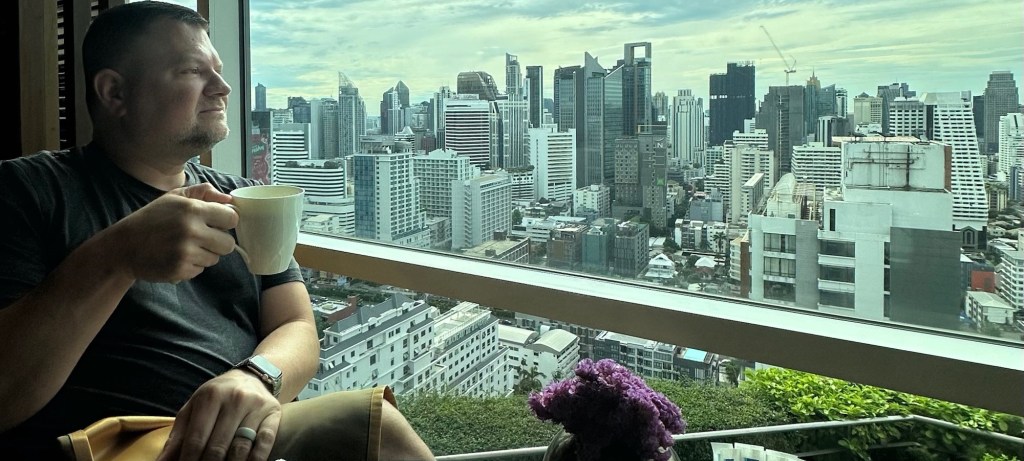
While we didn’t sleep through the entire night, we did much better than in Dubai! We rolled out of bed and headed to the Executive Lounge (thanks to Hilton Diamond status!), where we enjoyed a wide selection of both Western and Eastern breakfast delicacies. The Executive Lounge not only provides breakfast but also offers afternoon tea and evening cocktails, which we would thoroughly enjoy as well later in the day.
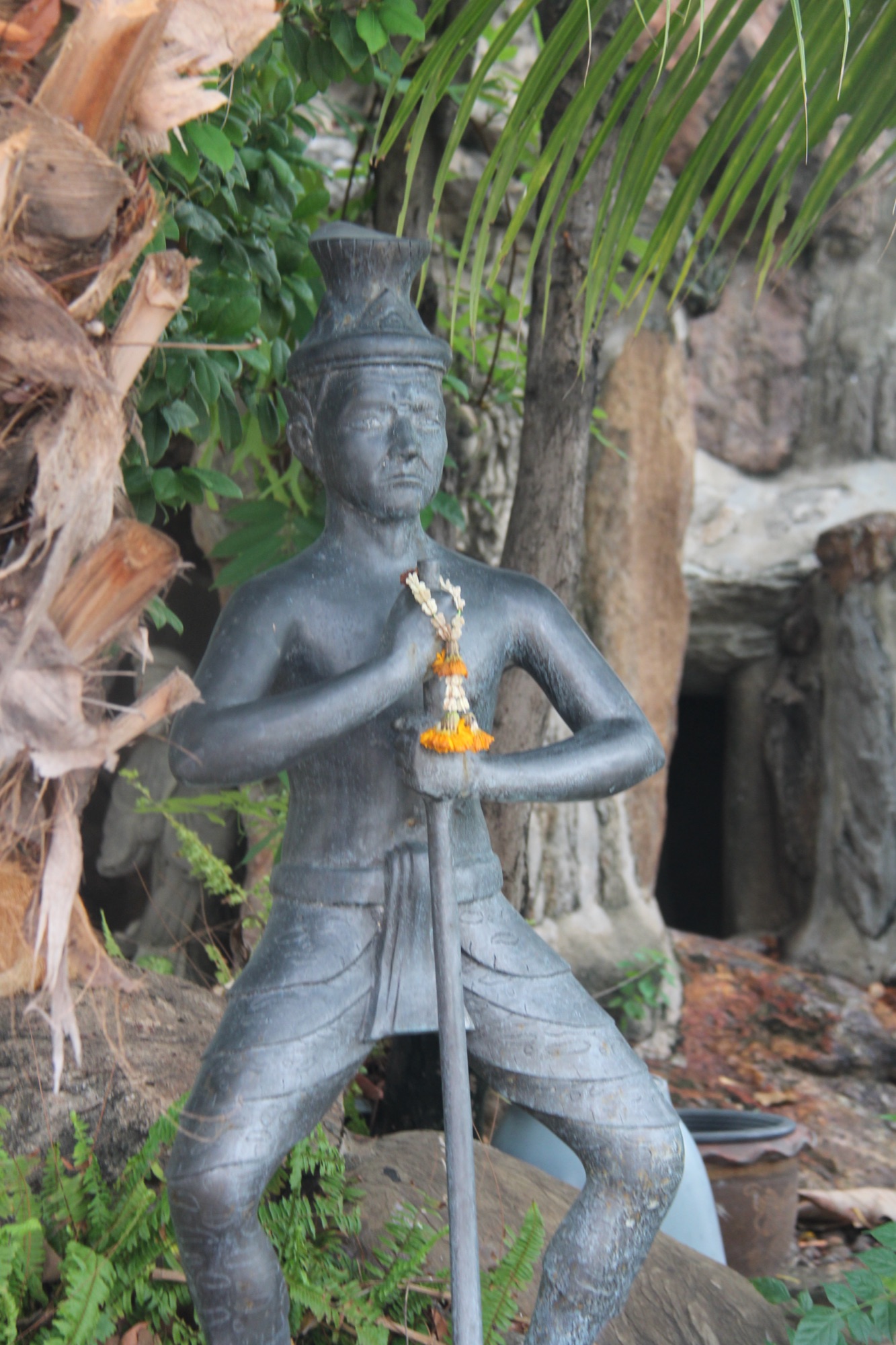
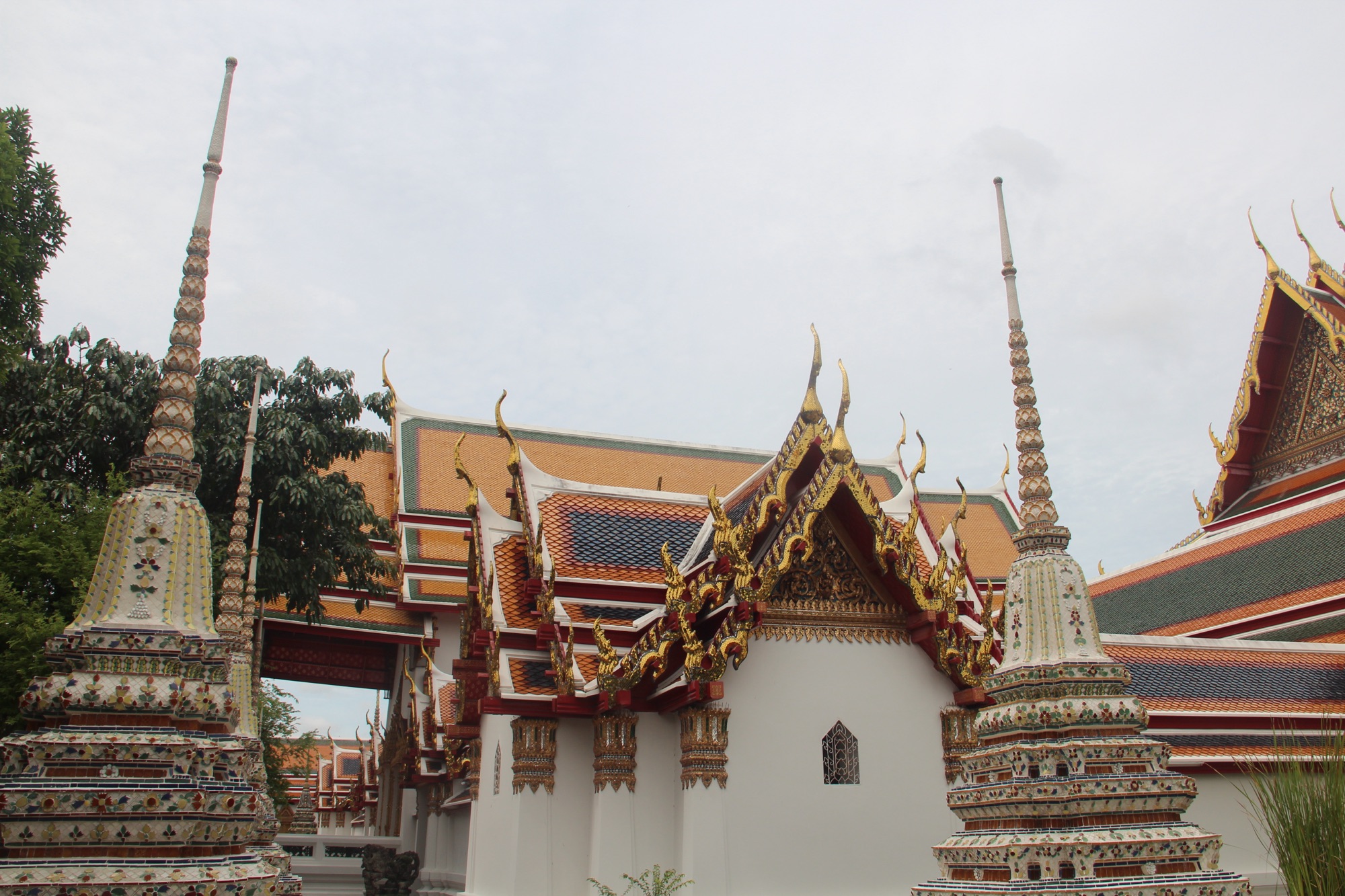
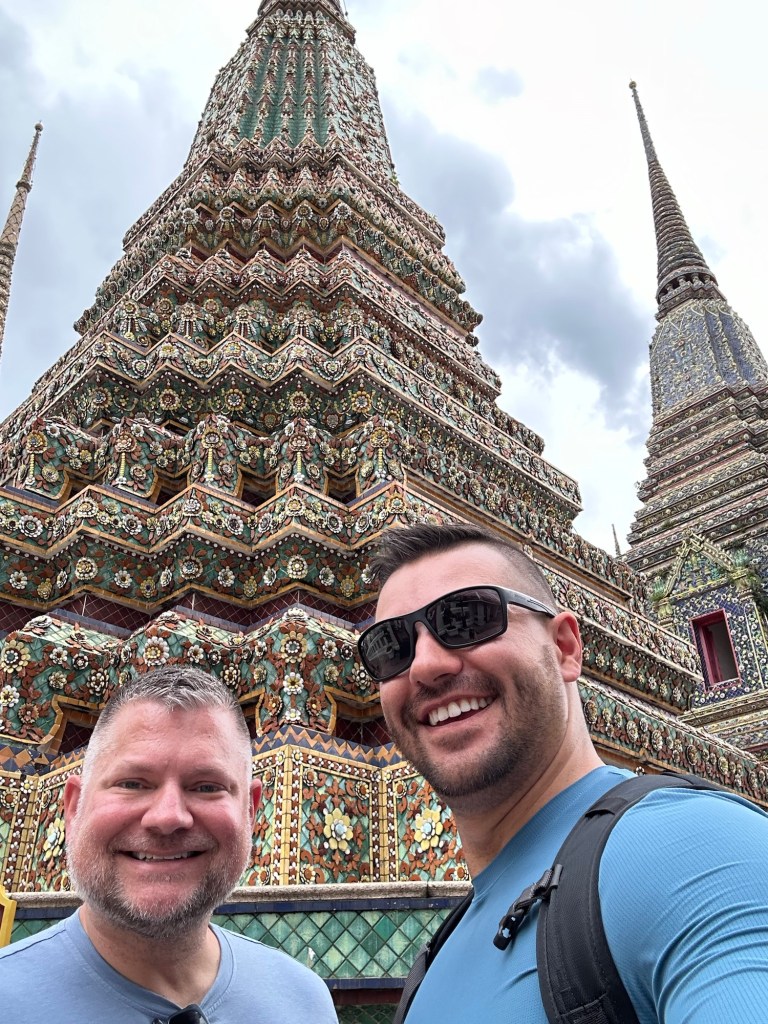
Seeing that the day’s temperature would reach a sweltering 98 degrees, we decided to get dressed, knowing we’d need a shower after our adventures. First on our itinerary was a visit to Bangkok’s top attraction, Wat Pho (also spelled Wat Po), officially known as Wat Phra Chetuphon Wimon Mangkhalaram Rajwaramahawihan. The temple grounds are among the largest and oldest in Bangkok and feature over a thousand images (statues) of Buddha. The most famous is the Reclining Buddha, housed in a grand chapel on the grounds. This Buddha statue spans nearly 50 feet in height and an impressive 150 feet in length, making it one of the largest in Thailand.


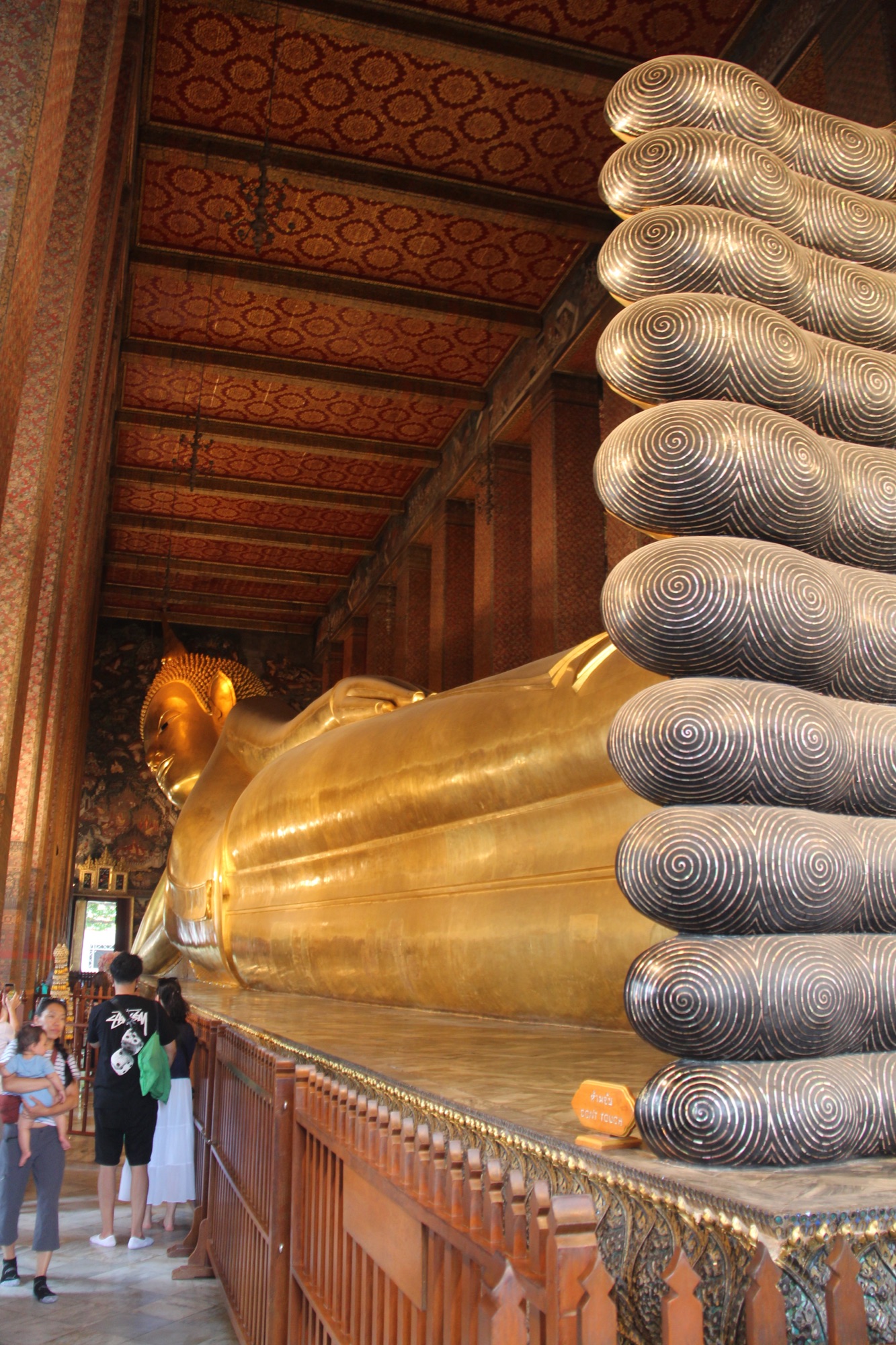
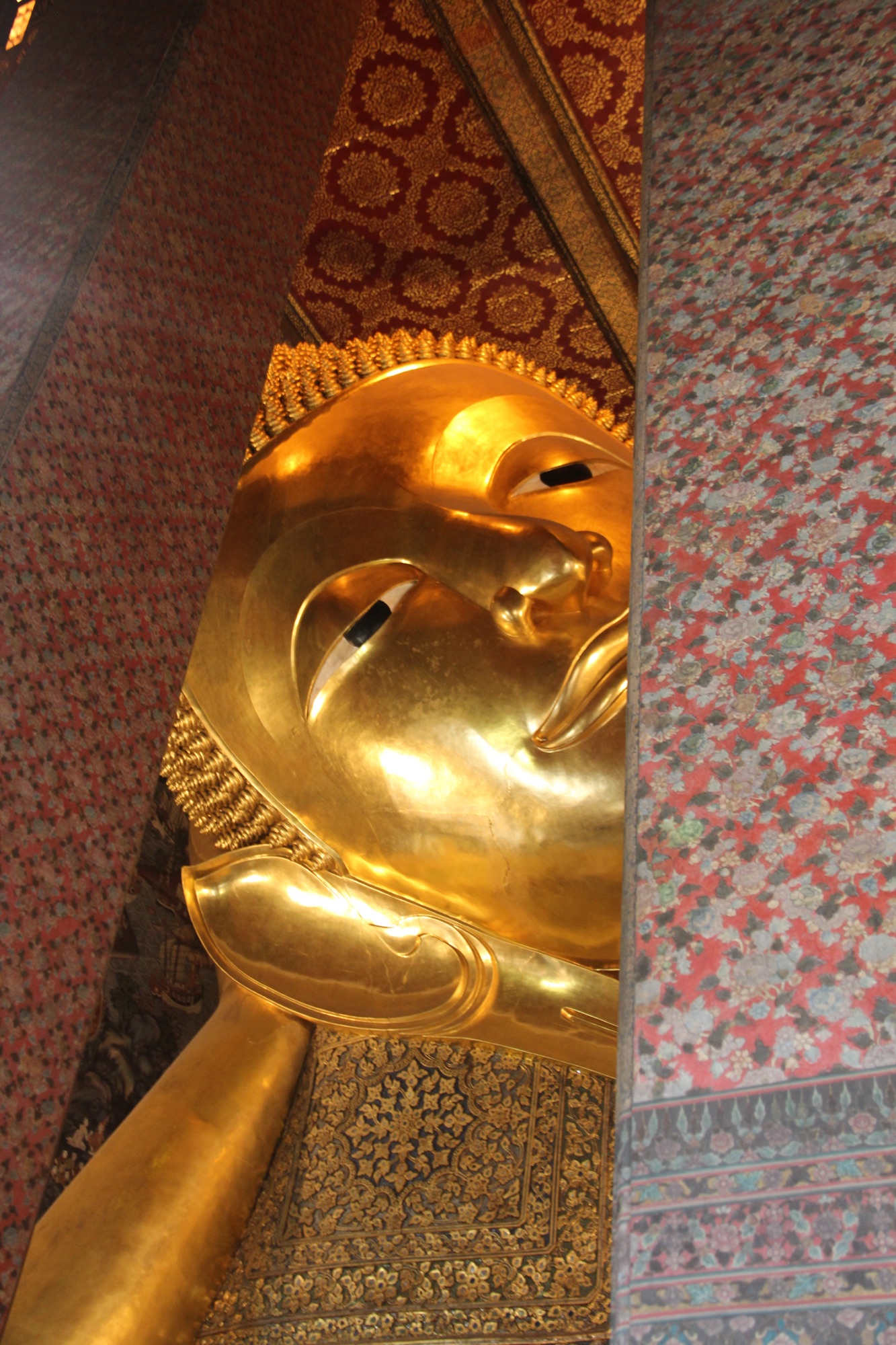
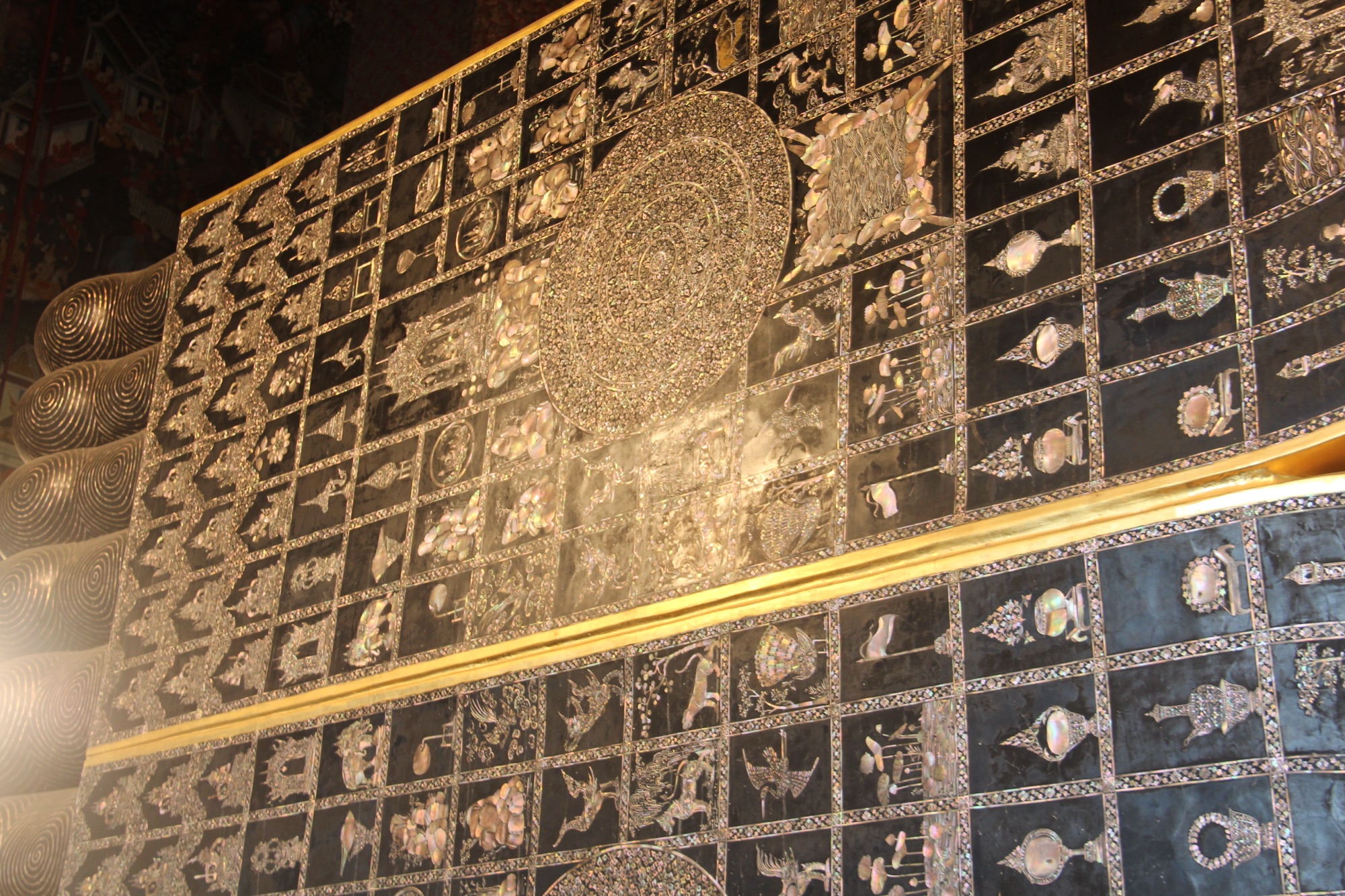
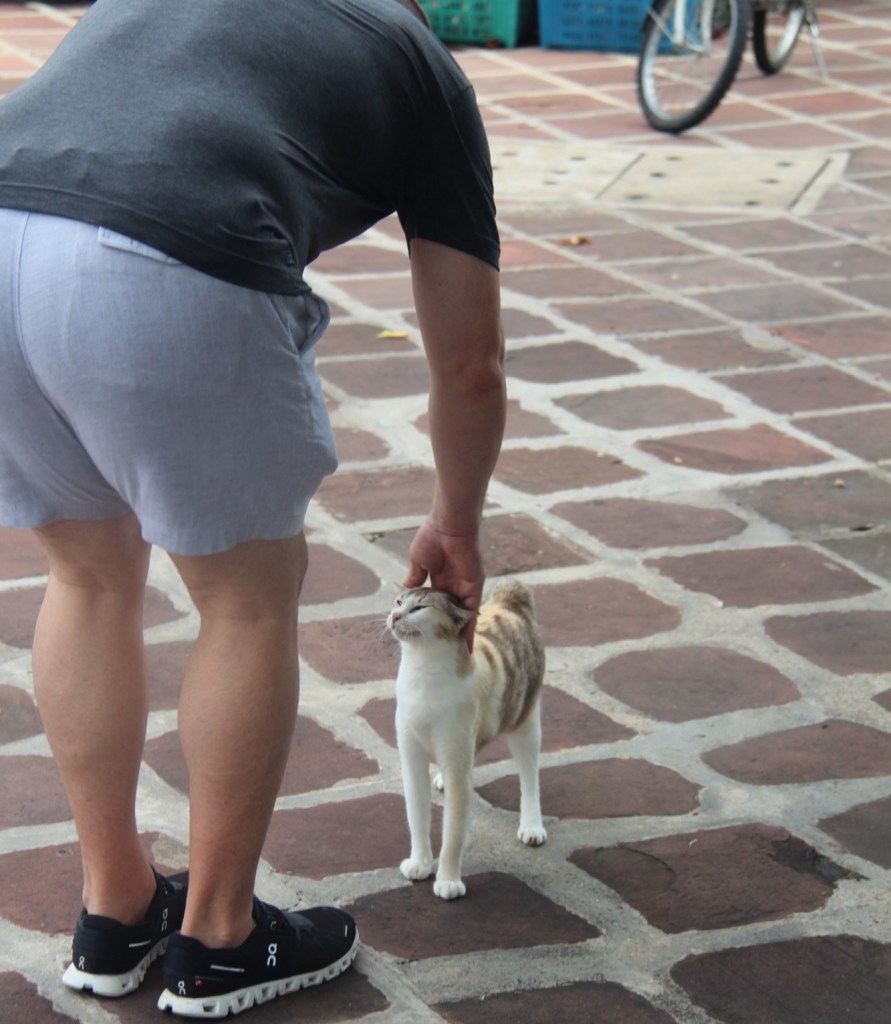
The image of the Reclining Buddha represents Buddha’s entry into Nirvana and the end of all reincarnations. This posture, known as sihasaiyas, is that of a sleeping or reclining lion. To show respect to Buddha, women must cover their shoulders and legs before entering, and everyone must remove their shoes. After exiting the chapel, we explored the rest of the temple grounds, admiring their exquisite beauty. Did I mention that there were also cats roaming around? Needless to say, they too were being adored by tourists and received plenty of affection.
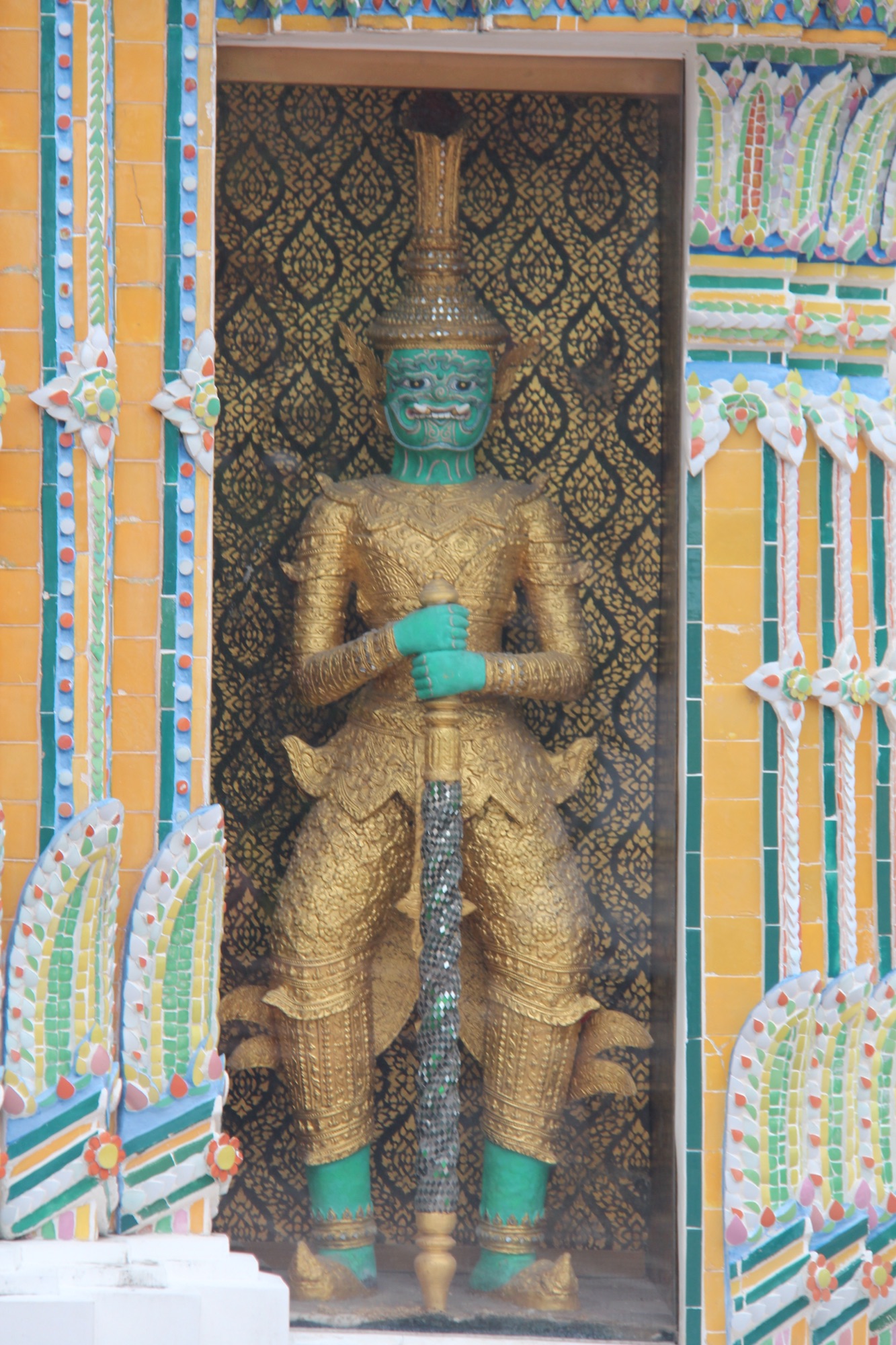
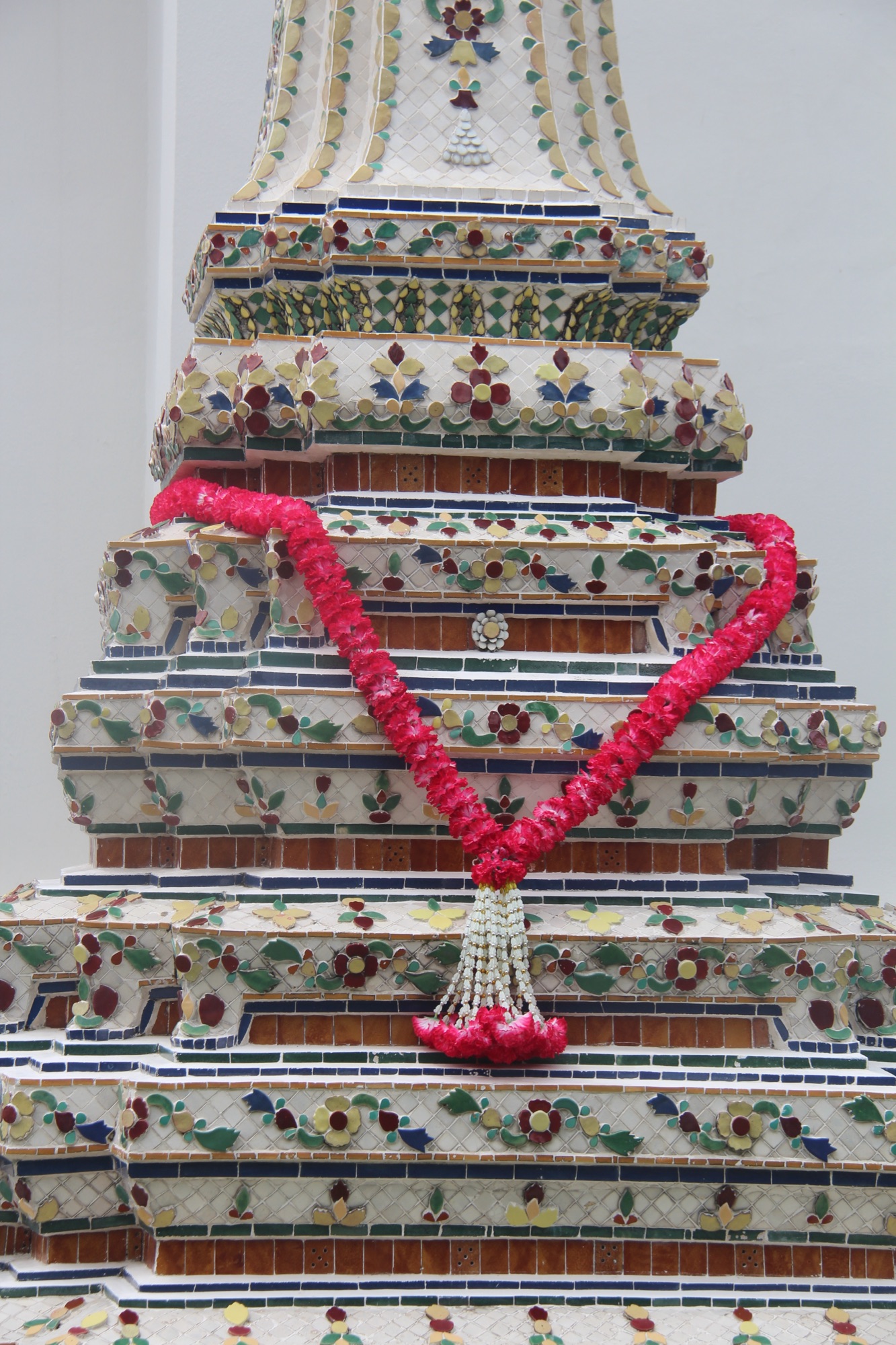
Two other notable aspects of the grounds are the chedis, known as Phra Chedi Rai. The grounds are dotted with 71 small chedis, each standing 16 feet tall, and 20 slightly larger chedis clustered in groups. These chedis, built pointing towards heaven, enshrine the ashes of the royal family as well as other Thai individuals, with families renting the space and paying a monthly fee.
The second notable aspect is the birthplace of Thai massage: the Wat Pho Thai Traditional Medical and Massage School. It is the first school of Thai medicine approved by the Thai Ministry of Education and one of the earliest massage schools. To date, over 200,000 practitioners have graduated from this school and now practice in more than 146 countries. For a small fee—$13 for an hour—you can enjoy a 30-minute or 60-minute full-body or foot massage.




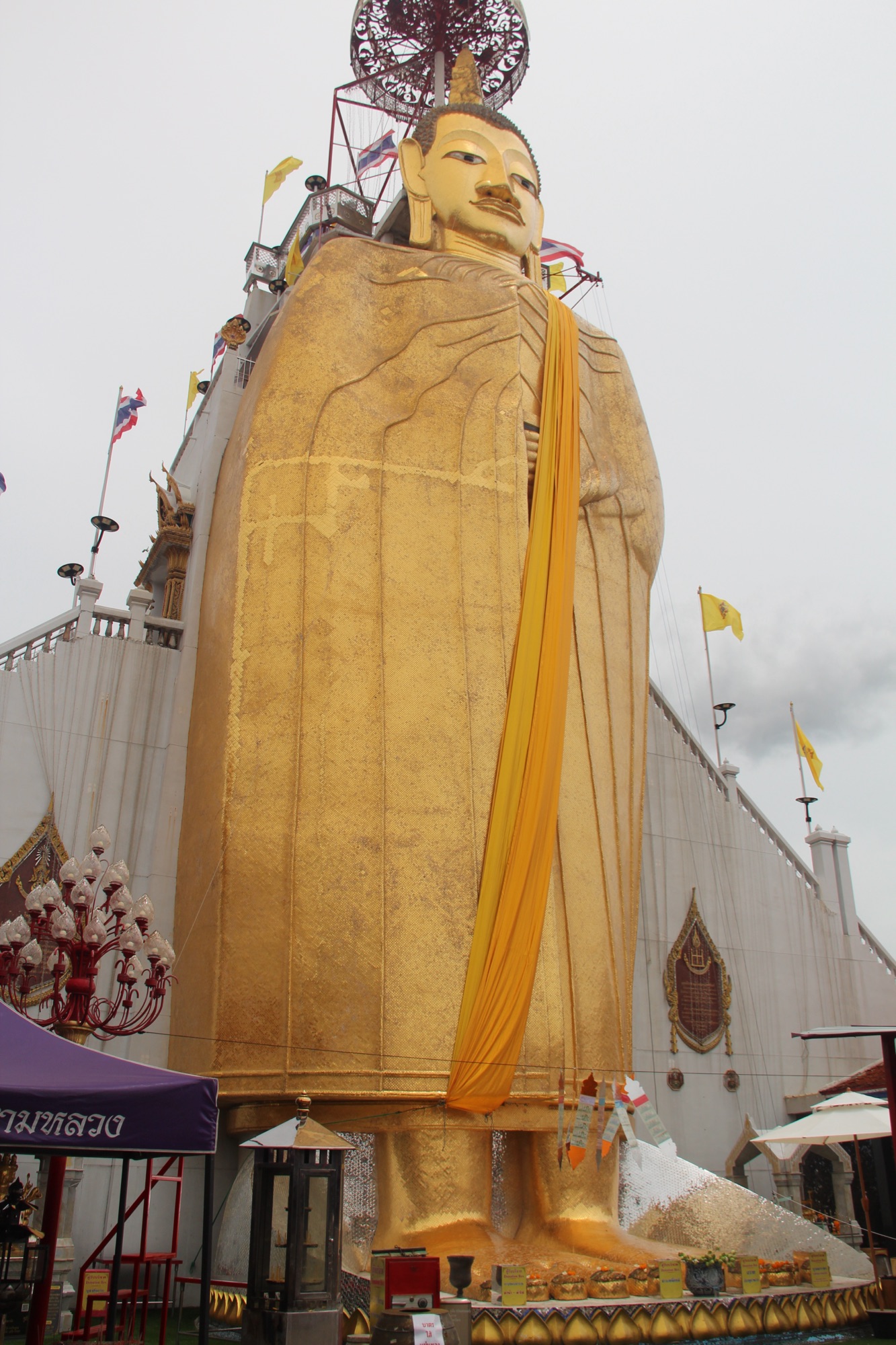
After exiting Wat Pho, we grabbed a tuk-tuk (a three-wheeled taxi) and headed to another Buddha image—this time a standing one! We welcomed the open-air ride for the breeze it provided after nearly melting while walking through the grounds of Wat Pho. Upon arriving, we were greeted by the enormous standing Buddha, towering at 105 feet. This was not only a sight to see but also to climb—yes, you read that correctly. After exploring the surrounding grounds, we hiked up into the statue, enjoying the breathtaking 360-degree views from Buddha’s head. The refreshing breeze up there was an added bonus!


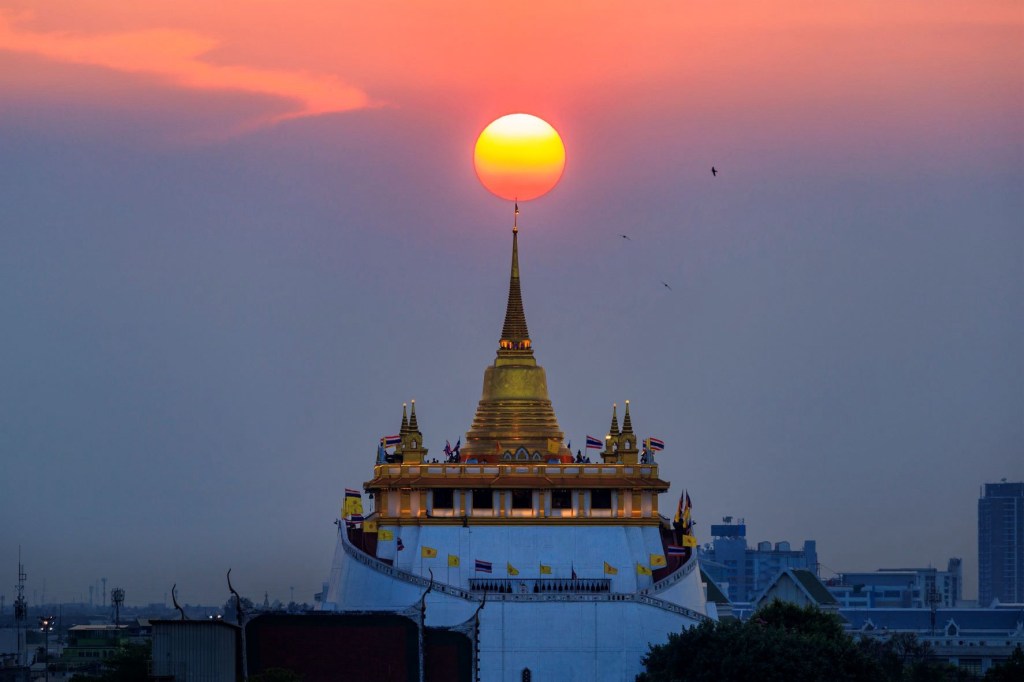
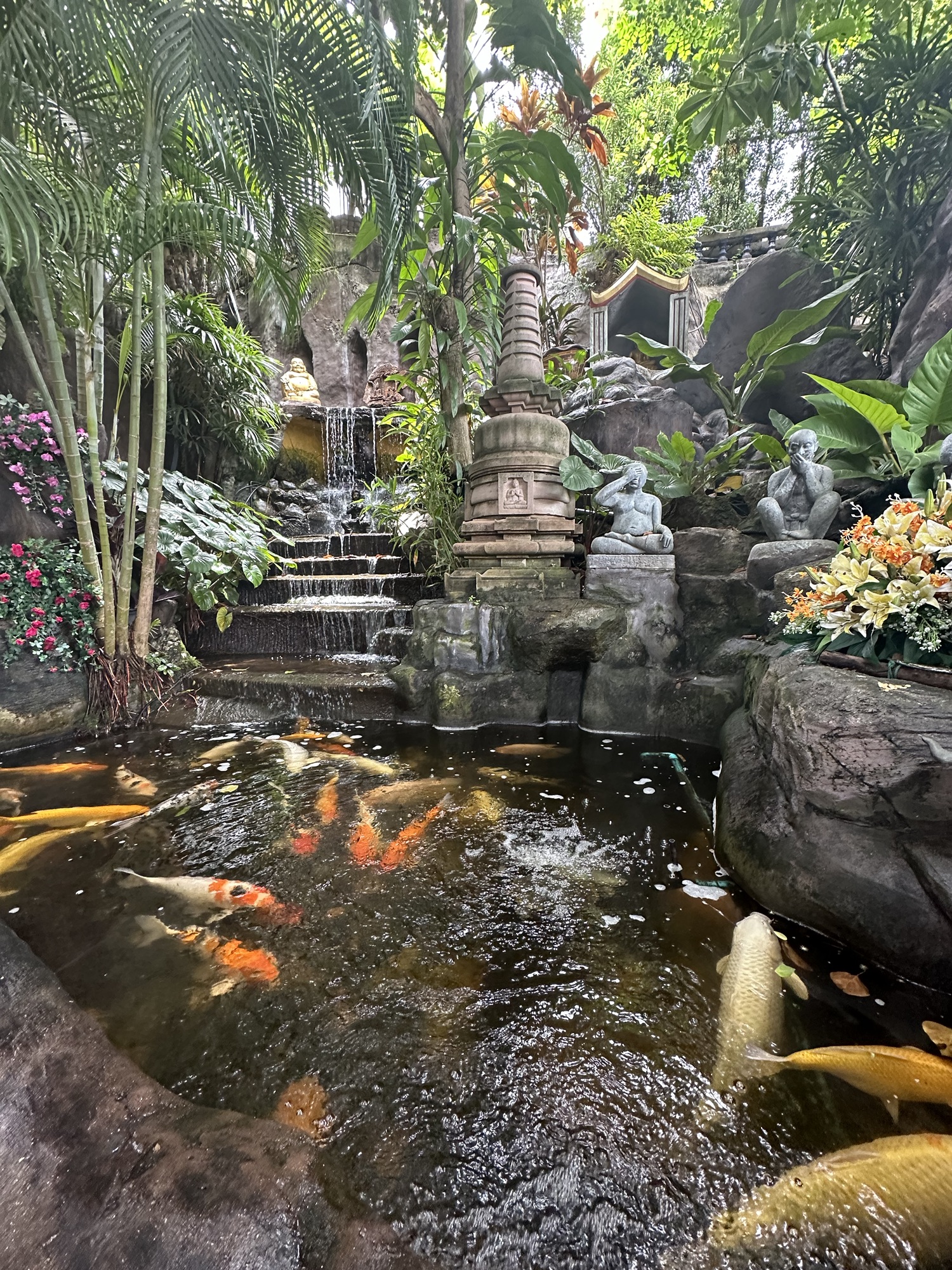
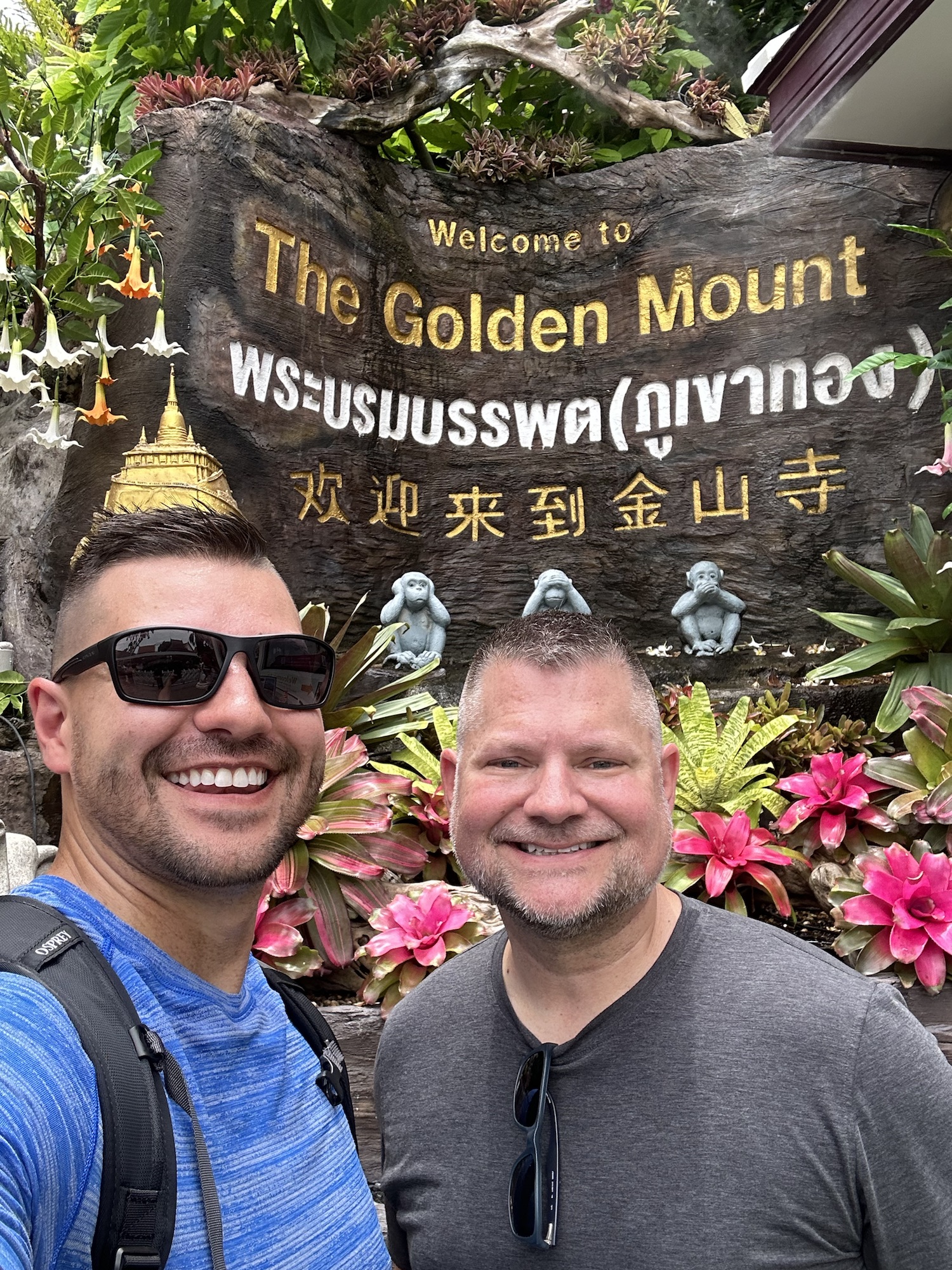
Our last stop on the temple tour was the Golden Mount, a temple built on the only hill in Bangkok and of sacred importance to any follower of Buddha. To reach the golden chedi at the top, you must climb 320 stairs winding through banyan trees, a koi pond, and numerous religious relics. Unfortunately for us, the golden chedi was undergoing restoration and was surrounded by scaffolding—hence the stock image of the Golden Mount below.

After not one but two climbs, our stomachs were rumbling, so we headed to a famous Bangkok restaurant known for its delectable pad Thai. We called a Grab (their version of Uber) and made our way to Thip Samai. Upon arrival, we were quickly seated and ordered chicken egg rolls and chicken pad Thai. The restaurant’s interior was clad in wood, and everyone around us was sipping on their famous orange juice, which, for some reason, we didn’t order. Maybe being a Floridian with an abundance of OJ readily available made me jaded?
One bite into the pad Thai, and we were both impressed. It was flavorful with the perfect amount of spice. Pleased with our lunch, we were ready to take on one more Bangkok attraction: the Jim Thompson House. We knew very little about it, only that it was well-known and considered a “must-visit” by TripAdvisor and Lonely Planet.

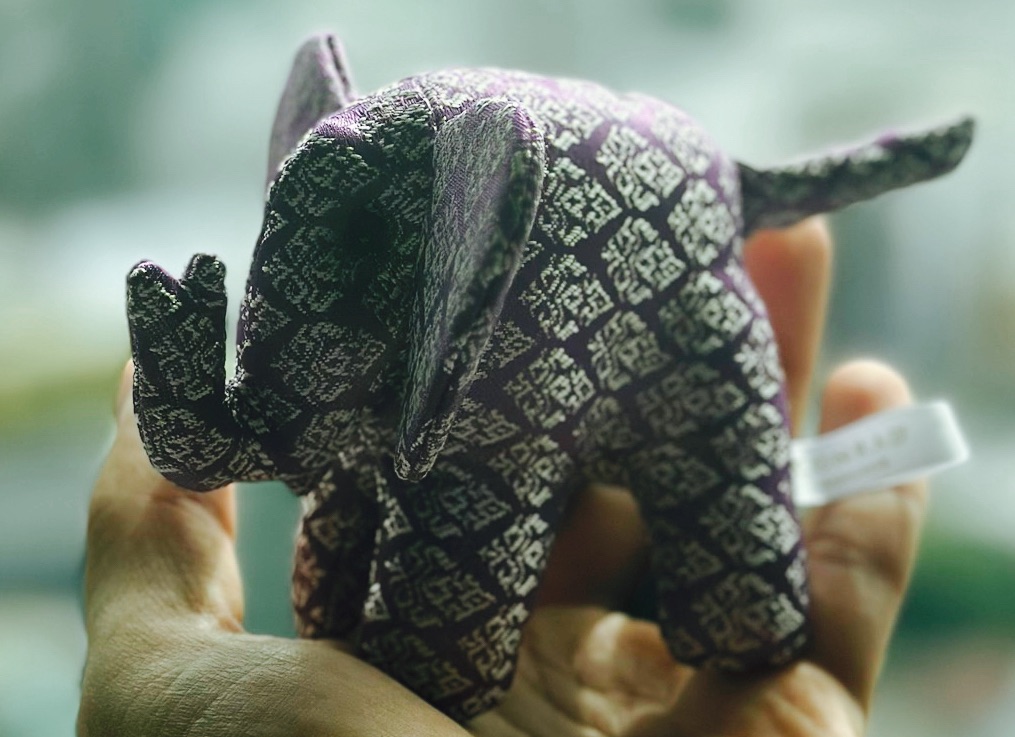
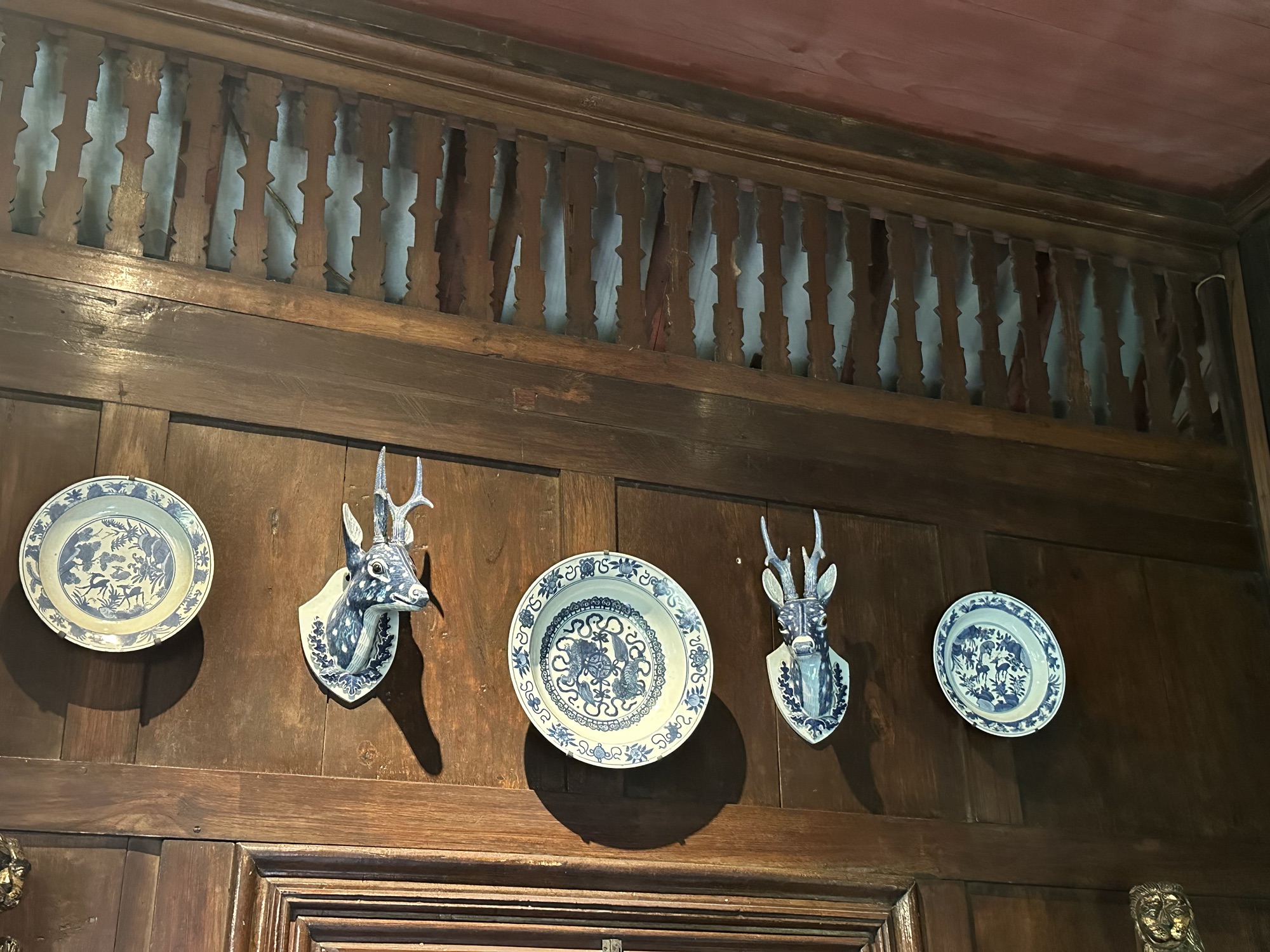
We purchased our tickets for the Jim Thompson House Museum and waited for our tour group to be called. Once gathered, our tour guide began to share the fascinating story of Jim Thompson, an OSS operative, American businessman, architect, and the king of Thai silk. In 1948, Jim Thompson founded the Thai Silk Company and began exporting silk worldwide, with a particular focus on New York.
The company struck a pivotal deal in 1951 with designer Irene Sharaff, who used their silks for the Rodgers and Hammerstein musical “The King and I,” propelling the company to prosperity. With his newfound wealth from silk exports, Thompson started collecting art and antiquities from across Southeast Asia, including Laos, Cambodia, Burma, and, of course, Thailand. His collection included wood and stone images of Buddha and traditional paintings made of wood, cloth, and paper.
To house his growing collection, Thompson began an architectural project in 1958. He sourced six traditional Thai-style houses from Ayutthaya and had them reconstructed along the Saen Saep canal, near his silk weavers. The buildings were completed in 1961, and a ceremony was held to mark the occasion. Tragically, in 1967, while visiting Malaysia, Thompson disappeared without a trace, and his fate remains unknown to this day. His home was eventually turned into a museum, and the company he founded continues to thrive, producing Thai silk clothing, home goods, and more.
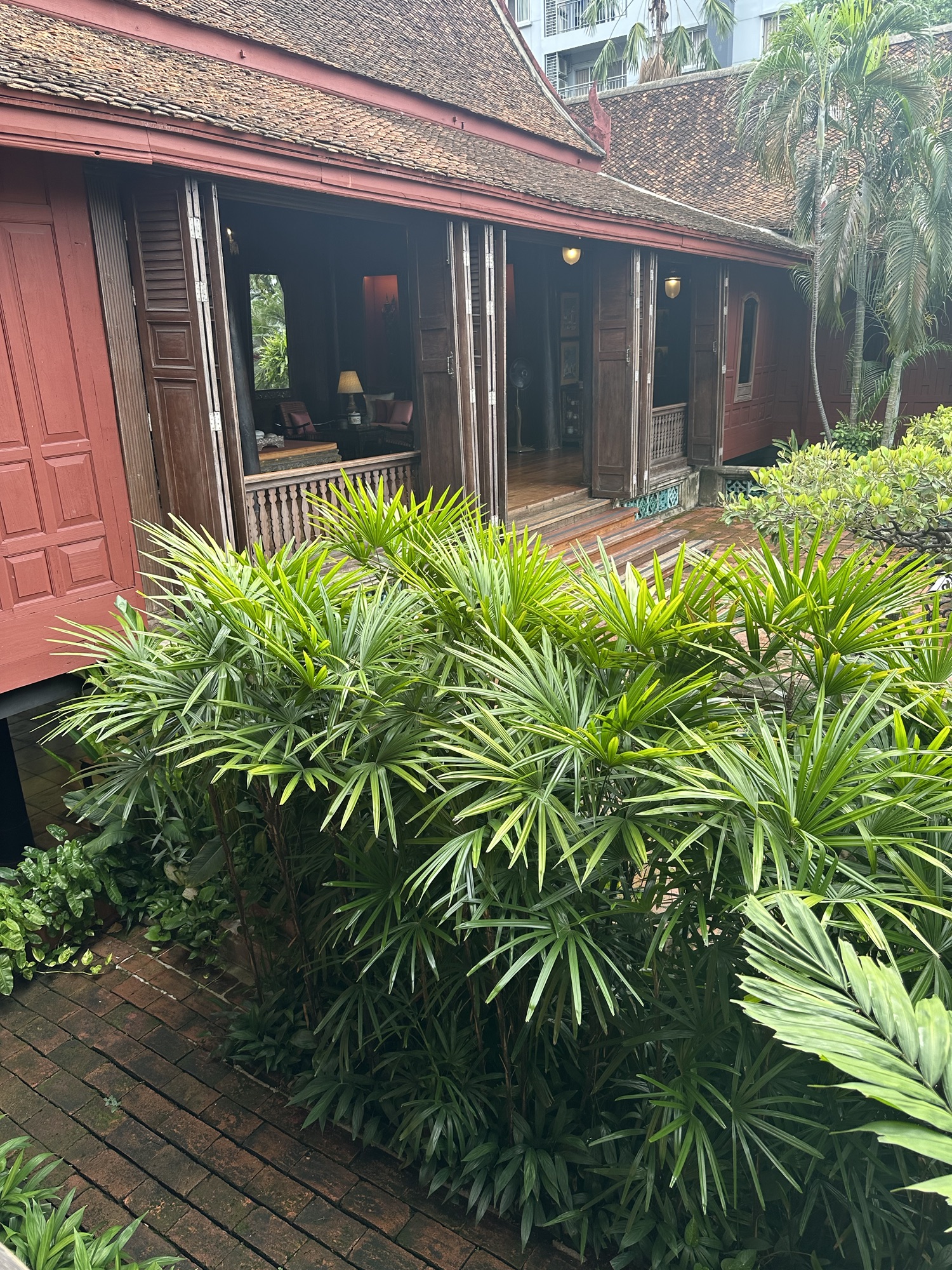
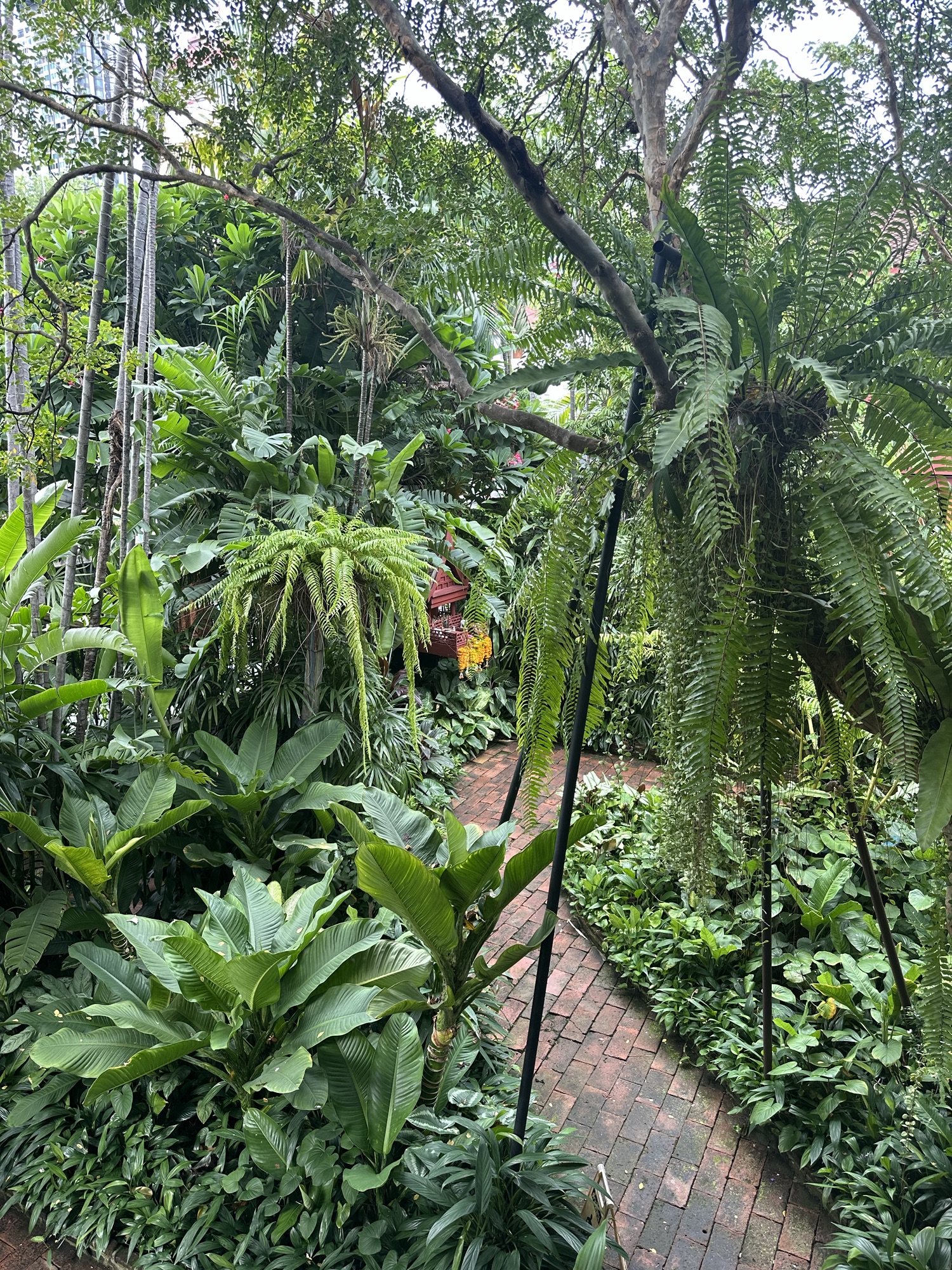
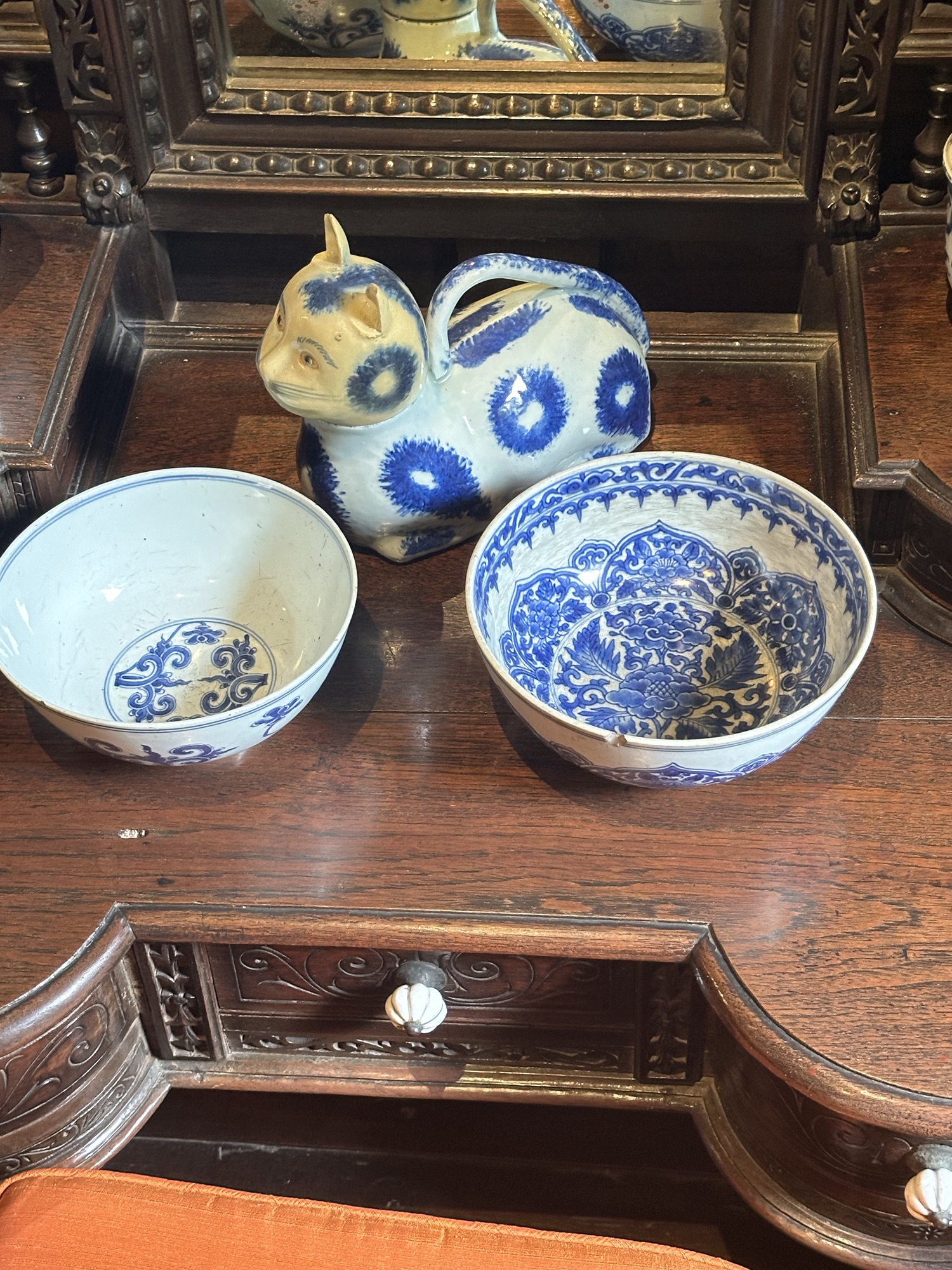
As you can tell, this was an adventurous day that deserved cocktails and food in the executive lounge, followed by much-needed showers. We initially planned to have a proper dinner afterward, but our bodies had other plans—we passed out right after the showers.
Much love – Andrew



 Jeff + Andrew Travel the World
Leave a reply to Maria Rivera Cancel reply