
The group was split on whether the overnight train was better or worse than the one in Thailand. On the positive side, we had our own cabin with good A/C. However, the stone-hard mattresses and questionably “clean” sheets and blankets were definite drawbacks. Thankfully, I was able to sleep through the majority of it, as was the rest of Cabin 7, where most of us resided. The last train ride of the tour is over, so it’s only planes and buses from here – woohoo!
Our bus dropped us off at Asia Hotel in the city center of Huế, the capital of Thừa Thiên Huế province in the North Central Coast region of Vietnam. You can pronounce this as ‘Hway’, hence the pun of the blog title ;). This city, located near the center of Vietnam, is home to more than 300,000 people and 100,000 motorbikes. Residents of neighboring cities like Hoi An and Hanoi often vacation here to enjoy its slower pace before returning to their busy routines.
Huế is a hub of education with 11 universities dotting its landscape. The city is better known for its historic monuments, earning it a place in UNESCO’s World Heritage Sites. The Imperial City, the seat of the Nguyen emperors, occupies a large, walled area on the north side of the Perfume River, aptly named for the flowers that fall into it in springtime. Inside the citadel was a forbidden city where only the emperors, concubines, and close associates were granted access; the punishment for trespassing was death. Thankfully, those rules have changed, allowing us to explore every part of it with our amazing guide, Phuong.
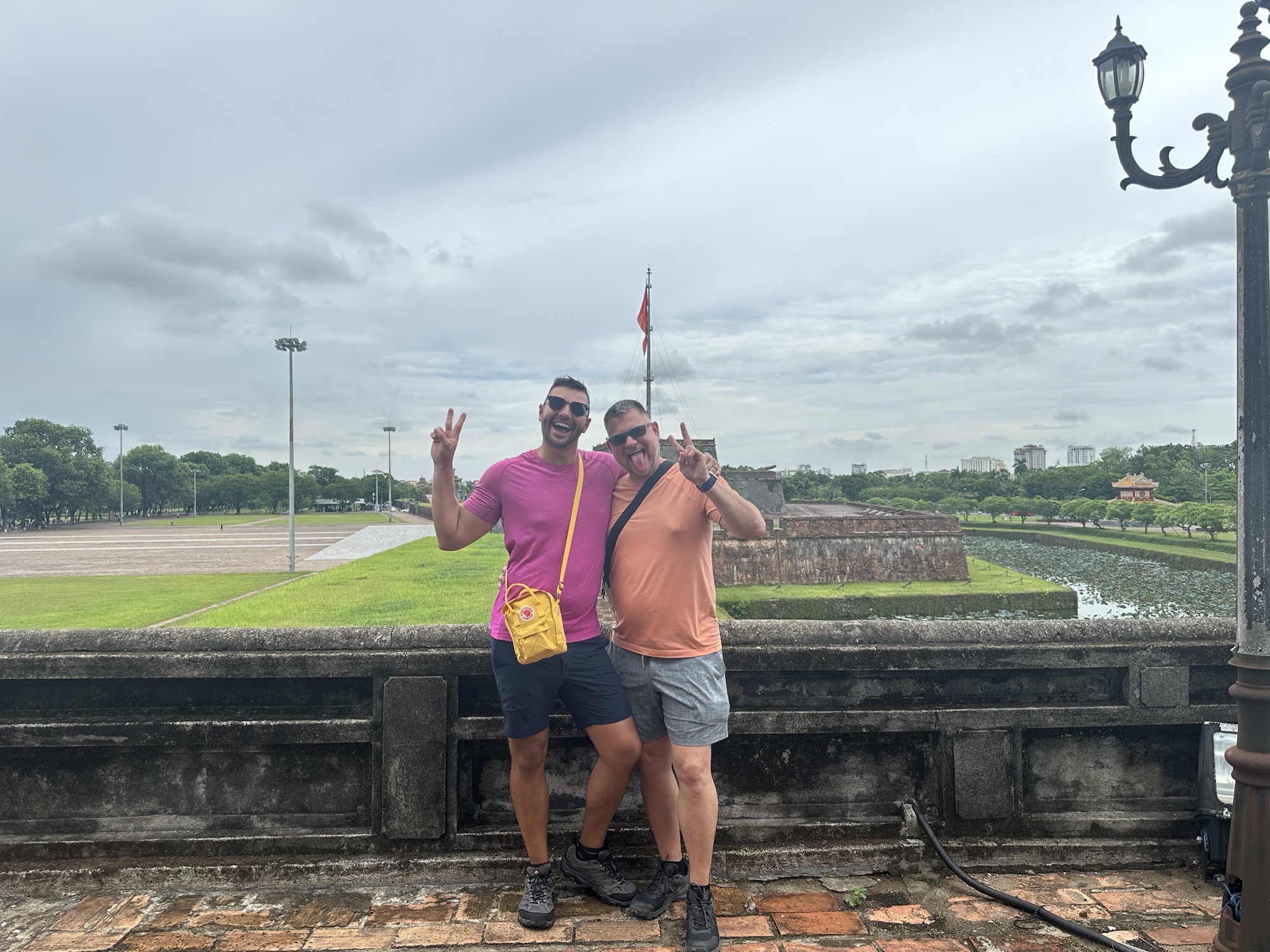
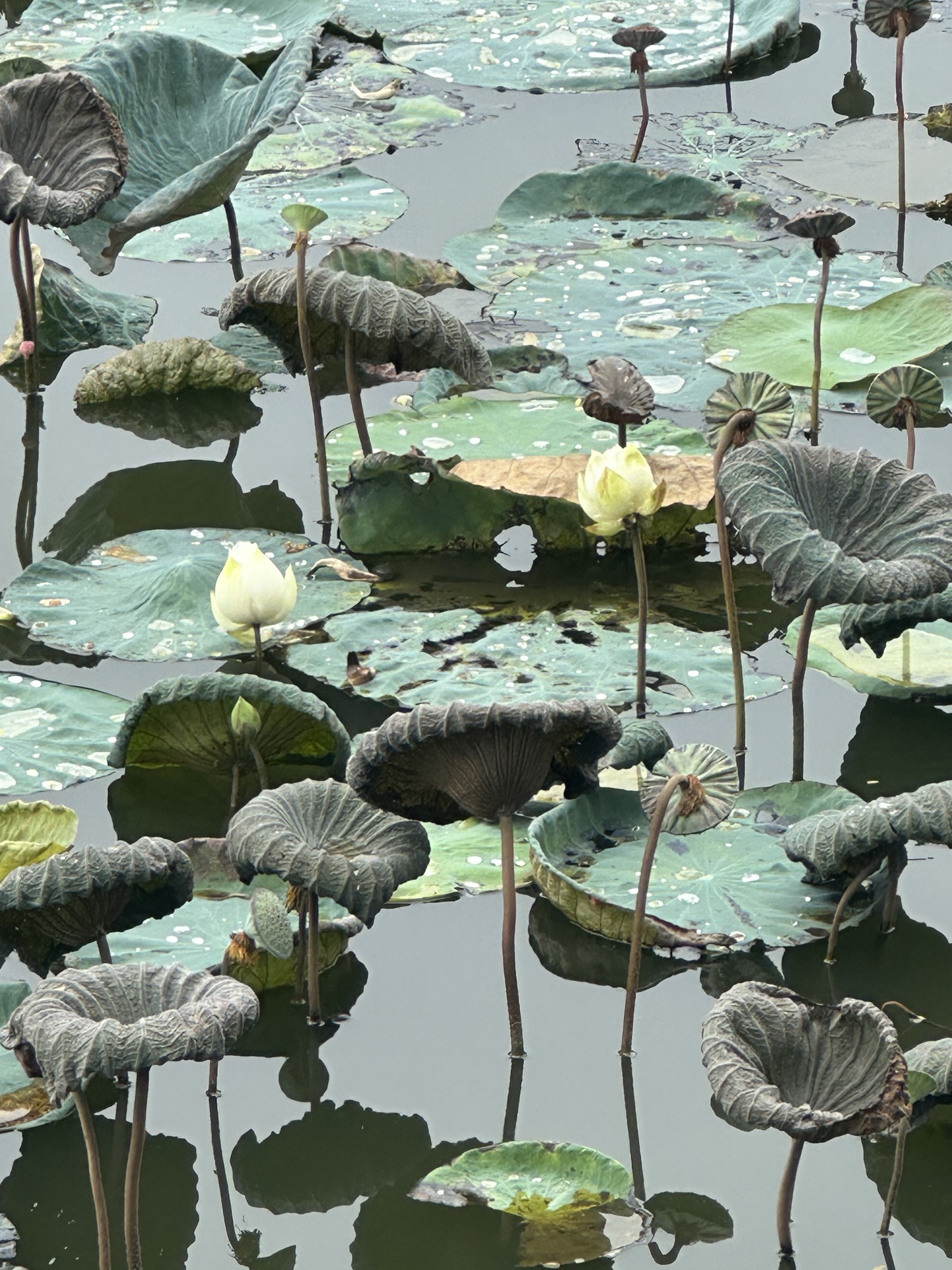
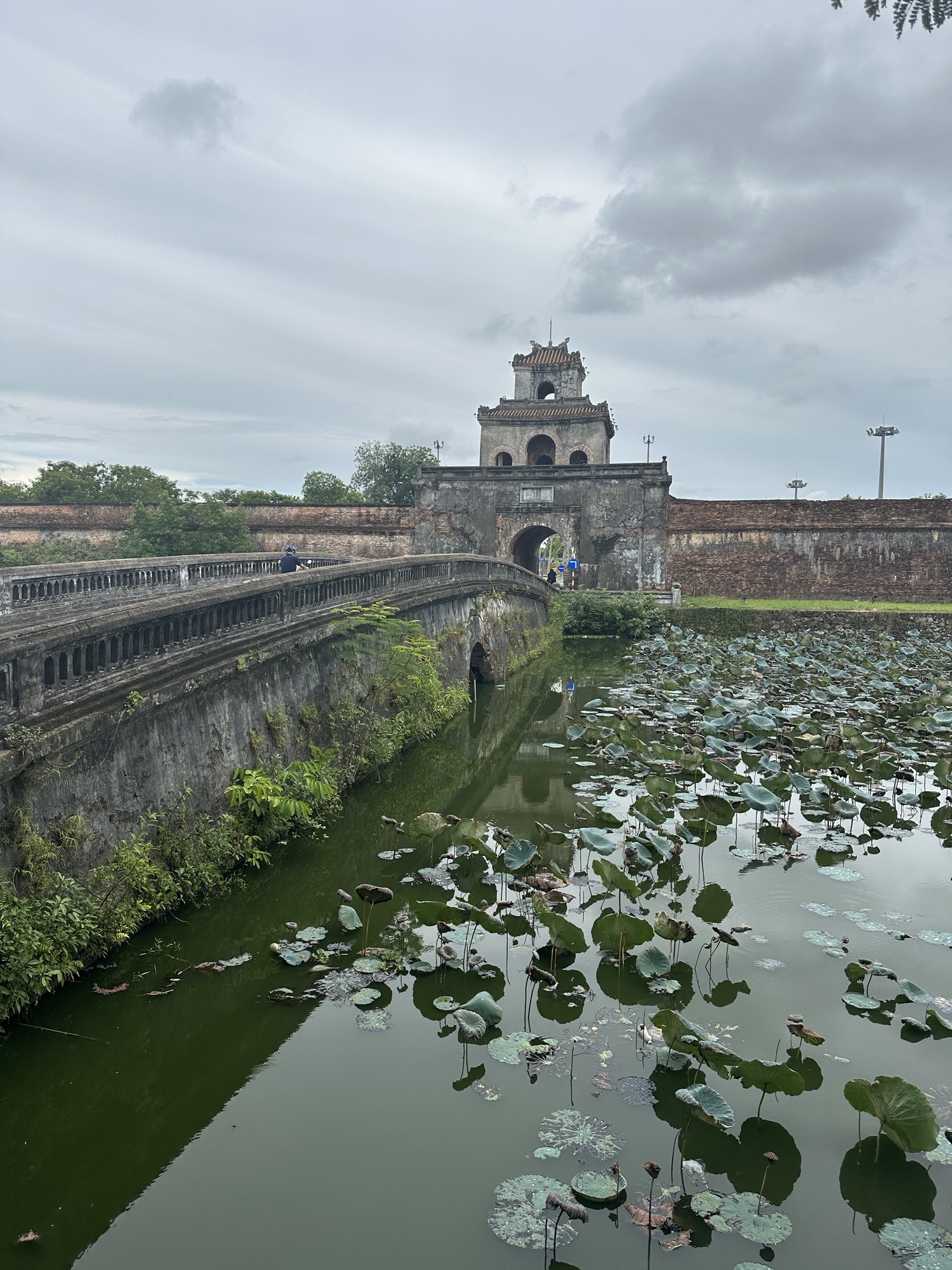
Little of the forbidden city remains, though reconstruction efforts are ongoing to maintain it as a historic tourist attraction. During the Vietnam War, referred to locally as either the French War or American War, the site was occupied by both American and French forces. They set up bunkers, took over portions of the Forbidden City, and bombed other parts. Many in the group, myself included, wondered what this gorgeous place would have looked like before the war ravaged it. Amazingly, UNESCO and tourism dollars have been allocated towards reconstruction efforts, with more underway. One particular portion is the focus of reconstruction and has already been two years into the total seven-year project; it will be completed in 2029 at the cost of $30 million.


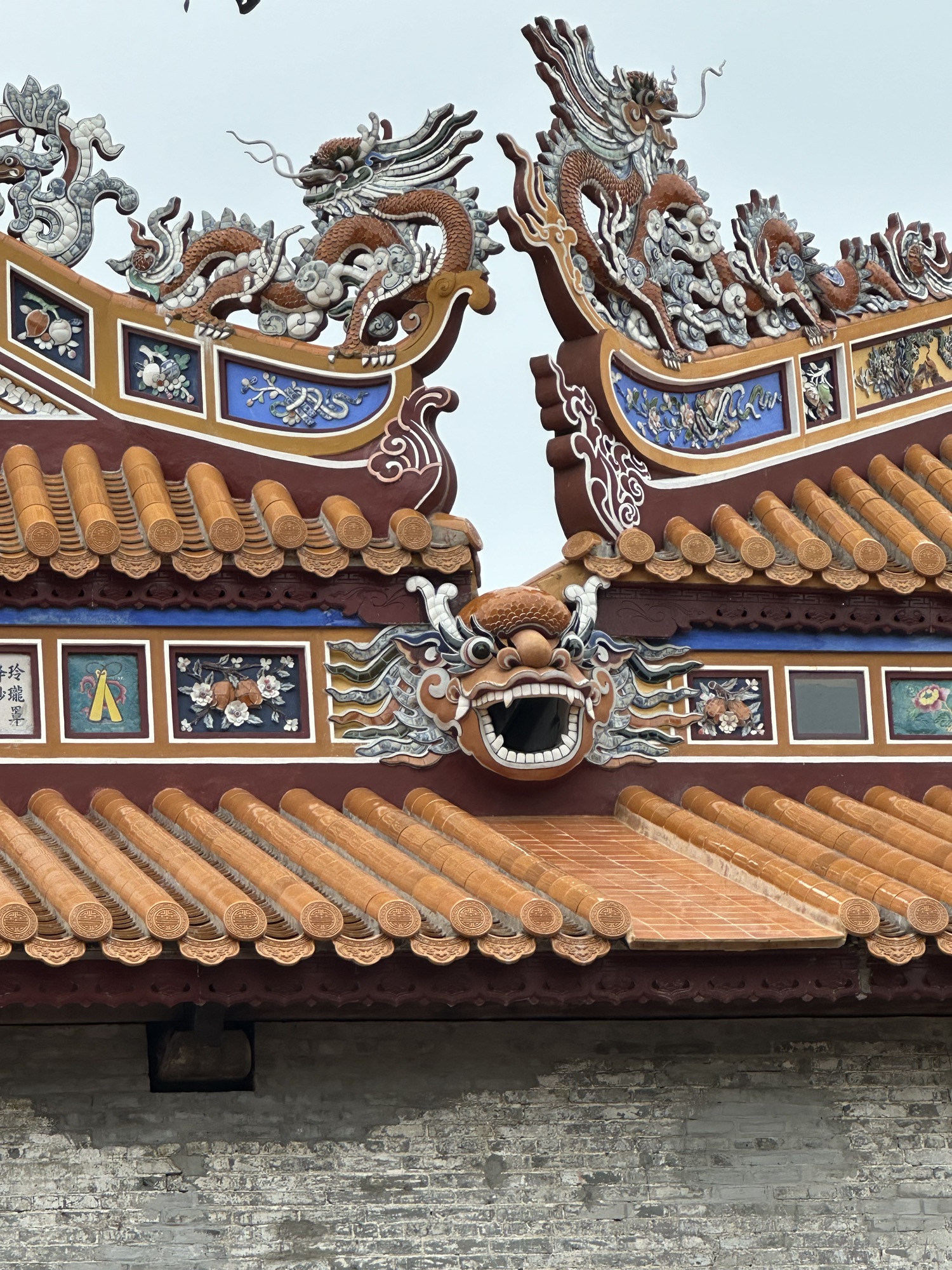
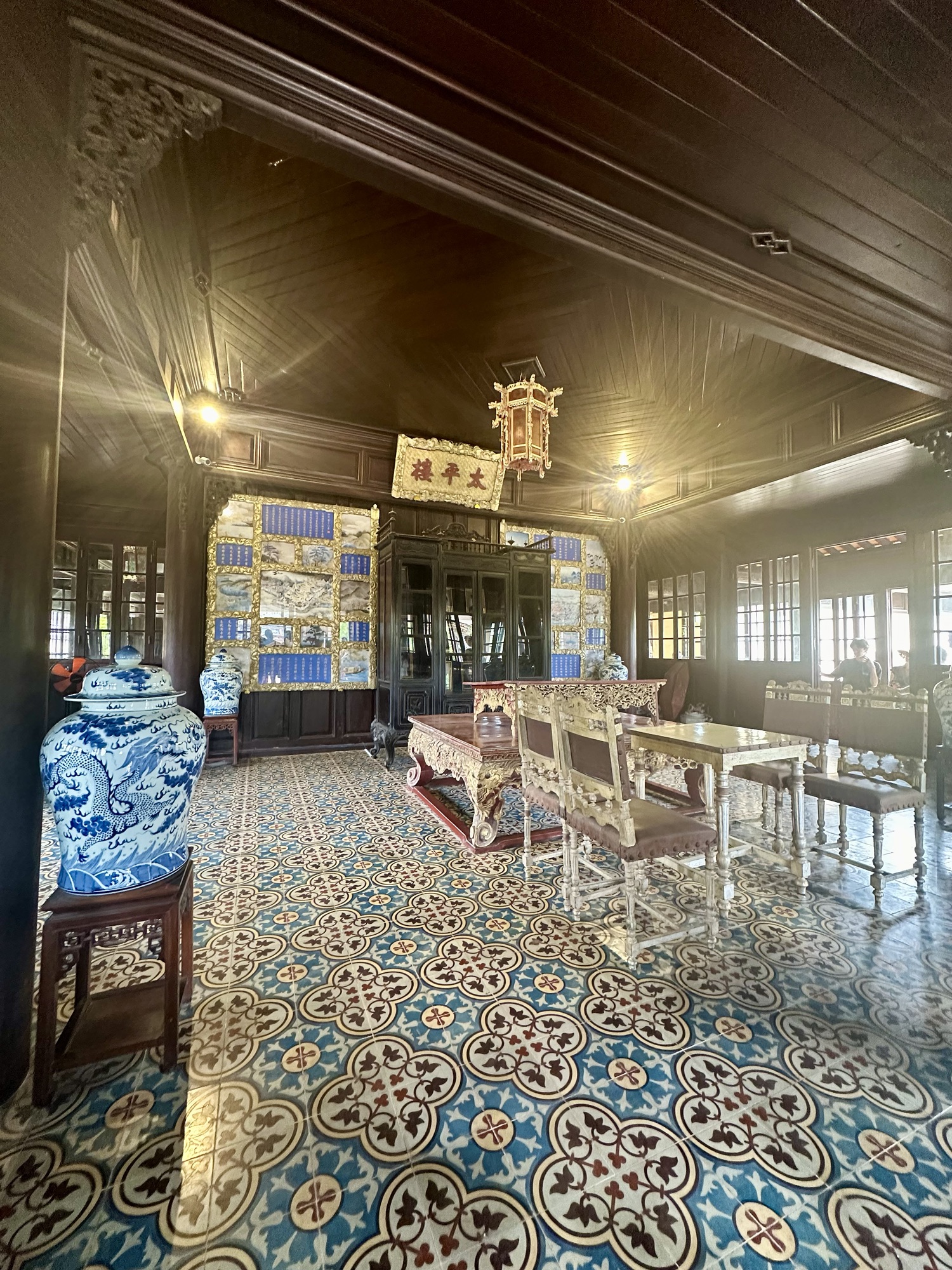
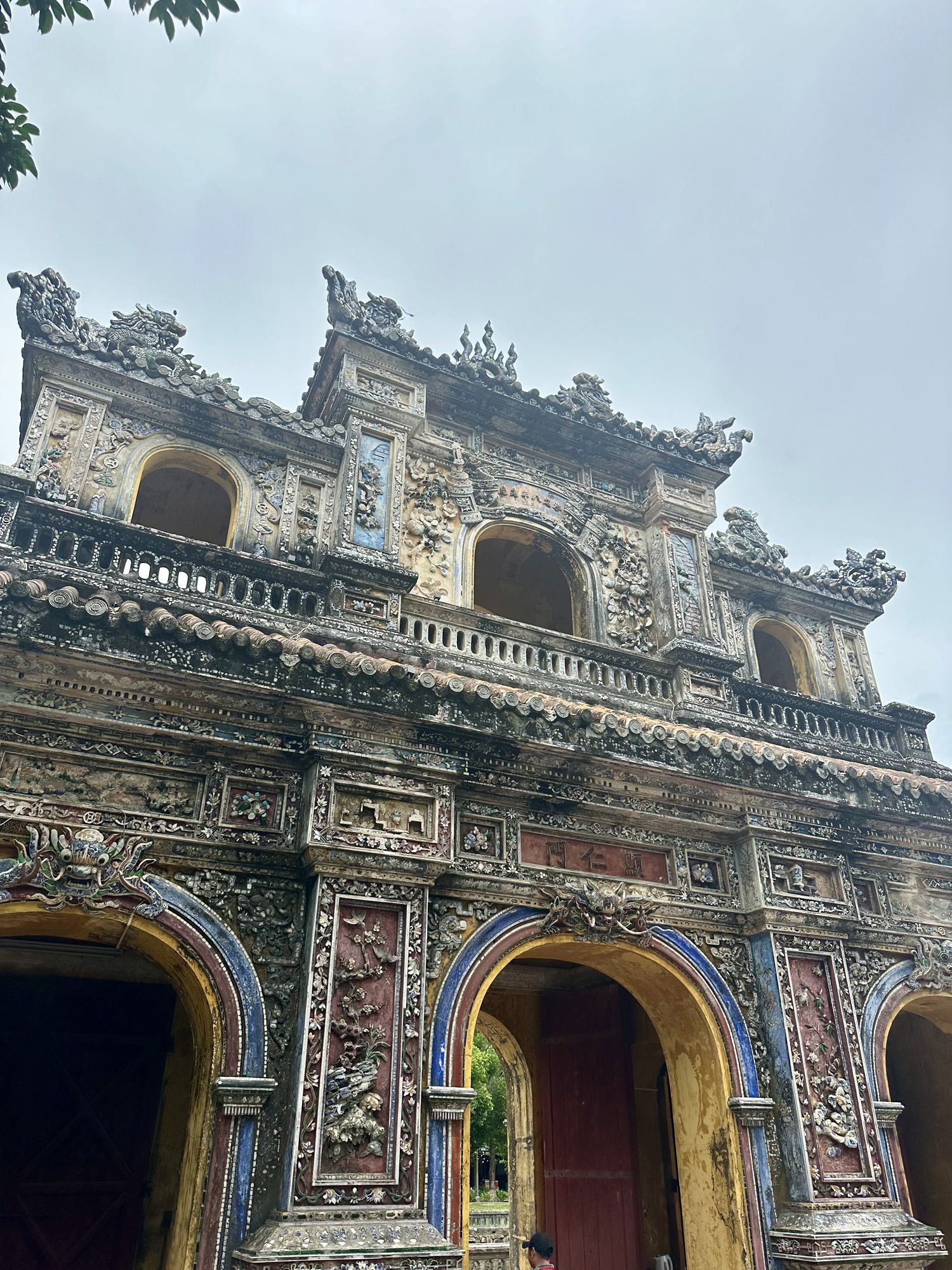
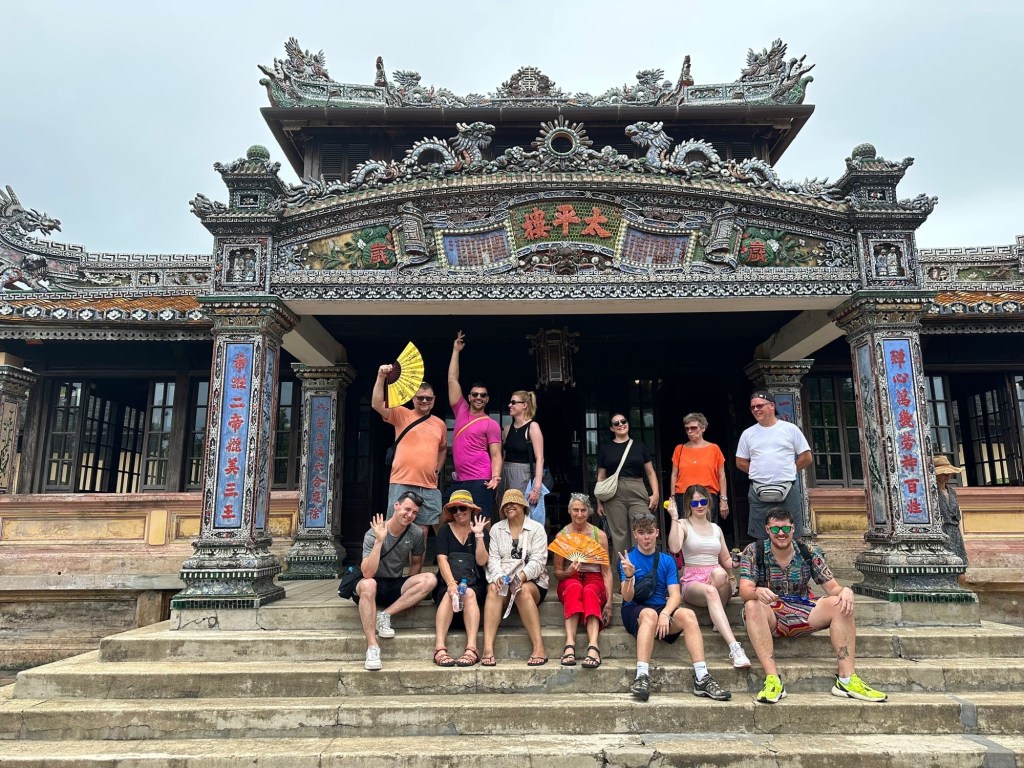
Winding through gardens and relics, the group learned from Phuong about the various parts of the city and their historical uses. At one point, Phuong picked up a small bullet from an M16 that had surfaced after recent heavy rains. He explained that relics such as bullets and fabrics are still left to be found all over Huế. After a brief break for water, fans, and beers, the group got back on the bus to head to our next historical site, the Thien Mu Pagoda.
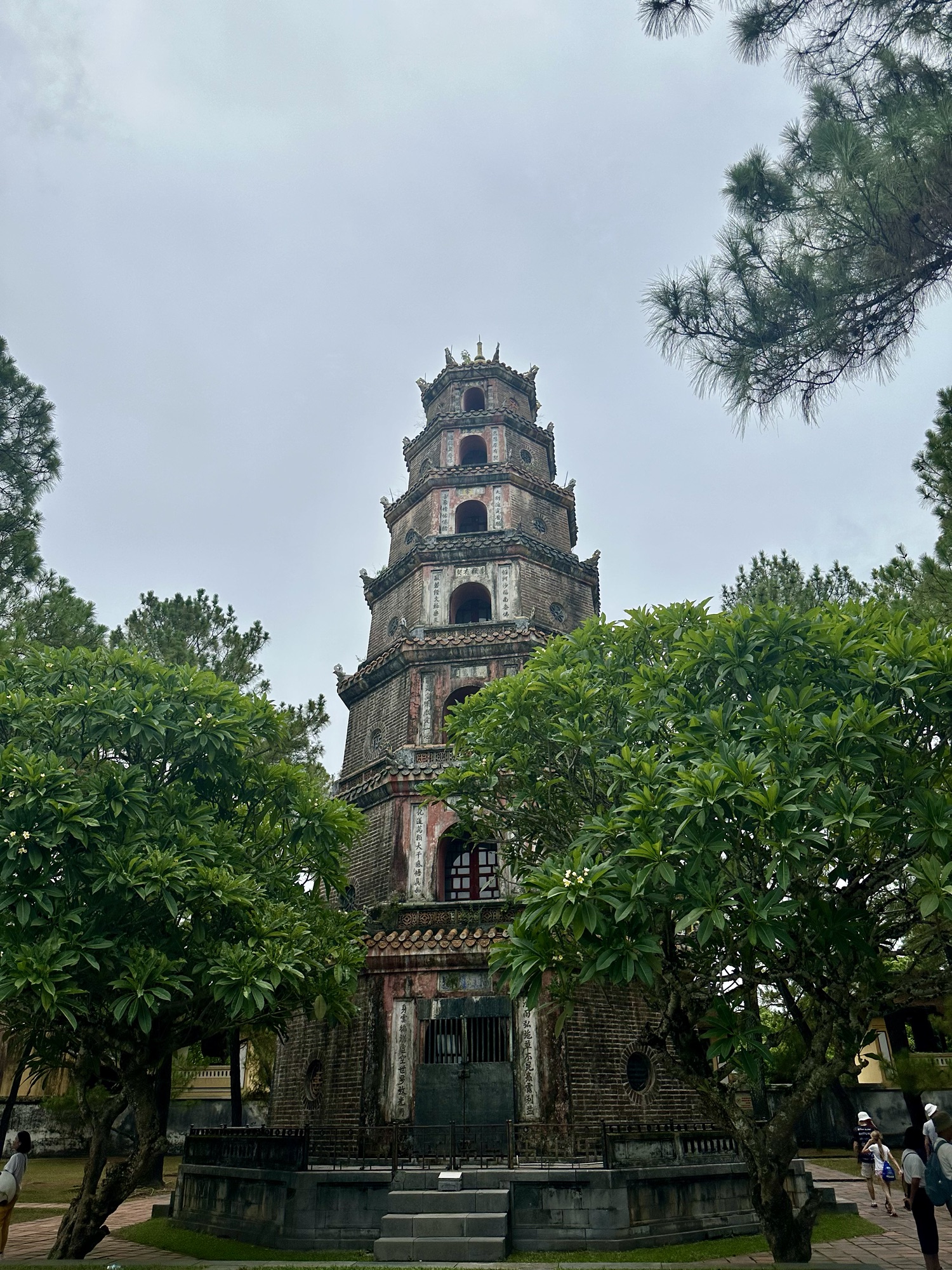
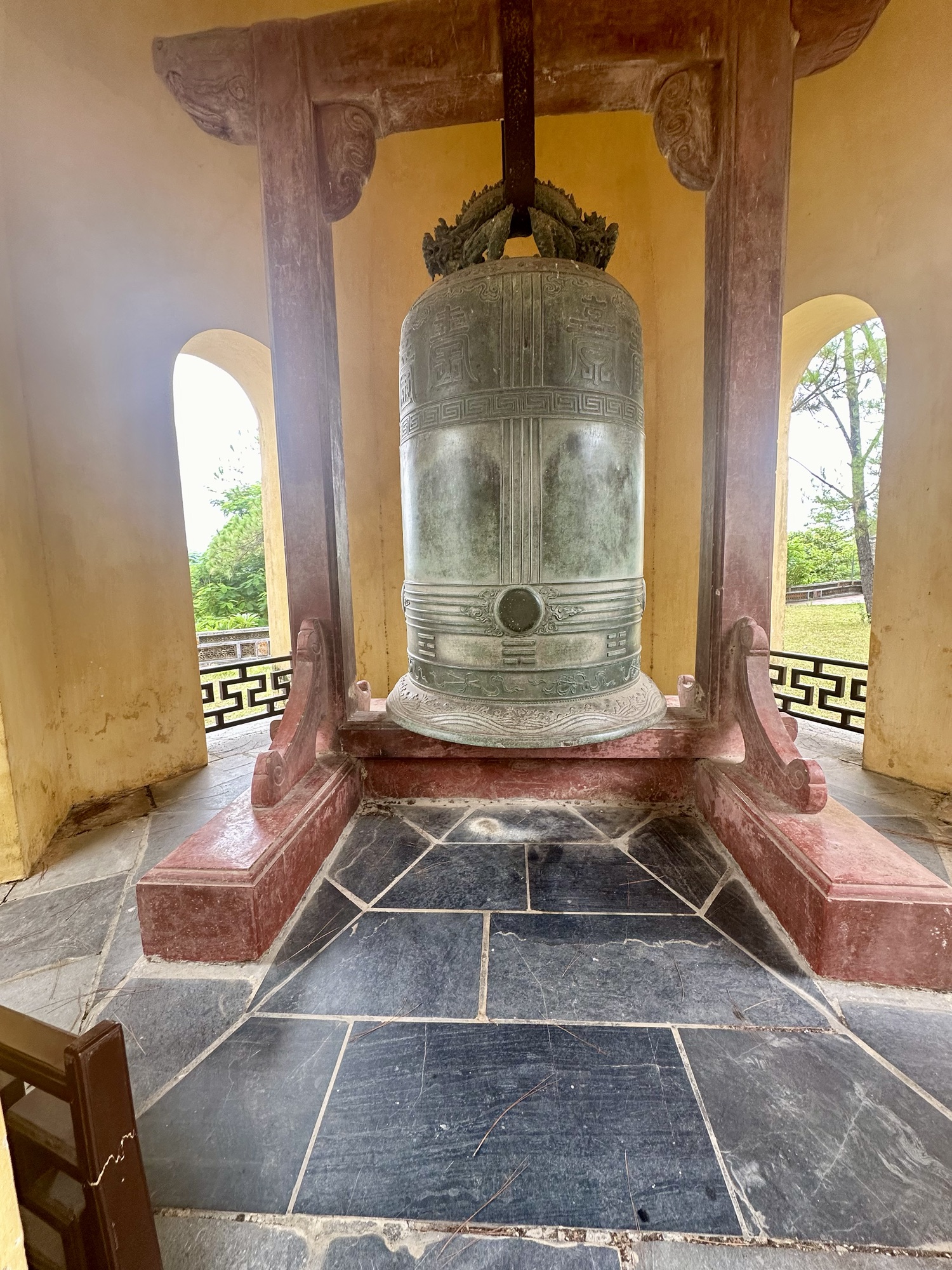
Situated on a small hill, the seven-story pagoda overlooks the city while hugging the Perfume River embankment. Octagonal in shape, the pagoda was completed in 1844 as a symbol of the Citadel and a dedication to Buddha. The temple itself is a humble building in the inner courtyard, past the triple-gated entrance where three statues of Buddhist guardians stand on alert. In the main sanctuary behind the bronze laughing Buddha are three statues: A Di Da, the Buddha of the Past; Thich Ca, the historical Buddha (Sakyamuni); and Di Lac, the Buddha of the Future.

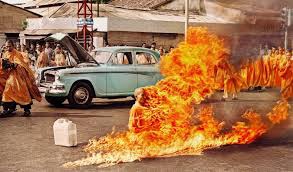
Phuong recounted the story of a famous photo many of us had seen (above) — the self-immolation of Buddhist monk Thích Quảng Đức. Famously captured by Associated Press photographer Malcolm Browne, the act was meant to draw attention to the Buddhist teachings threatened by then-President Diem, part of the Catholic minority. The President was pushing policies that favored Catholics and provided them with ammunition and other favors, not Buddhists. Phuong told us this story because the car in the background of the photo is kept at this historical site. The only restoration done to it was a fresh coat of blue paint applied by the Buddhists many years later. Photos on the wall of the car’s garage show a fellow monk holding a charred black heart, the only part of Quảng Đức that remained after his self-immolation. Sadly, many more followed in his path throughout Vietnam and the world; the latest was in February in Washington D.C. by a serviceman protesting the genocide in Palestine.


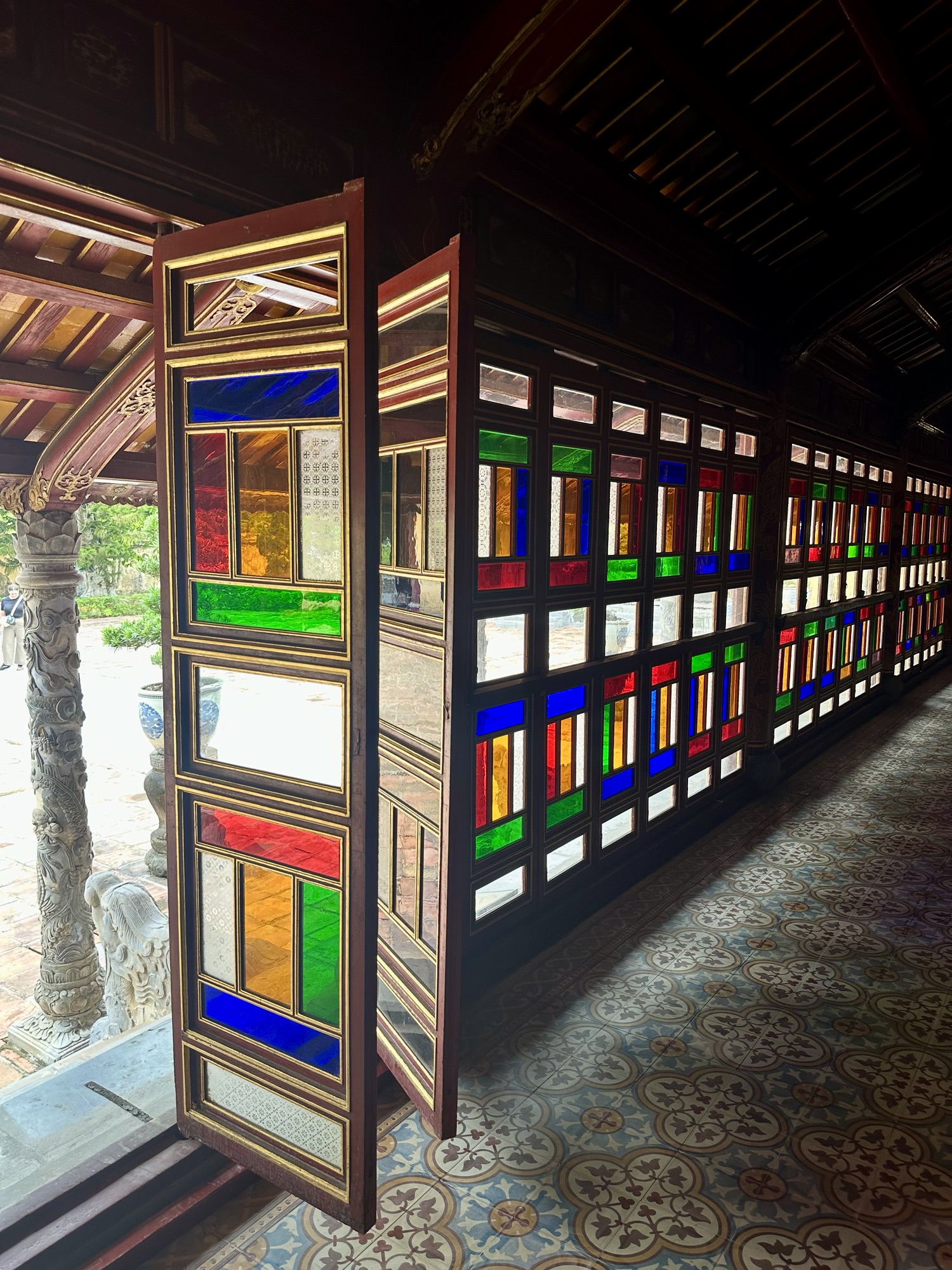
After collecting ourselves, we proceeded to the Imperial Tomb of Dong Khanh. This gorgeous structure held not only the emperor’s tomb but also the quarters he once inhabited. Many emperors assisted in building this site since Dong Khanh passed away at 25 without constructing a tomb for himself. The war damaged parts of the site, which have since been repaired with the help of UNESCO. There is a lot of history to this site so I’ll let a link here so you can read more about it if you’d like.
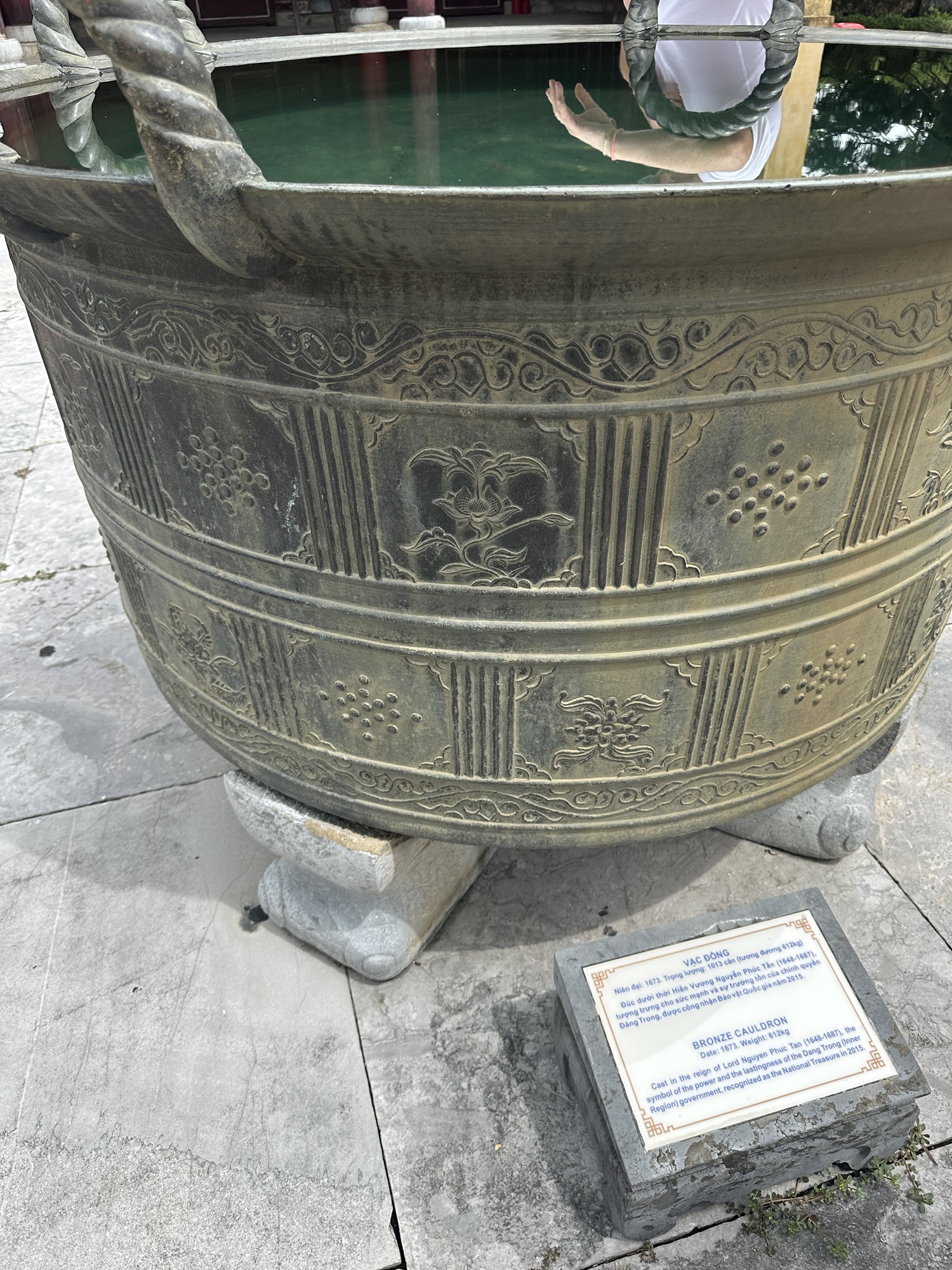
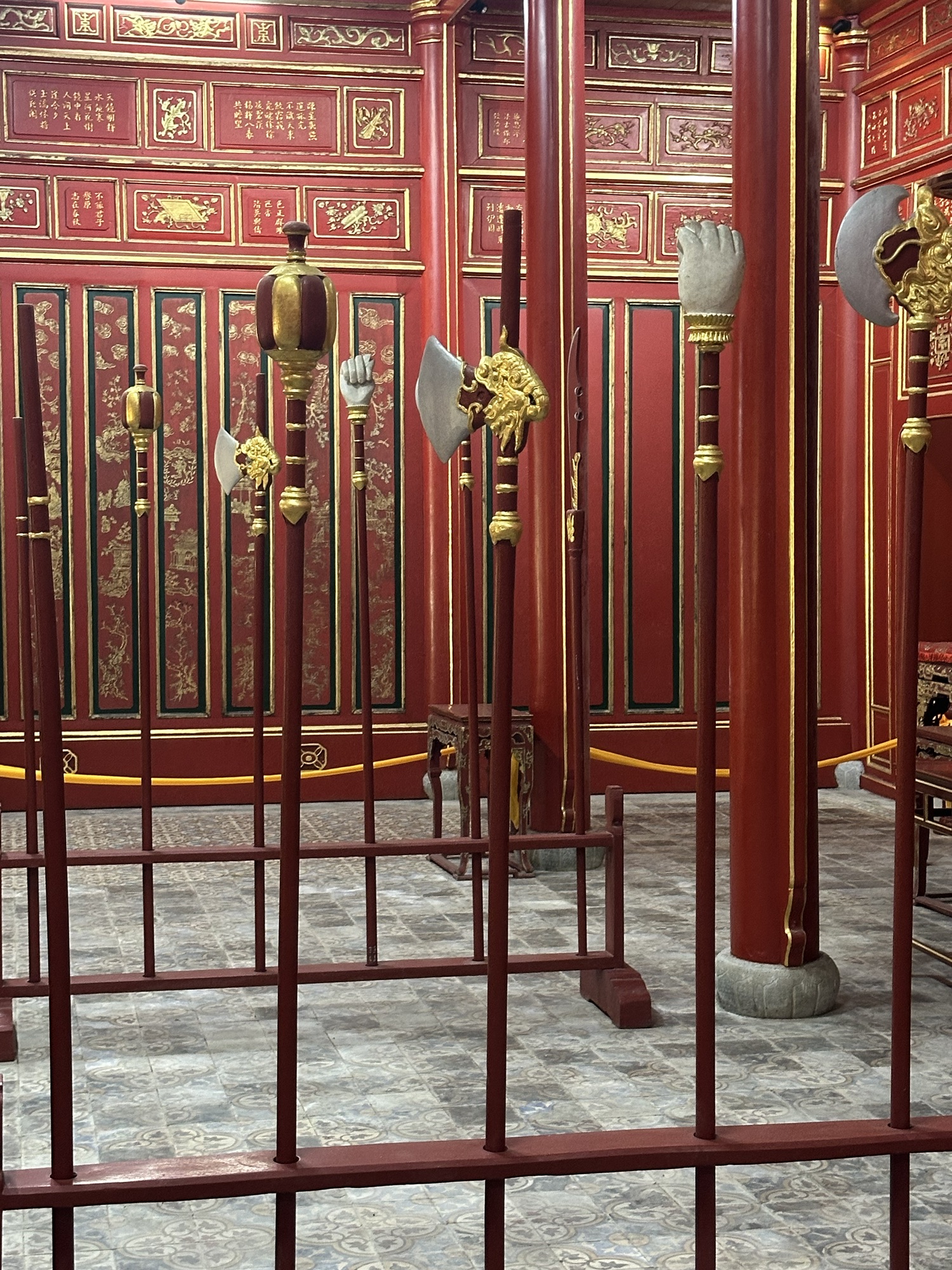


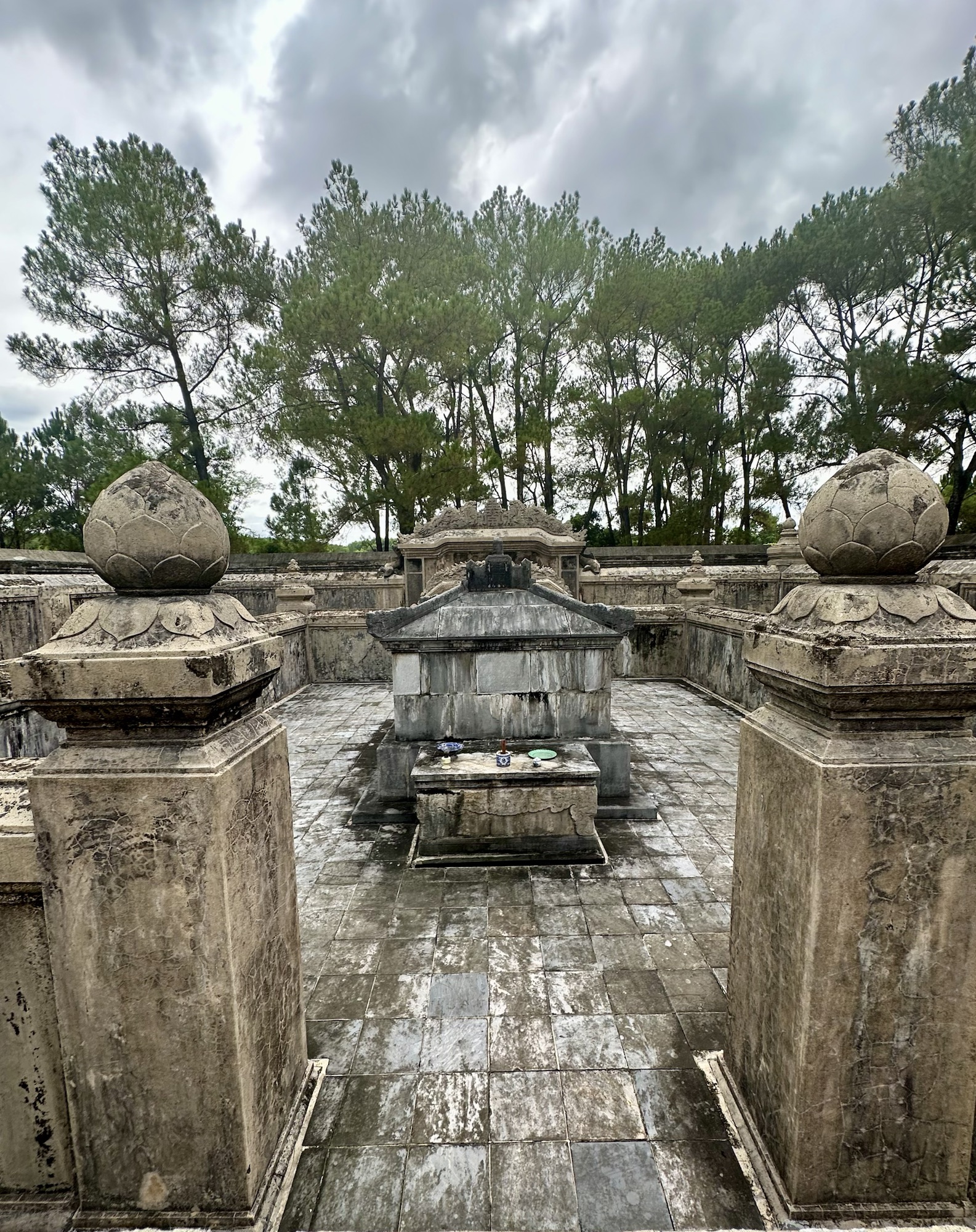

With the walking/bus tour complete, most of the group opted out of the additional motorbike tour and headed to the hotel for lunch and showers. Many didn’t join this tour, thinking it would cover the same sites and being already exhausted. Since we had pre-booked the G Adventures tours, we had a long day ahead. After a quick meal of local food, the two of us met back up with Phuong and his colleague to hop on motorbikes for a 3-hour tour of other sites.
Calling this a highlight of Huế is an understatement—it might be one of the best experiences we’ve had since the trip began. Phuong navigated Huế traffic with ease, eliciting lots of “yeehaws” and laughter. Our first stop was Hổ Quyền, the tiger arena. Often overlooked by visitors due to its off-the-beaten-path location, it was well worth the visit. Phuong recounted the history of the arena, where elephants and tigers battled for the emperor’s entertainment. From the late 1700s until the last fight in 1904, over 300 elephants and tigers faced off. The original purpose was to enhance the elephants’ fighting capabilities for war. We explored the walled arena and the waiting grounds, where the tigers left visible claw marks in the stone walls. Today, the arena sits abandoned, protected by UNESCO, while village children play soccer outside its walls. To read more about the tiger arena, click here.
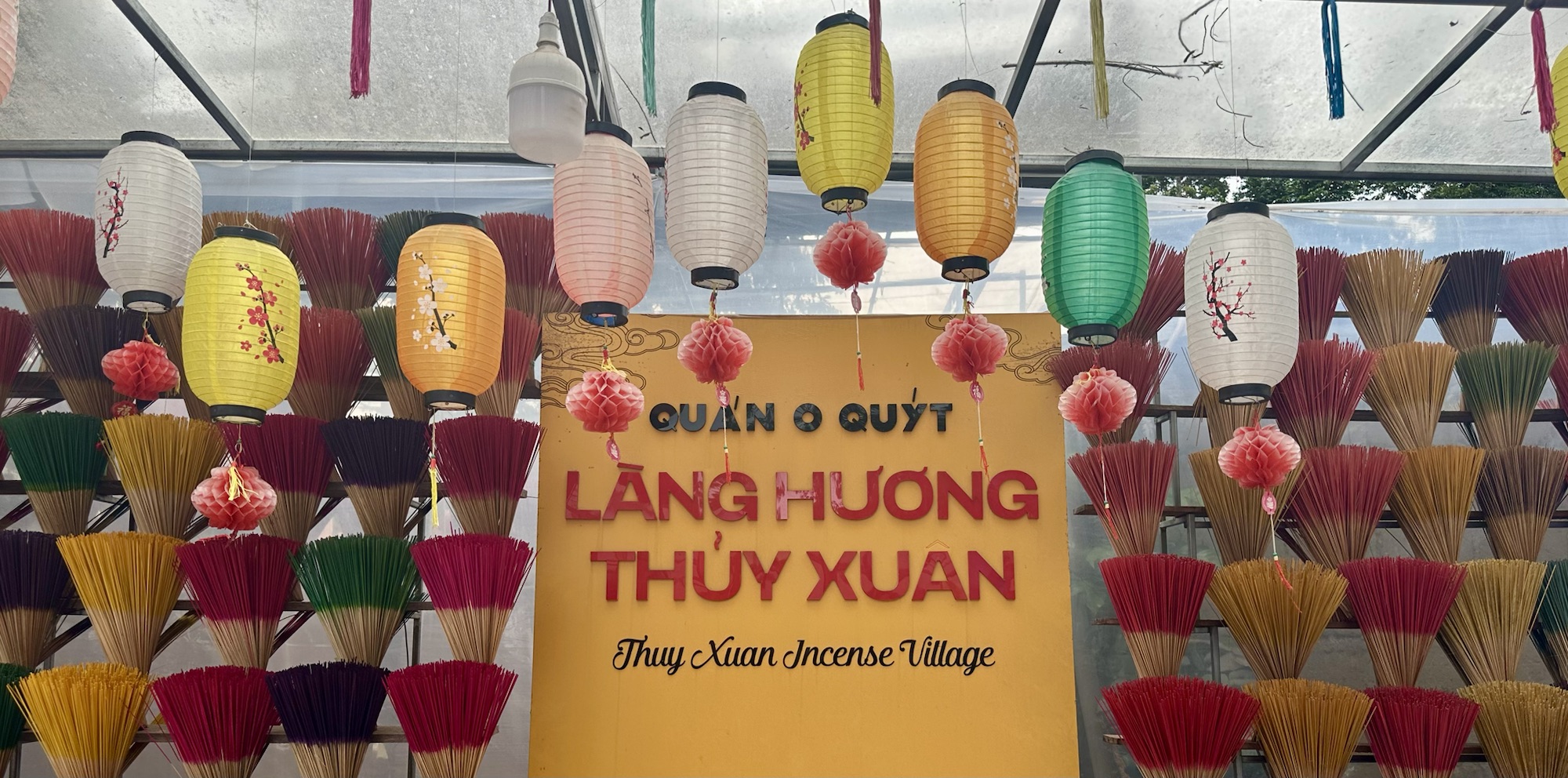
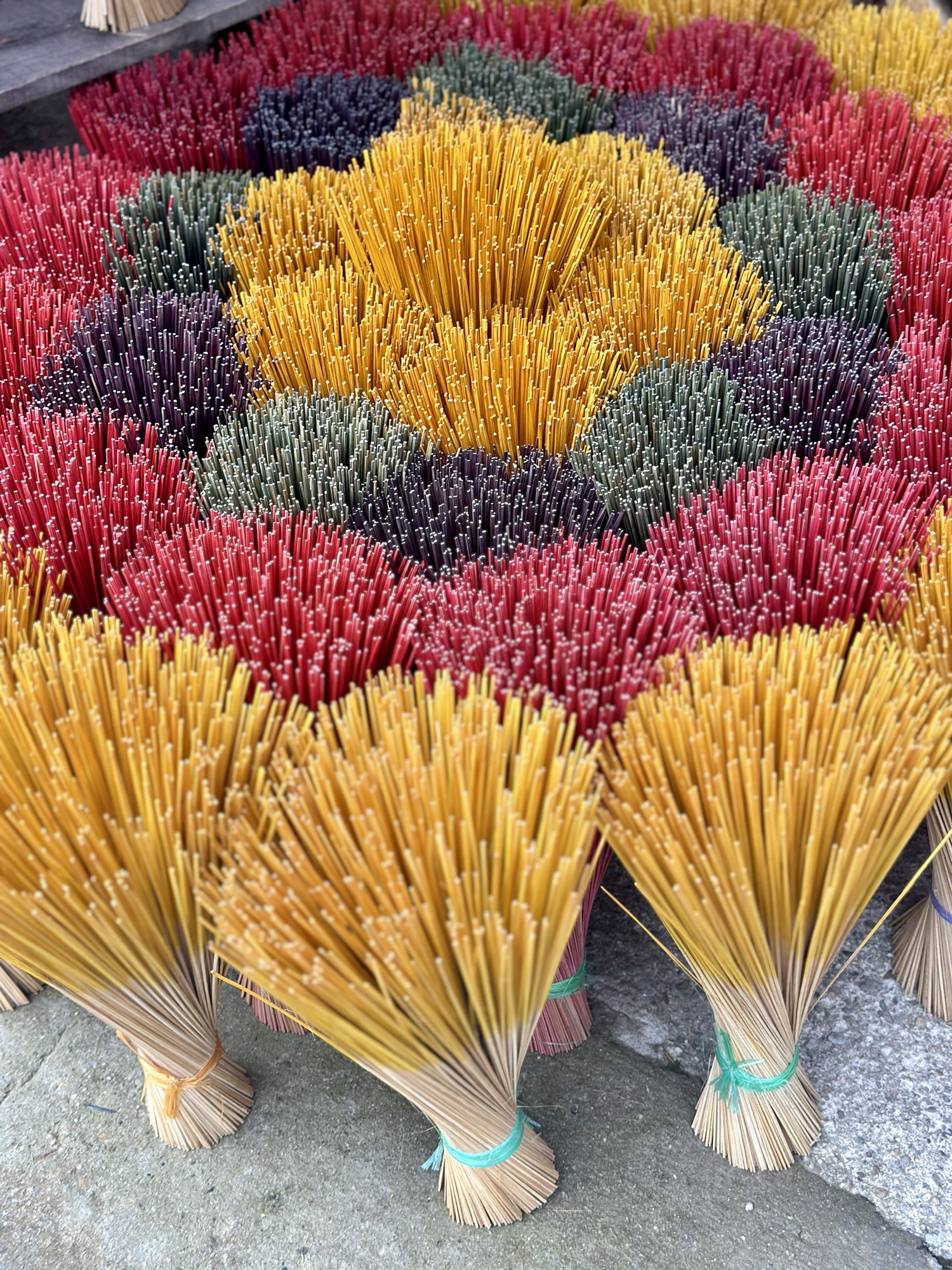
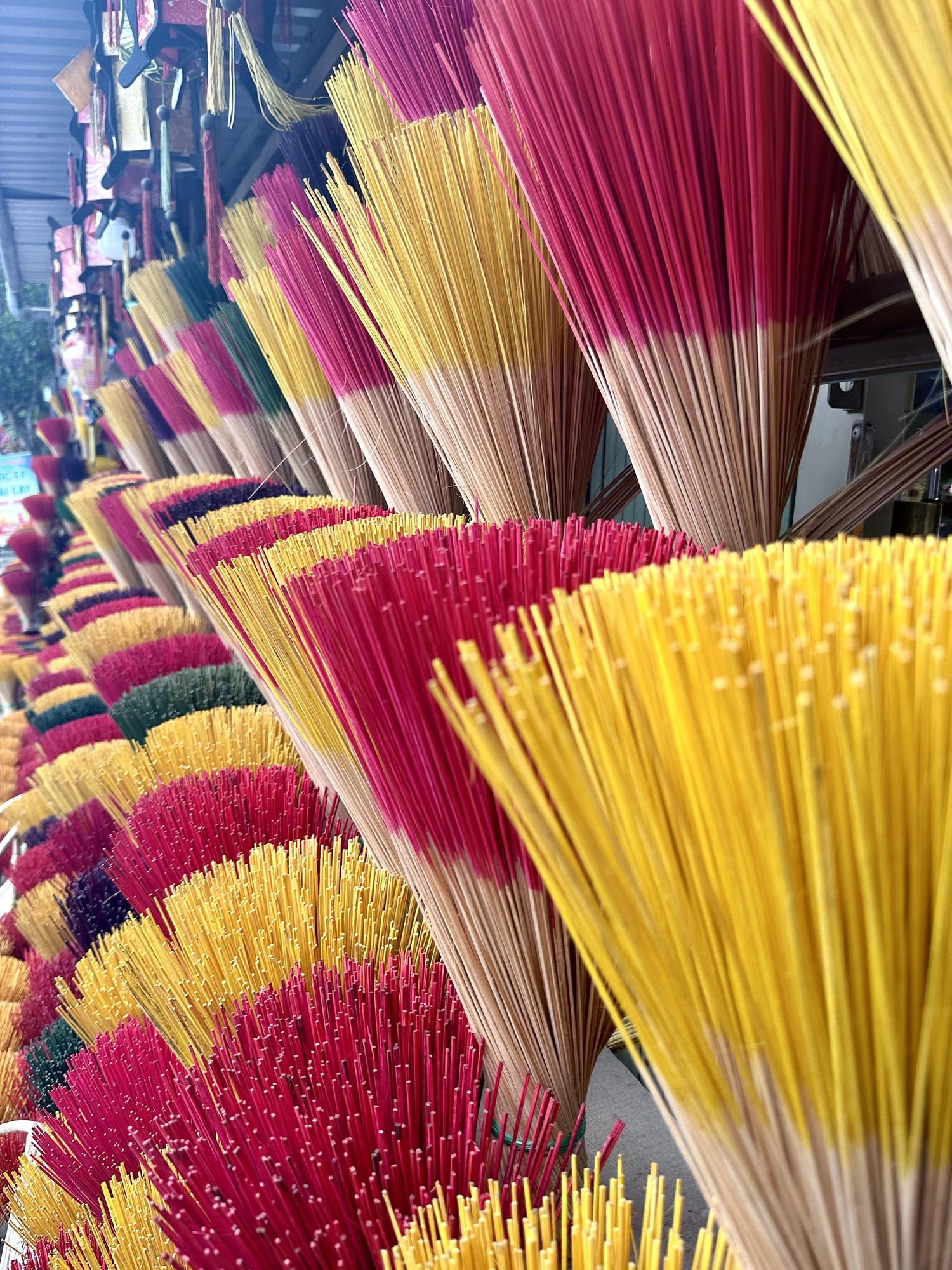
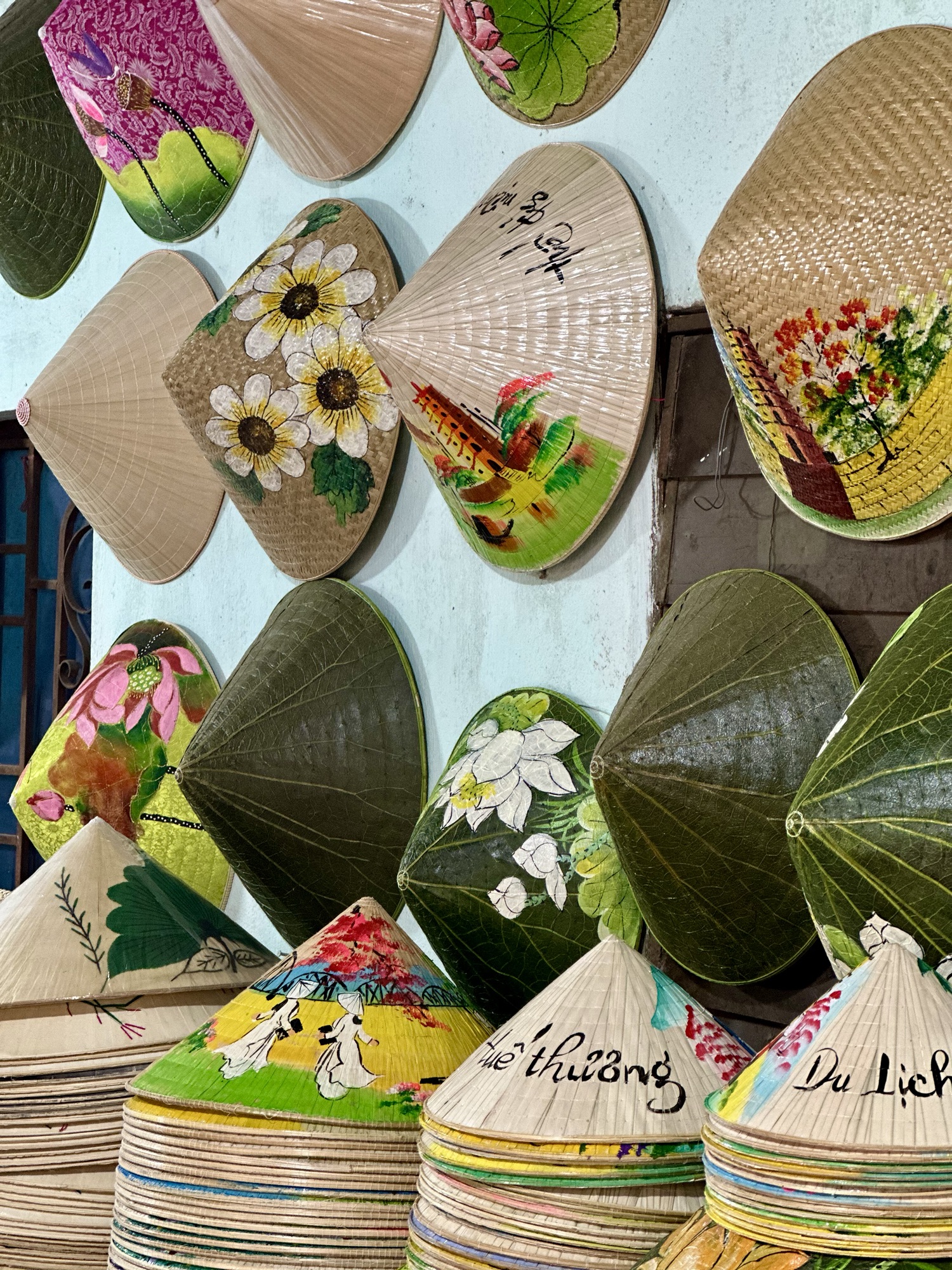
Our second stop, after a breezy trip through village alleys and dirt roads, was Incense Village. This was a nostalgic sight for me as the smell of incense reminded me of my childhood. We saw a local villager demonstrate making lemongrass incense; she produces over 2,000 sticks daily. The men cut strips of wood and dye them in various colors to match the given fragrance. The sticks are then dried in a beautiful arrangement before being used by the incense makers. The process, captured in my compliation video, showed the villager combining fragrance with putty, rolling it onto the stick, and then rolling it into sawdust, which is dried by the sun before packaging. We also saw traditional straw hats being made and sipped local tea with dried and sugared ginger. Phuong mentioned his parents have this tea and ginger daily, attributing their health to this practice.
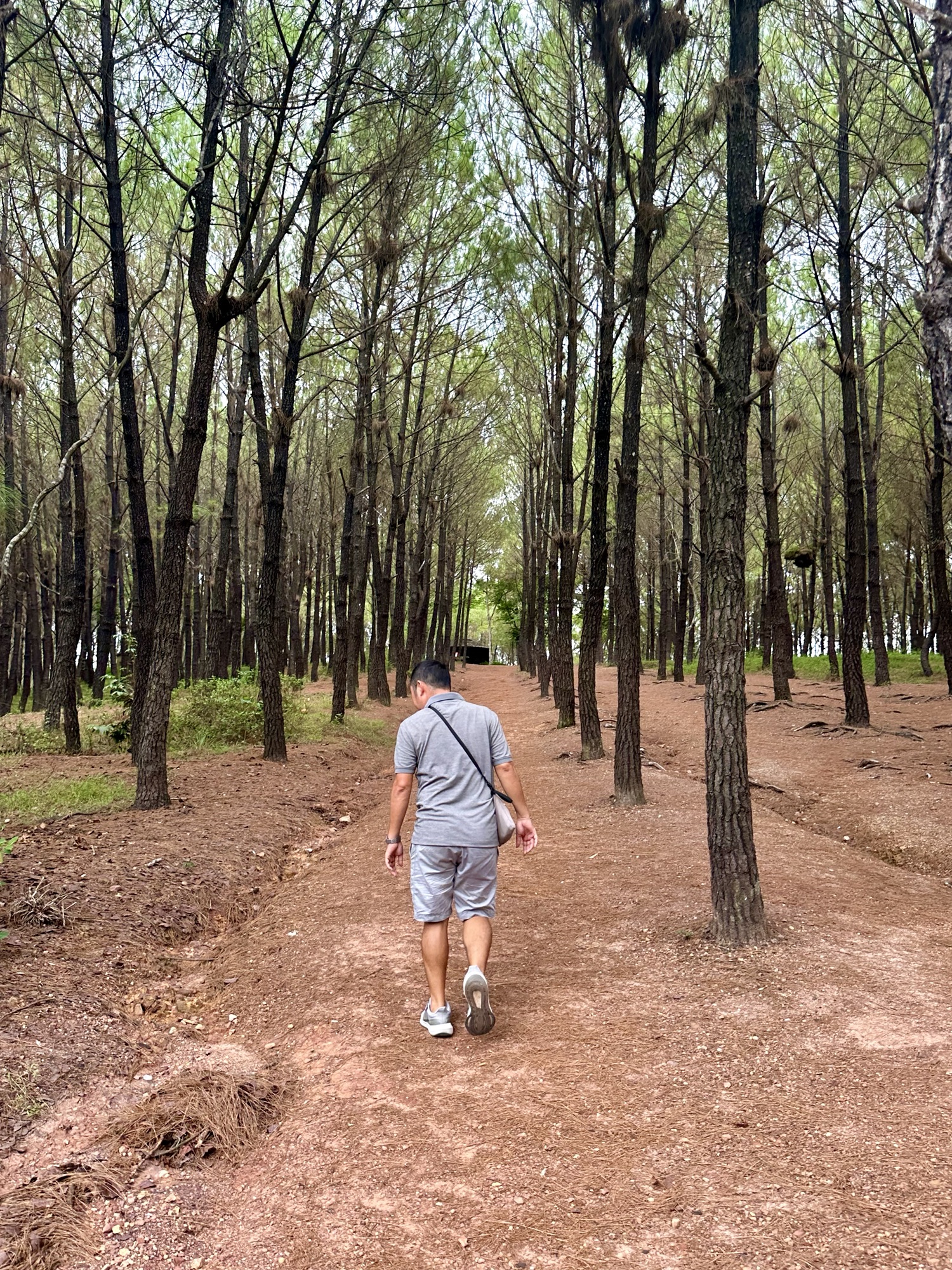
Back on the motorbike, we headed to Bunker Hill, just up the road from Incense Village. Phuong searched for M16 bullets on our way up (he found one!) and explained how the French and American military occupied this hill and built bunkers during the war. Today, the bunkers stand amidst overgrowth, with the surrounding area turned into a beautiful park where locals enjoy the river’s peace and quiet.

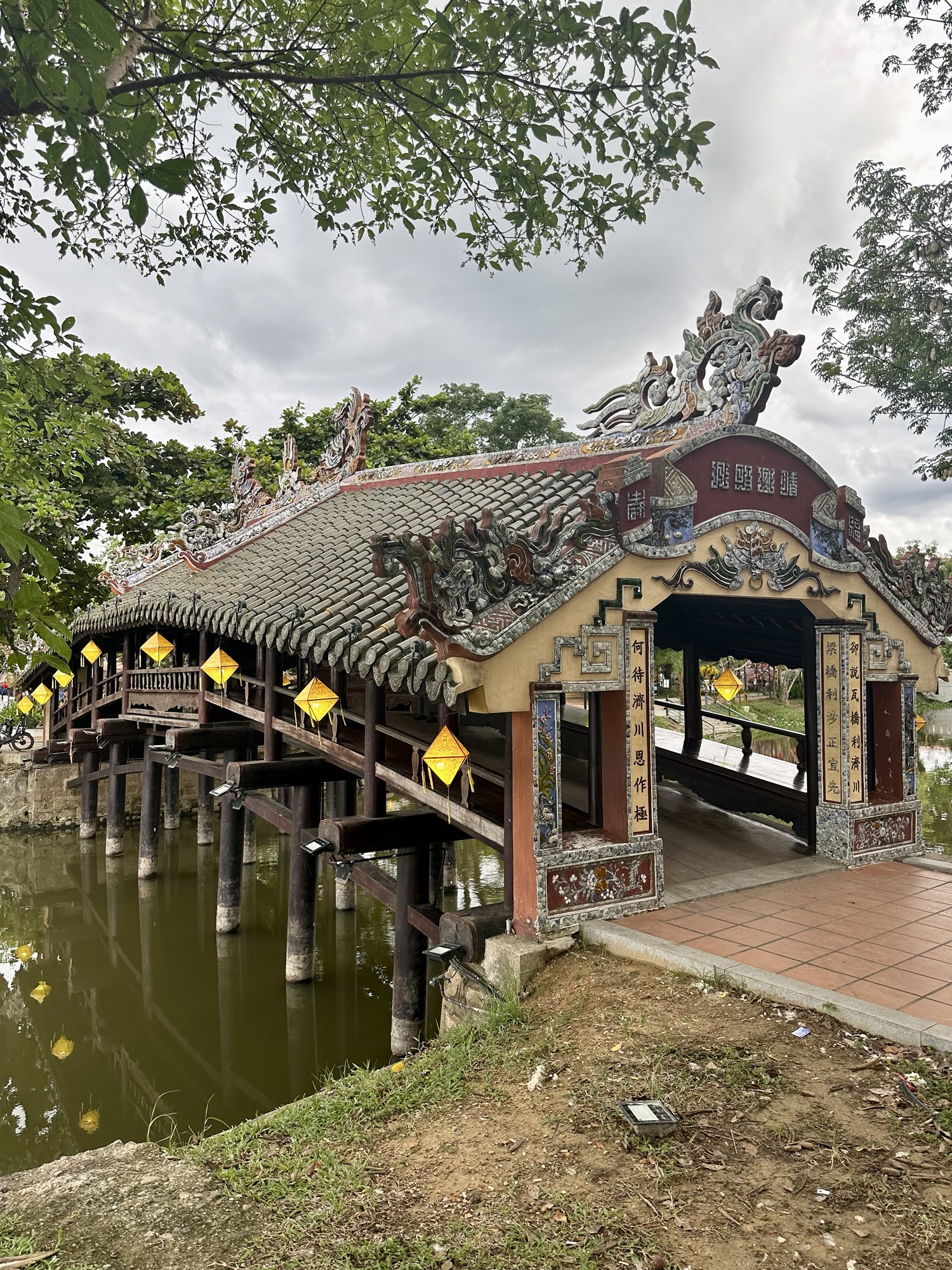
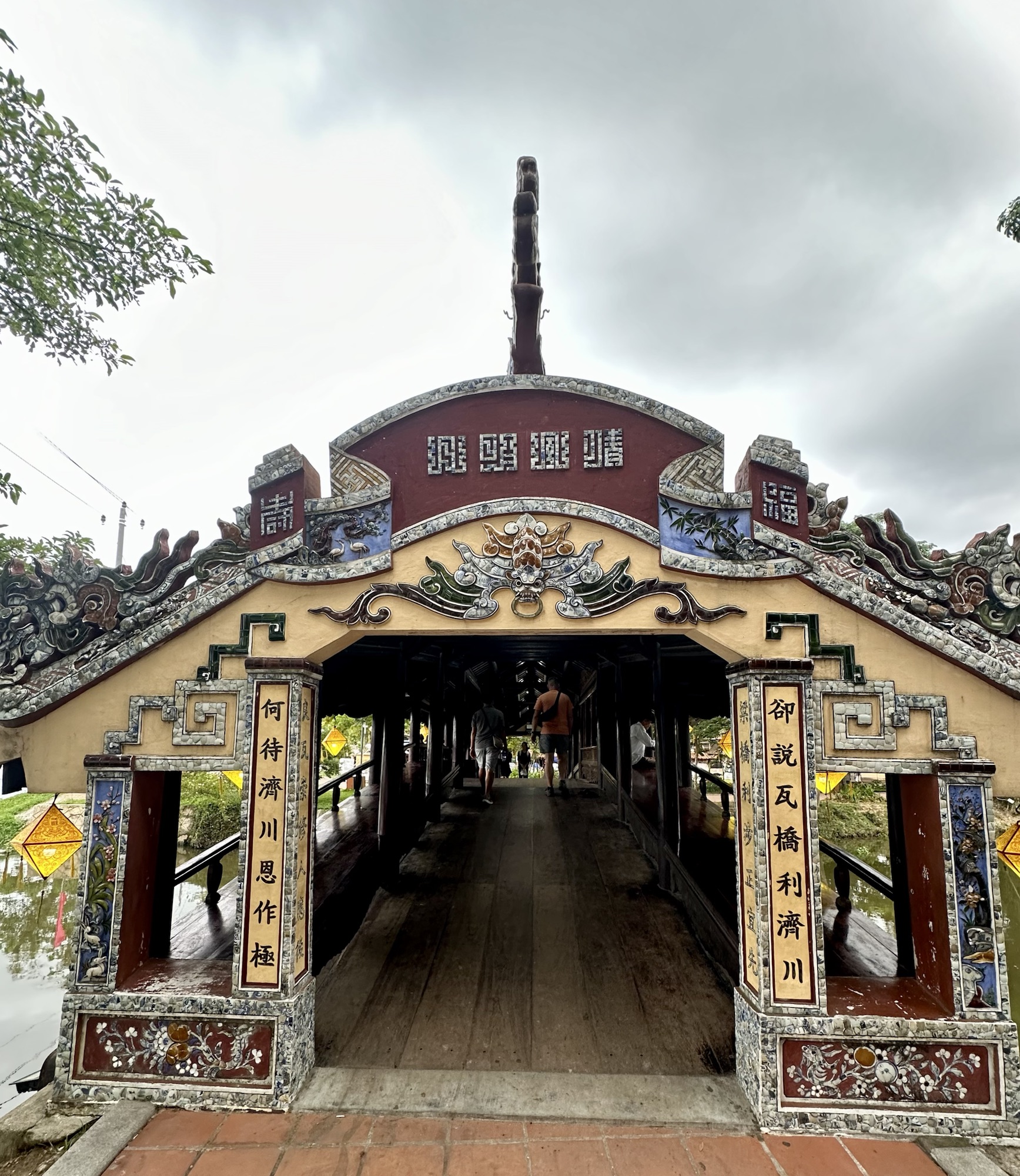
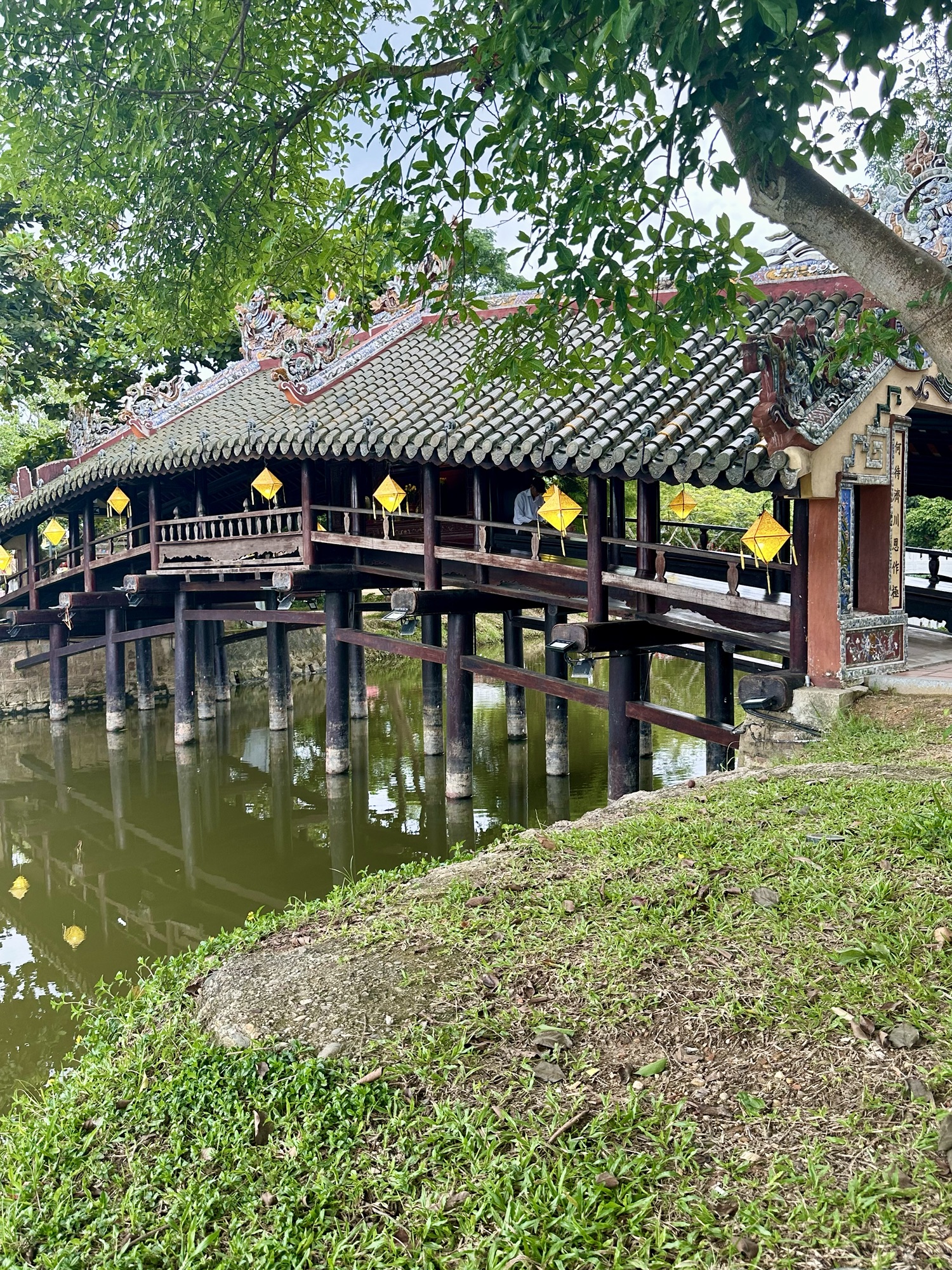
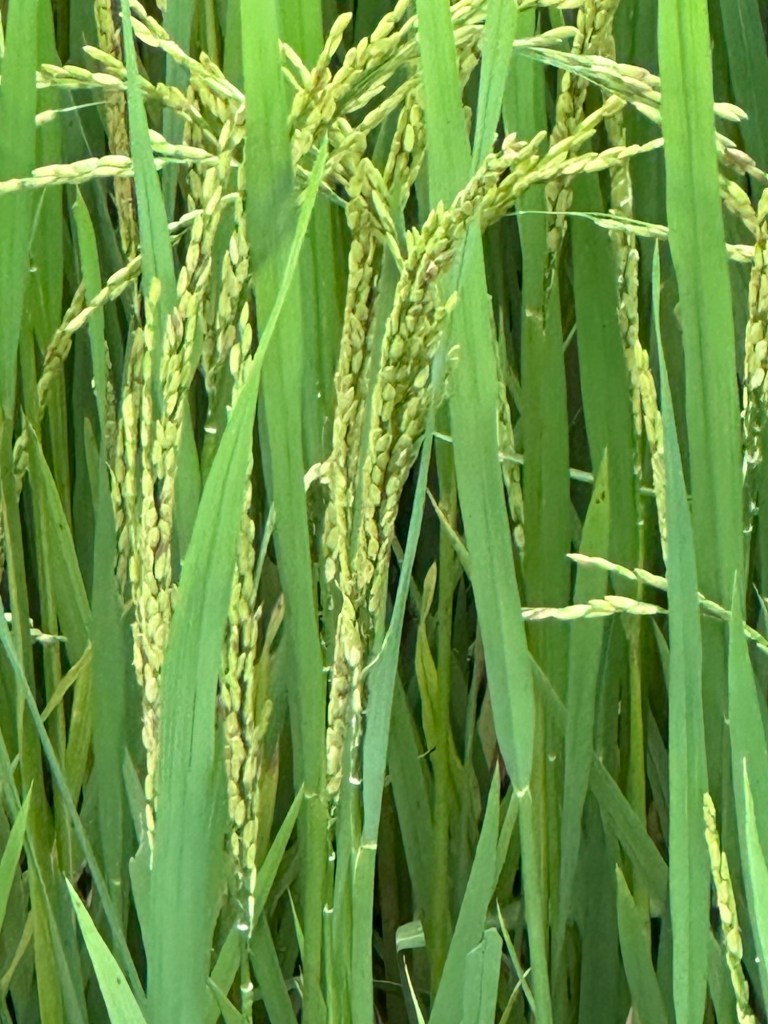
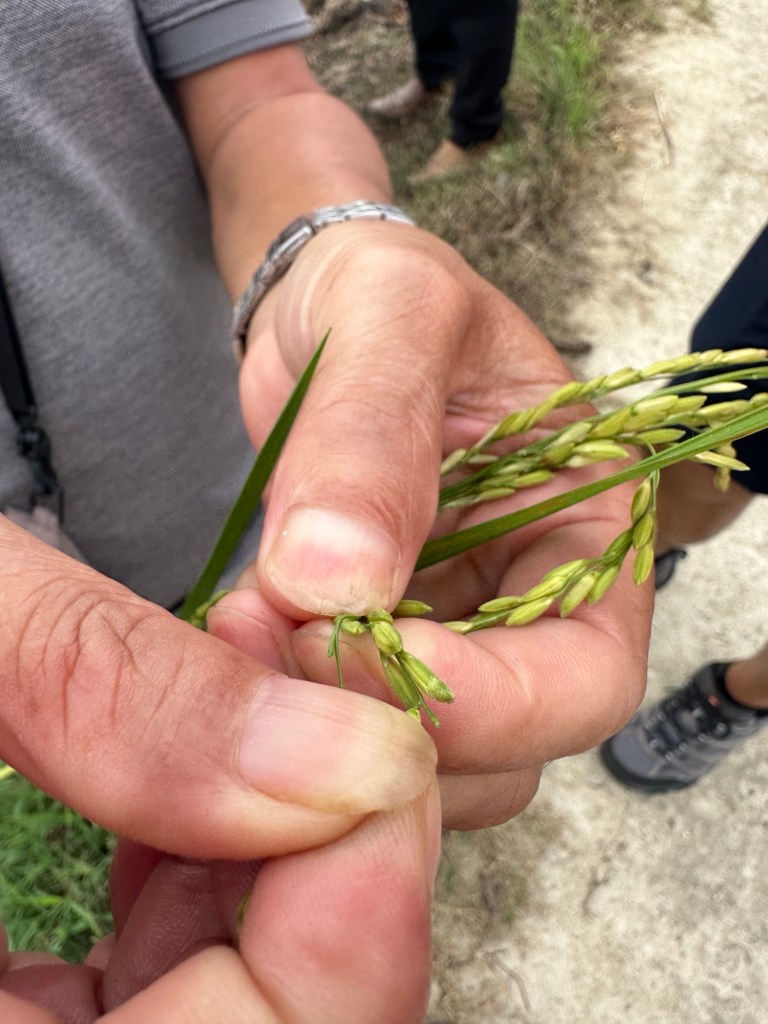
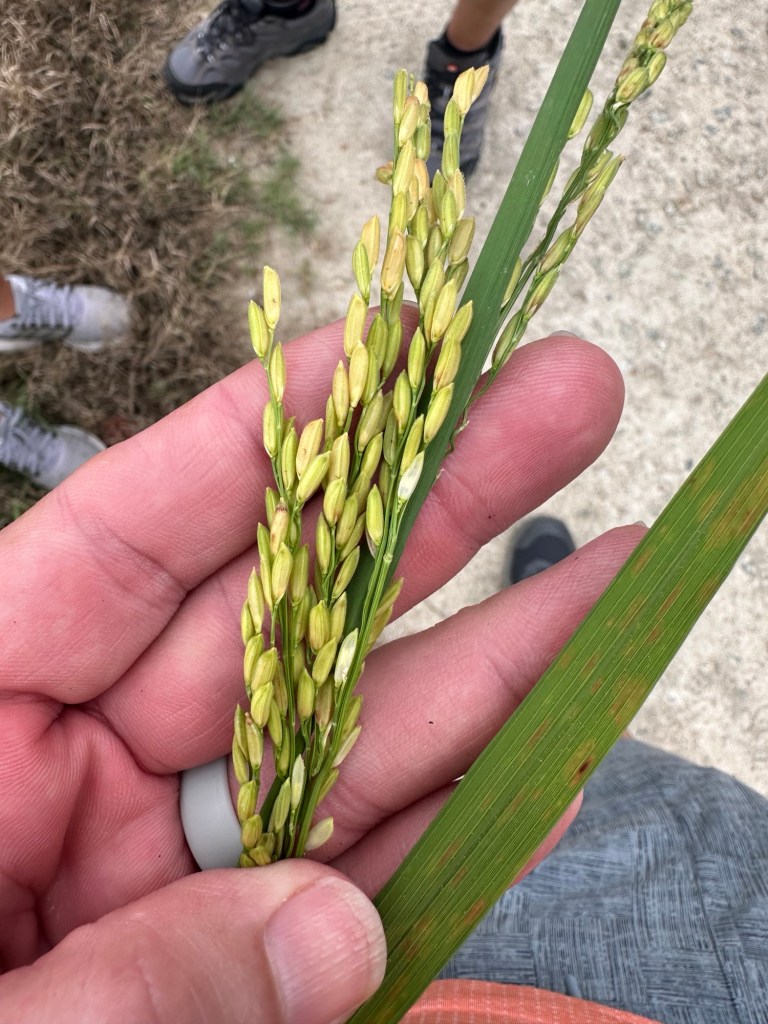
Our last stop took us 40 minutes out of the city into the rural countryside, passing fields of tapioca and rice as well as duck and pig farms. The rice museum was opened just for us. Phuong demonstrated how water irrigation was done before the advent of machines. An elderly woman then demonstrated harvesting rice, which was milled, sifted, pounded, and ground into rice flour—all captured in a compilation video I made. A quick walk outside the museum led us to The Vestige of Thanh Toan Tile-Roofed Bridge. This stunning wooden bridge, constructed in 1776, was central to local gossip and worship of Ms. Tran Thi Dao, a well-regarded local who funded its construction and other efforts to better the people of Huế.
After concluding our motorbike tour, we returned to the hotel for much-needed showers and a brief rest before dinner with the group. We dined at a local restaurant, sampling Huế’s unique cuisine. The evening ended with drinks at a bar called Brown Eyes, where every worker greeted us with a free shot. We weren’t in the mood for heavy drinking, so after two cocktails, we bid the group goodbye and headed back to the hotel for some sleep.
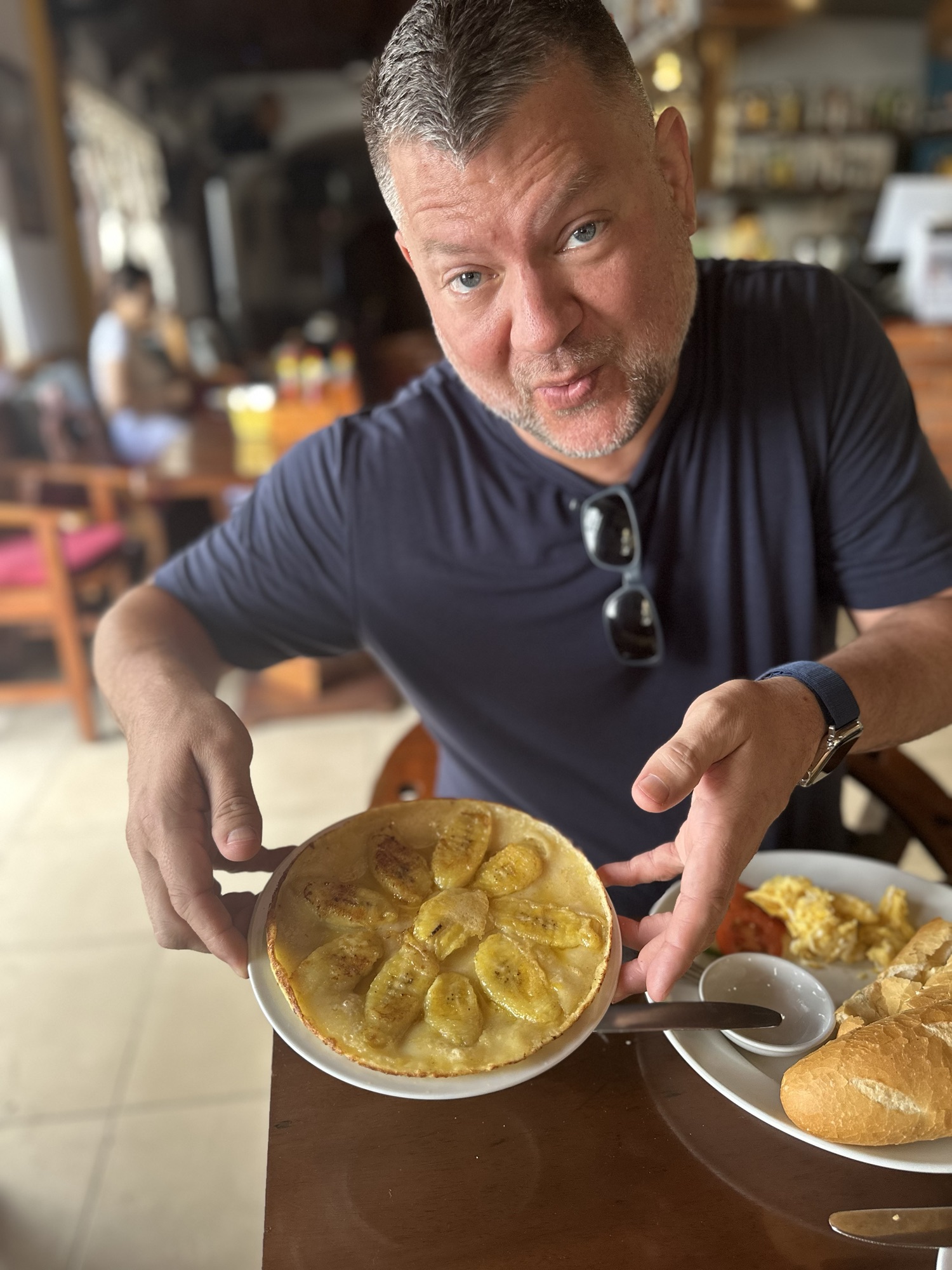
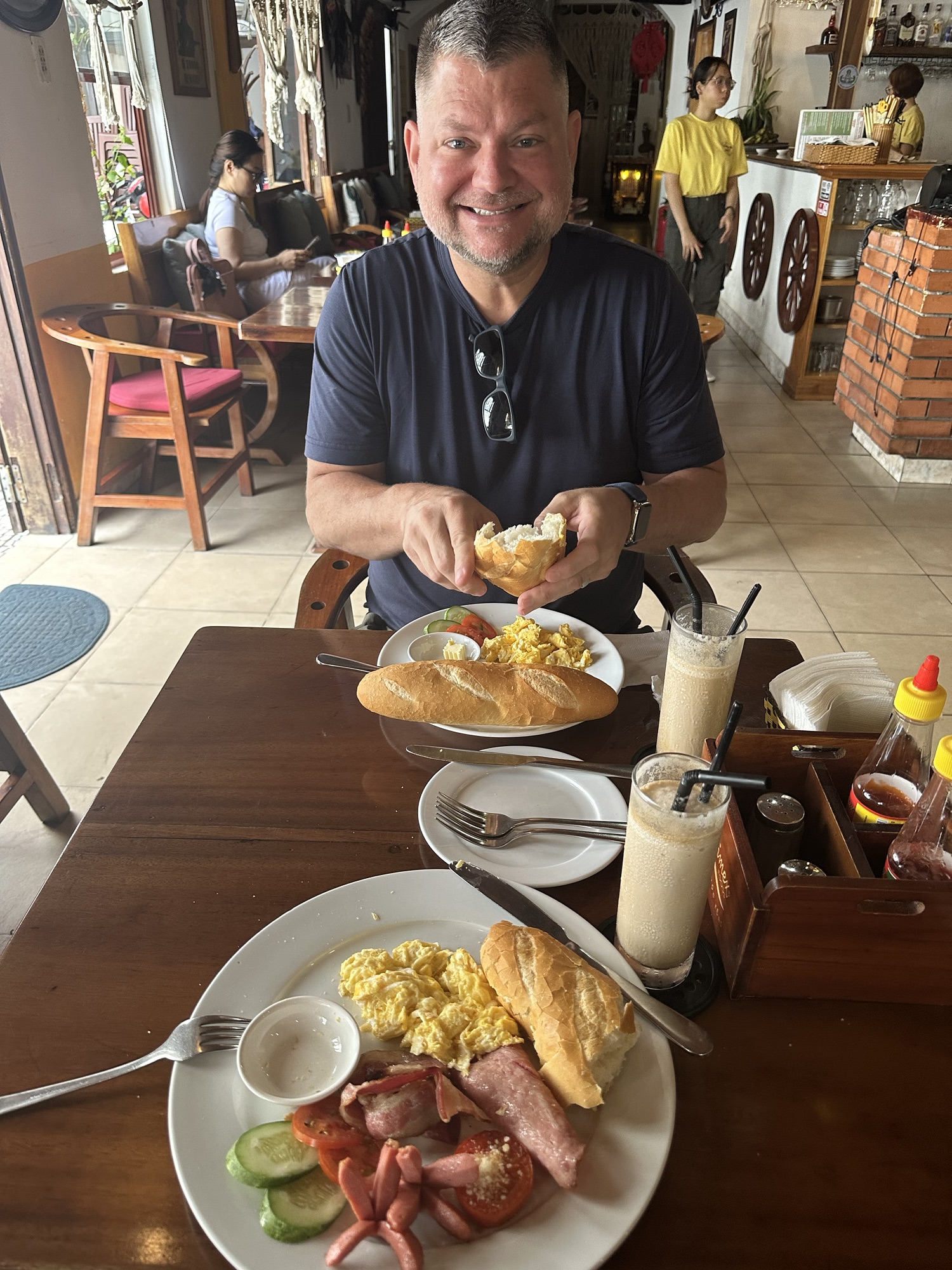
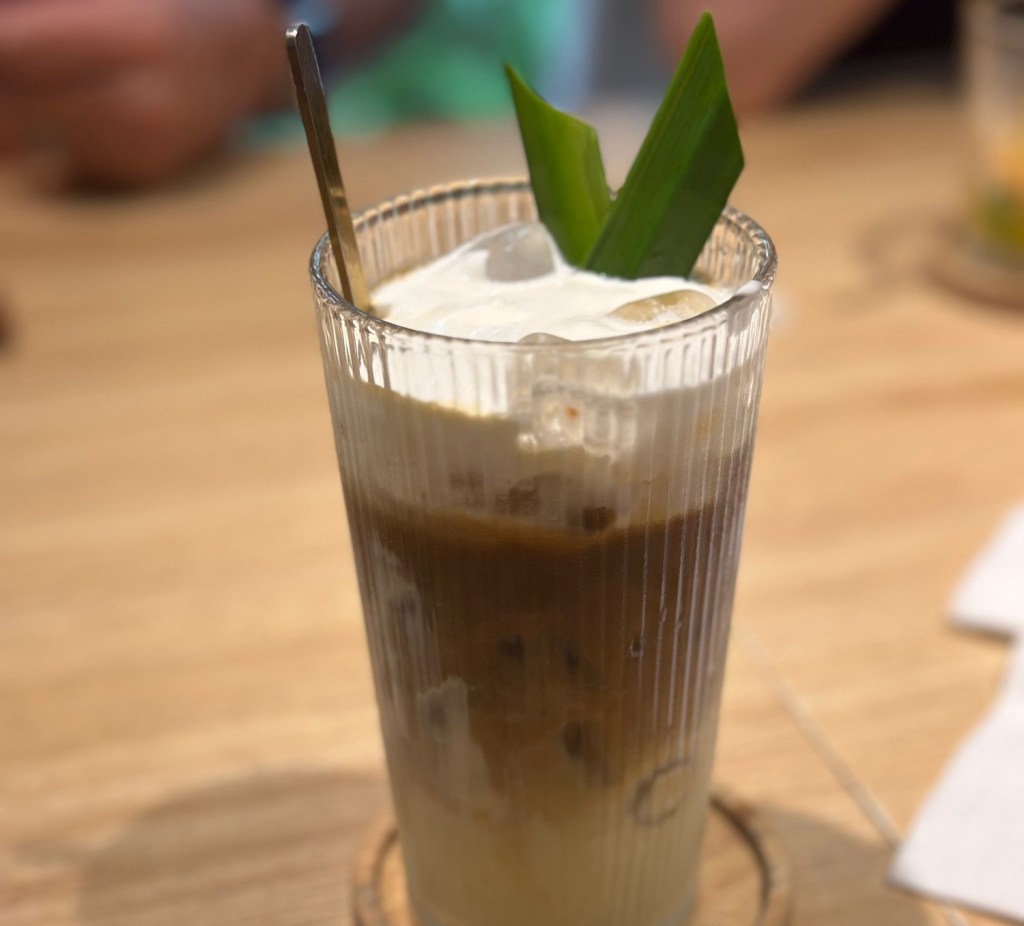
Waking up refreshed, we enjoyed more coconut coffee, which has become our go-to drink, along with eggs, bread rolls, a banana pancake, and more. It was a nice break from Asian breakfast, returning to something more familiar. Now, we’re back on the bus, heading three hours to Hoi An, where we’ll spend the next three nights. We’re looking forward to doing laundry, unpacking, and having a lighter schedule with optional activities.

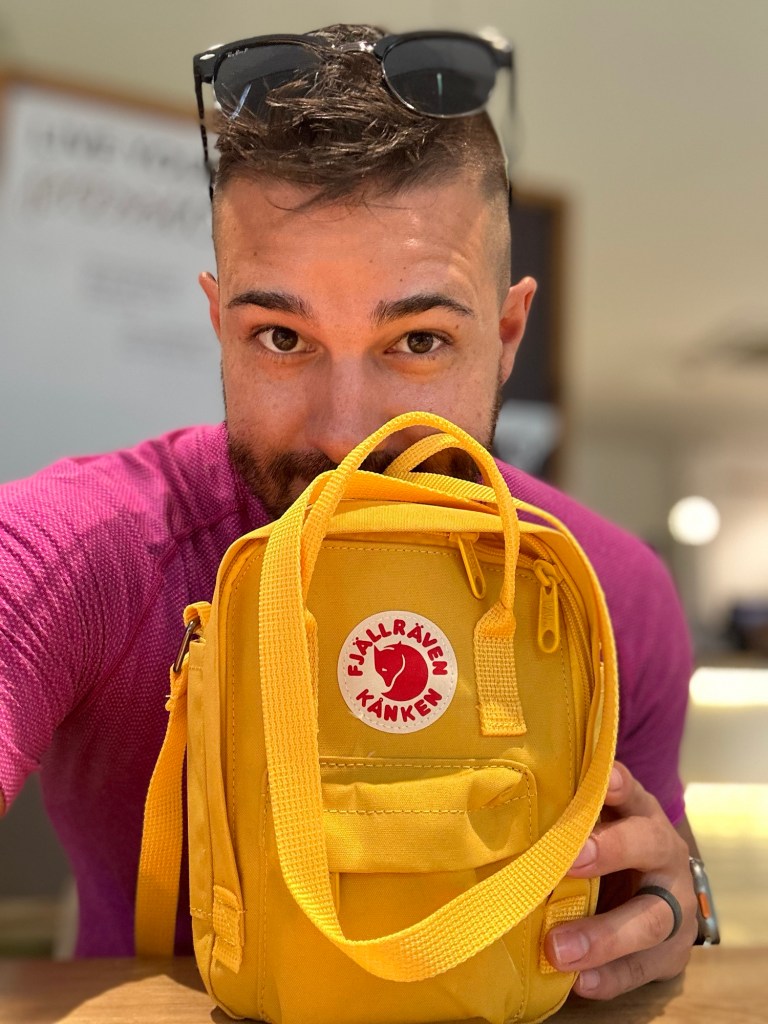
P.S. – Not only did I get my bag, but Jeff did too once we stopped in Huế and found a shop with similar offerings. Now he has one in burnt orange to match my yellow. Although they say “Fjallraven Kanken,” we suspect they’re just really good fakes since we paid $7 each versus $70-90 back home, ha!
Much love – Andrew



 Jeff + Andrew Travel the World
Leave a reply to AChang Cancel reply