This post is brought to you by the wonders of Zofran and Imodium. As Jeff mentioned in his last post about Vietnam, leaving Ho Chi Minh City was touch-and-go for me due to a bout of food poisoning. Thankfully, the symptoms subsided around 4 am, allowing me to board our long bus journey to Cambodia, with our first stop in Phnom Penh, the capital city, (pronounced Pa’Nom Pen).
**A heads-up: This post contains heavy and graphic content. While Jeff might have created a separate password-protected page, I don’t have the patience for that, so this is your warning. It’s crucial to understand this history to grasp Cambodia’s present.**
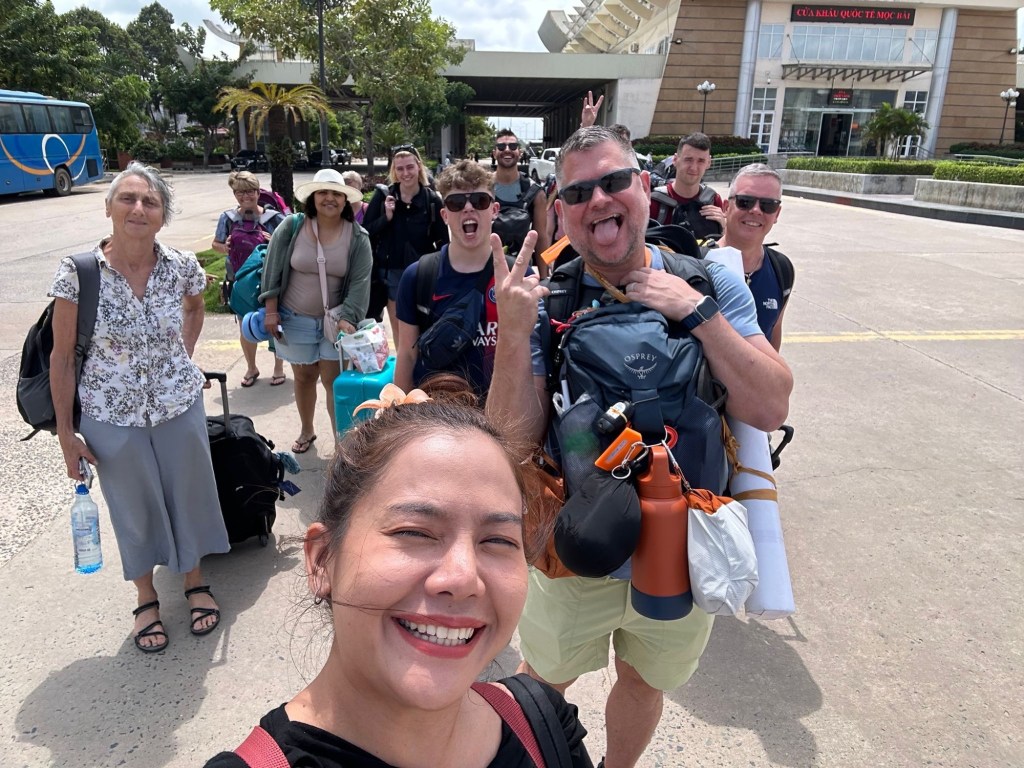
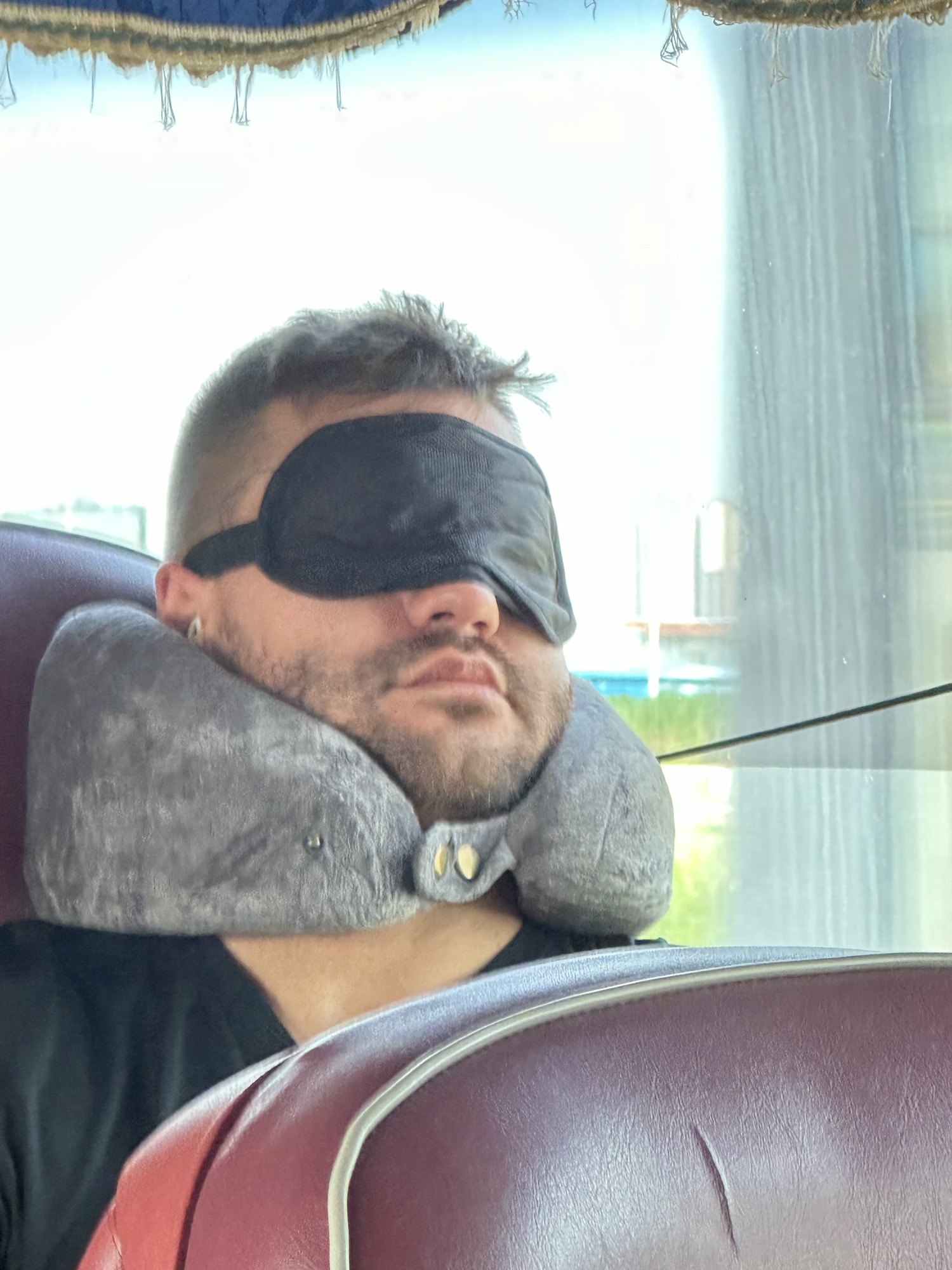
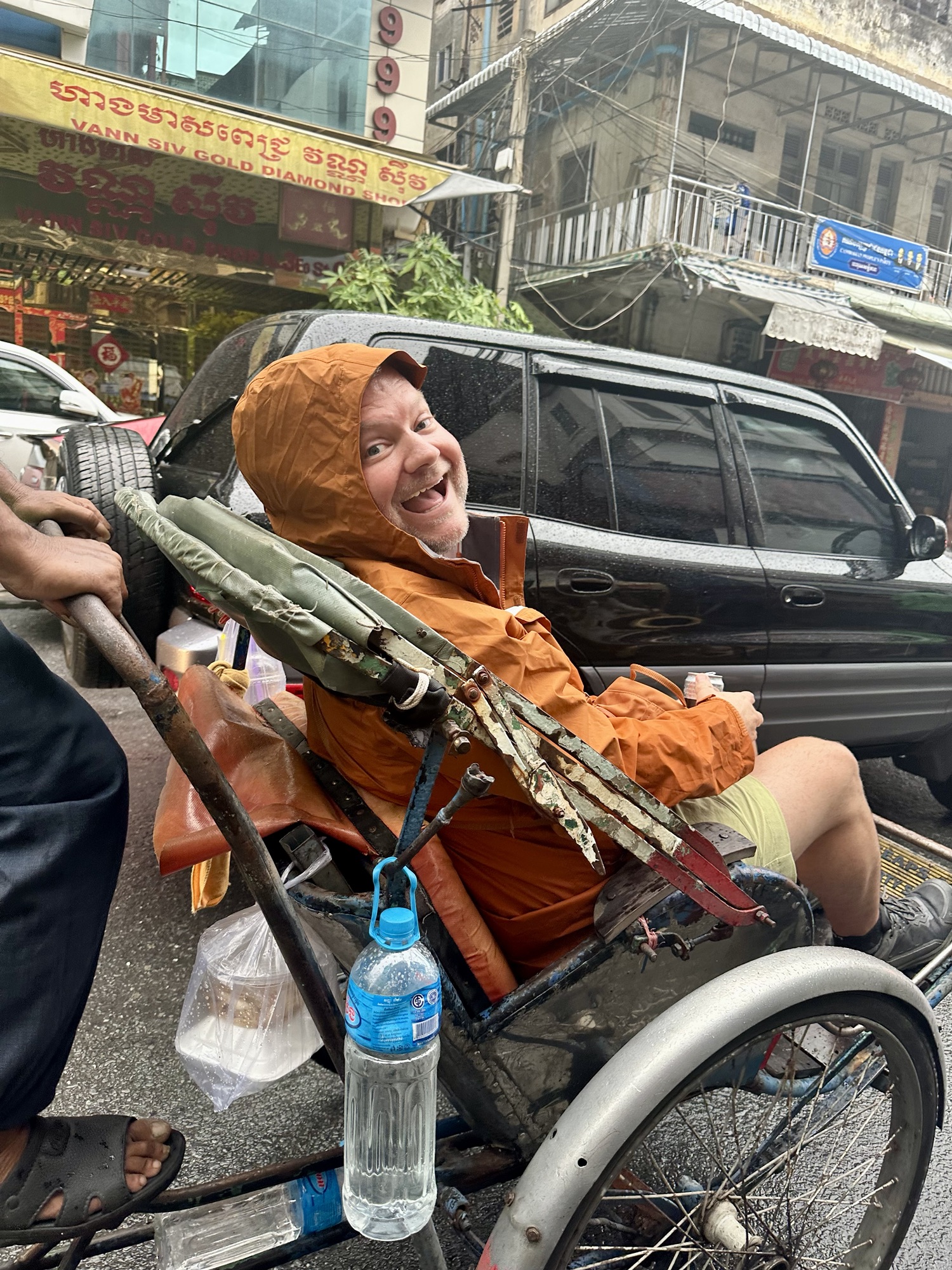
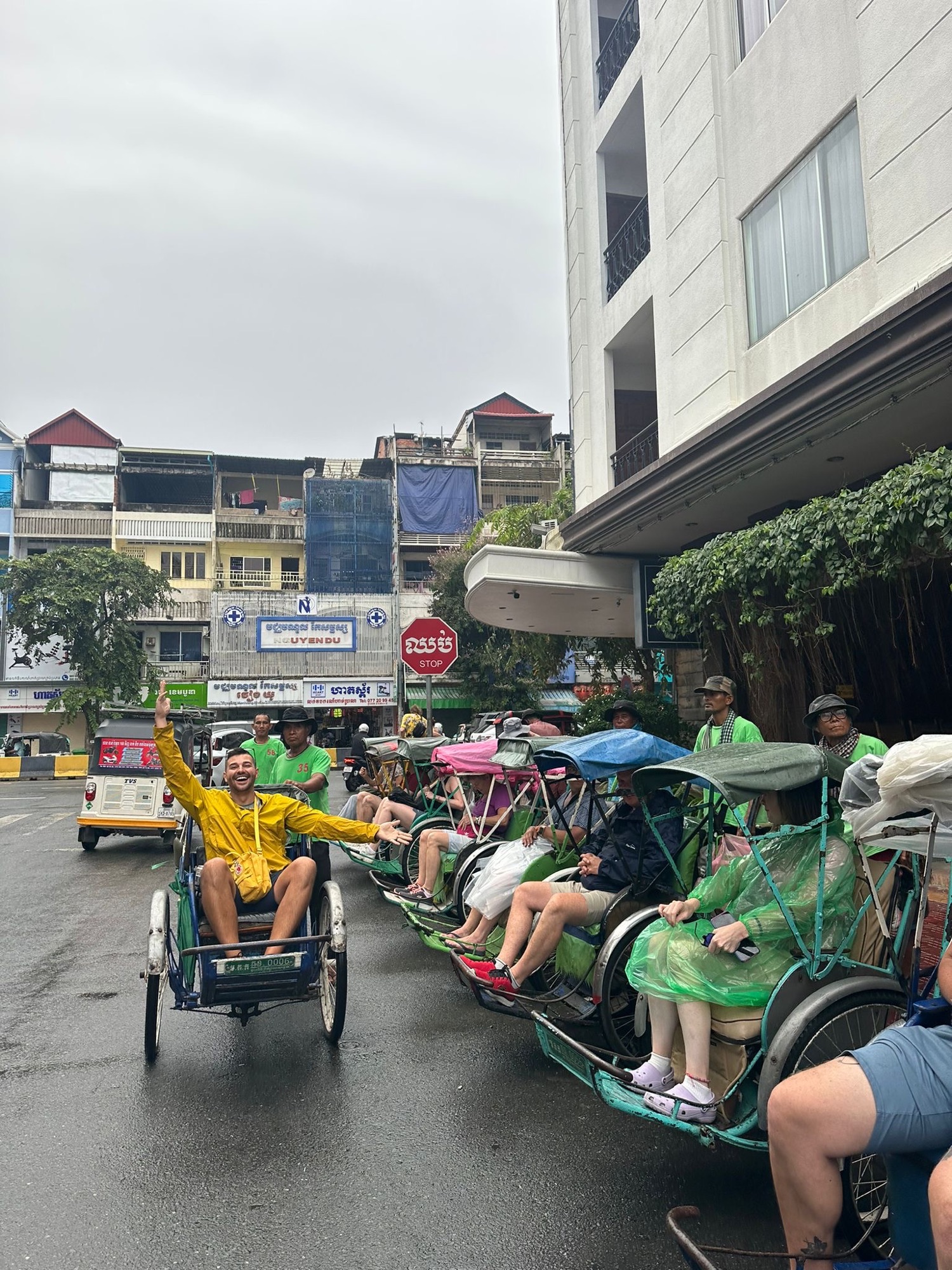
The bus journey was long, with multiple stops, totaling over 6 hours. At the Vietnam-Cambodia border, we had to carry all our belongings and walk about a third of a mile to cross. Interestingly, it’s advised to slip a couple of US dollars into your passport at the Cambodian border to smooth the immigration process (a nod to the prevalent corruption). With greased palms, our entry was swift, and we continued our journey to Phnom Penh. Arriving late in the afternoon, our itinerary included a cyclo tour to cover the city’s highlights, so we could explore on our own the next day. For those unfamiliar with cyclos, imagine the back of a bicycle with a seated rider attached to a front-facing cart for the passenger. They were everywhere in Hoi An, and I was thrilled to finally try one here. Despite a slight drizzle, the tour began, and we set off into the bustling city.


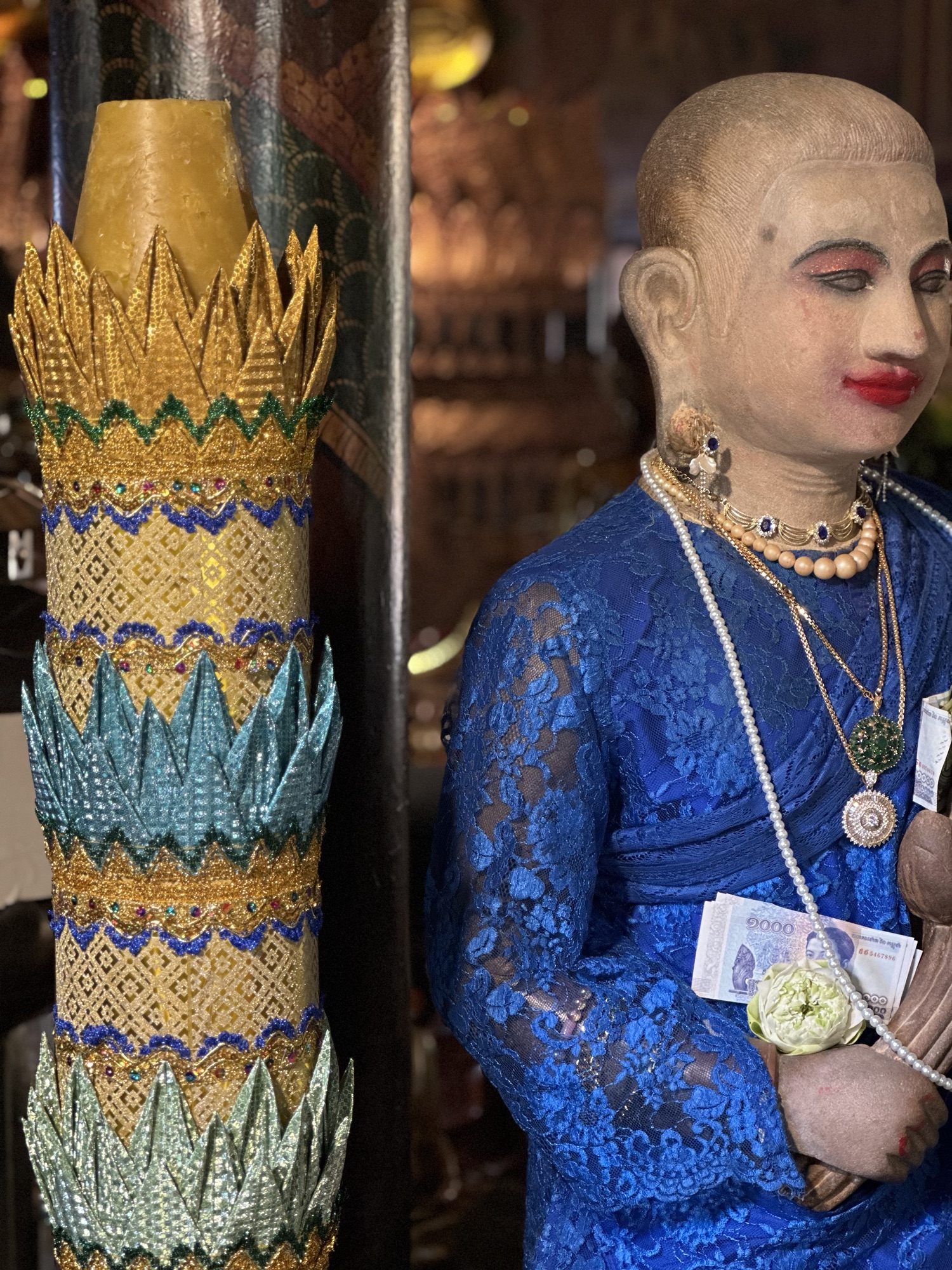
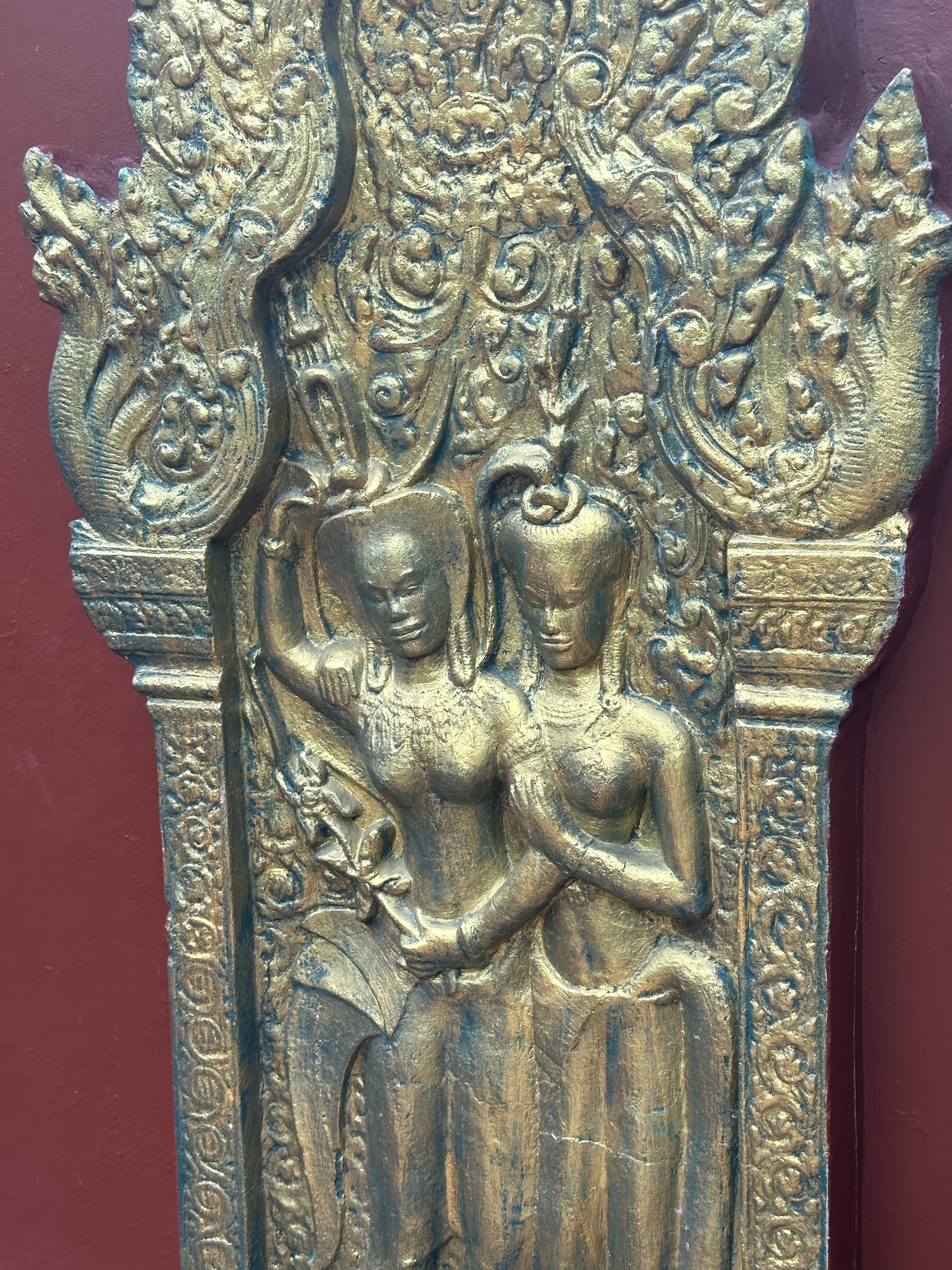
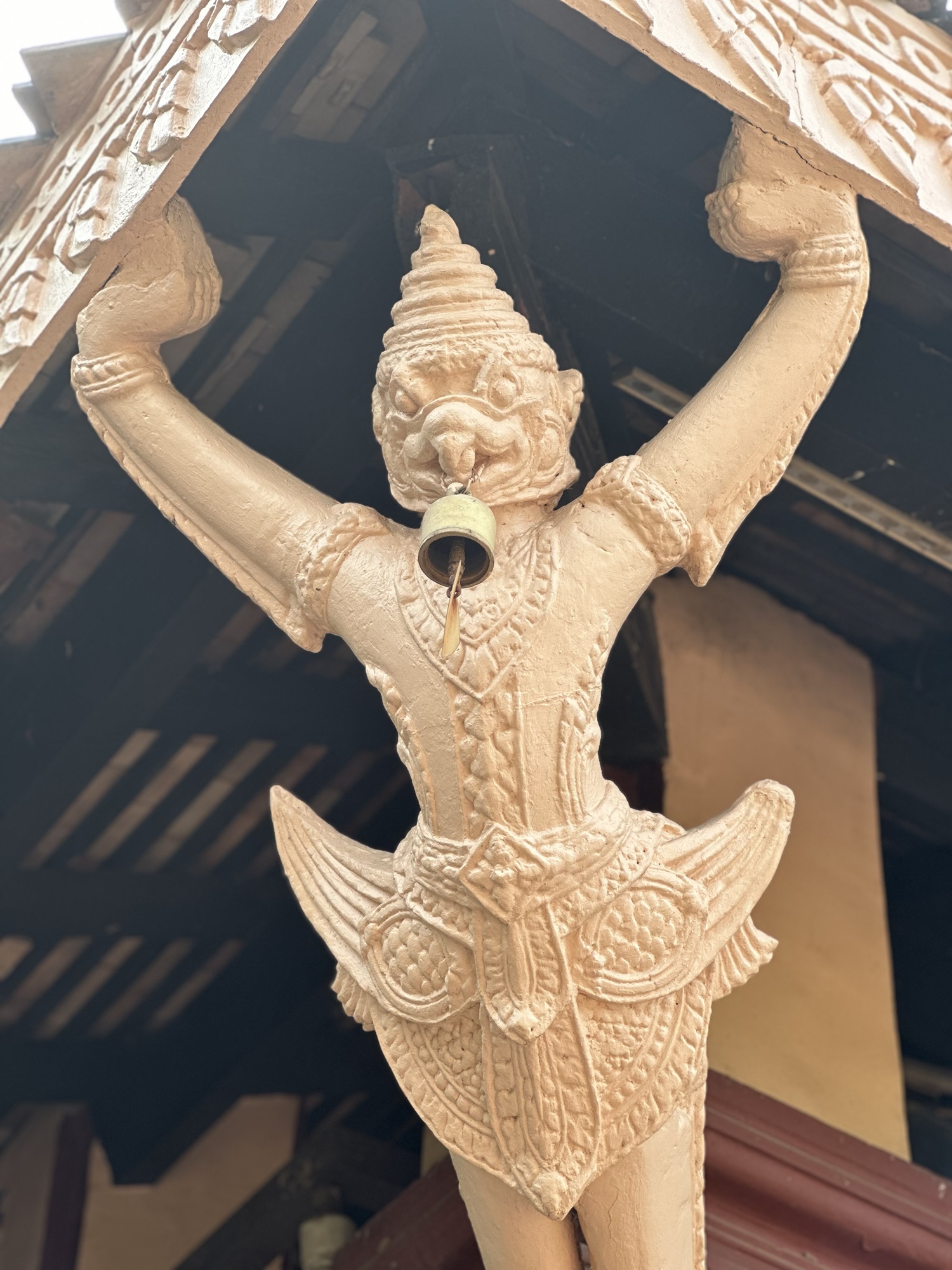
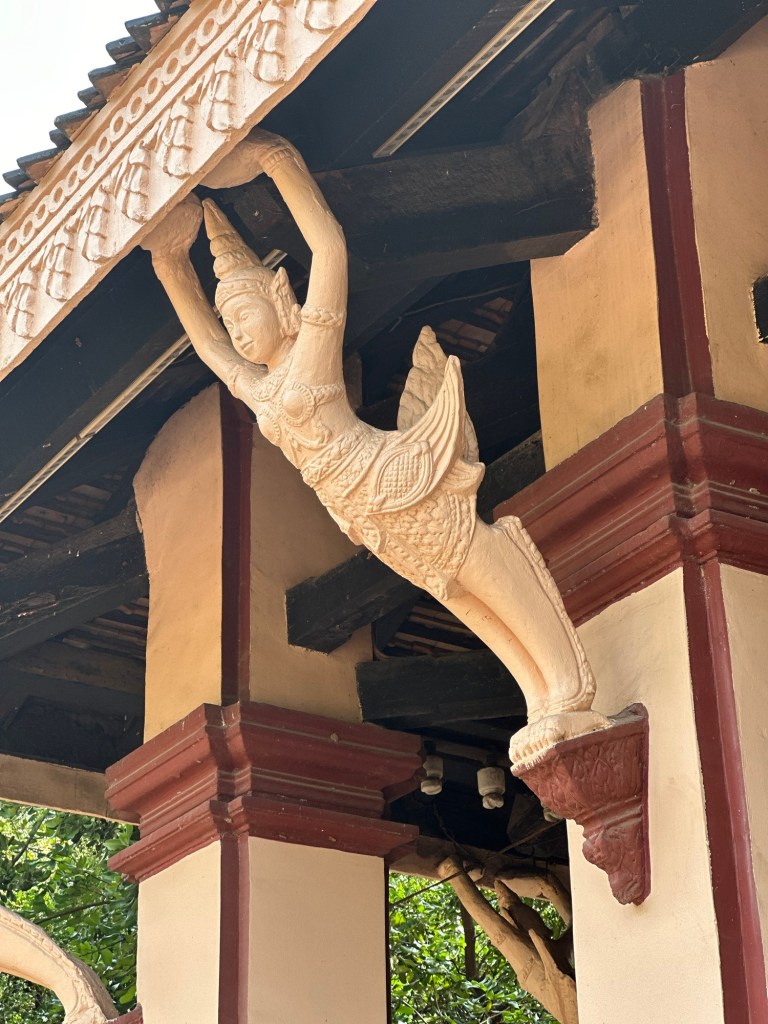
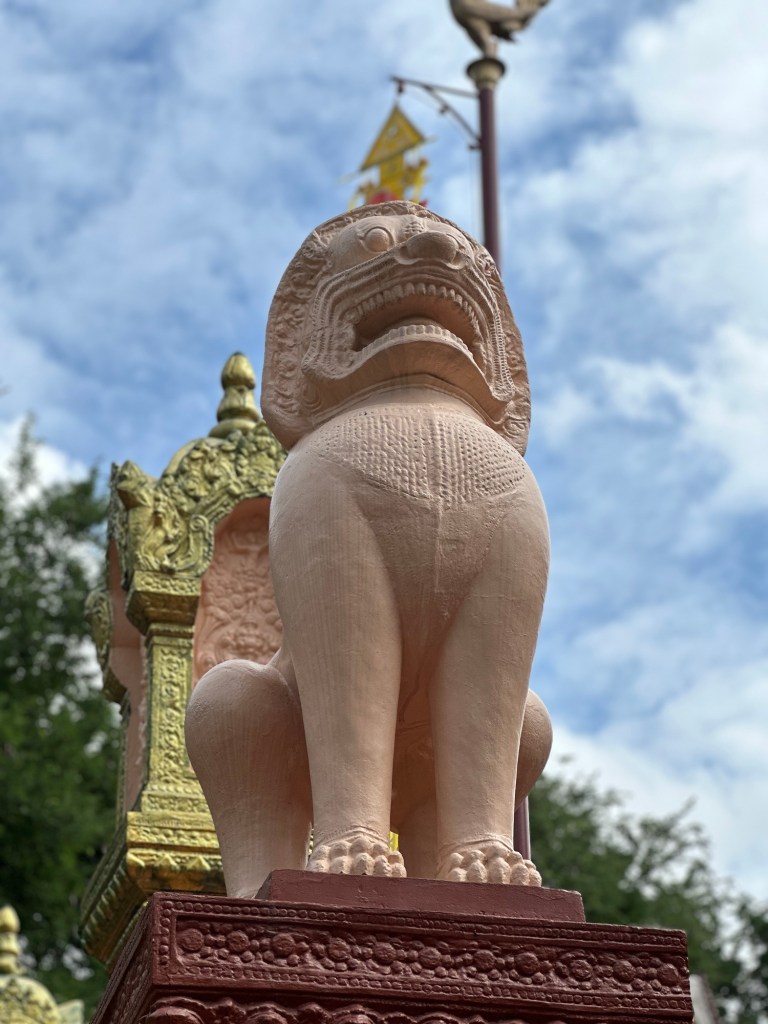
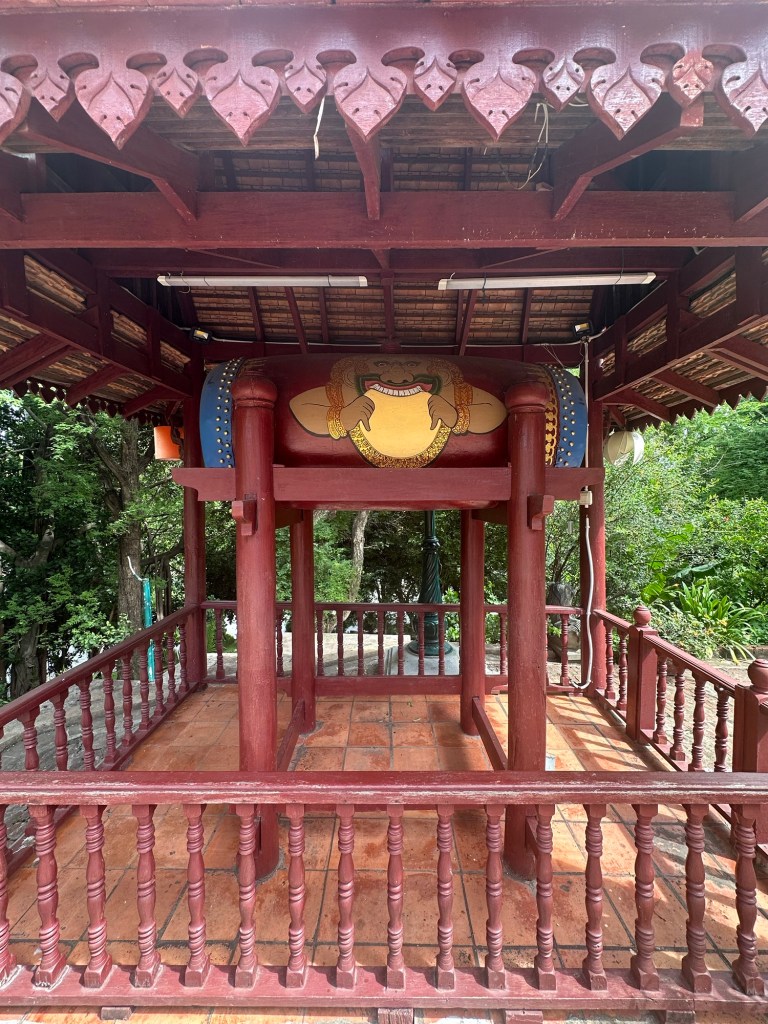
Navigating through the chaotic traffic of motorbikes and cars, our first stop was Wat Phnom. Our local guide explained that this temple, perched on a 90-foot ‘hill’, is the main place of worship for city residents due to its central location. He described the historical carvings flanking the steps—lions and naga (mythical serpent-beings). This temple offered a panoramic view of Phnom Penh, which we revisited the next day with Joanne and Daniel. Cambodian temples have their own unique ornamentation and imagery, my favorite being the corner roofing supports shaped like a bird/human biting bells.

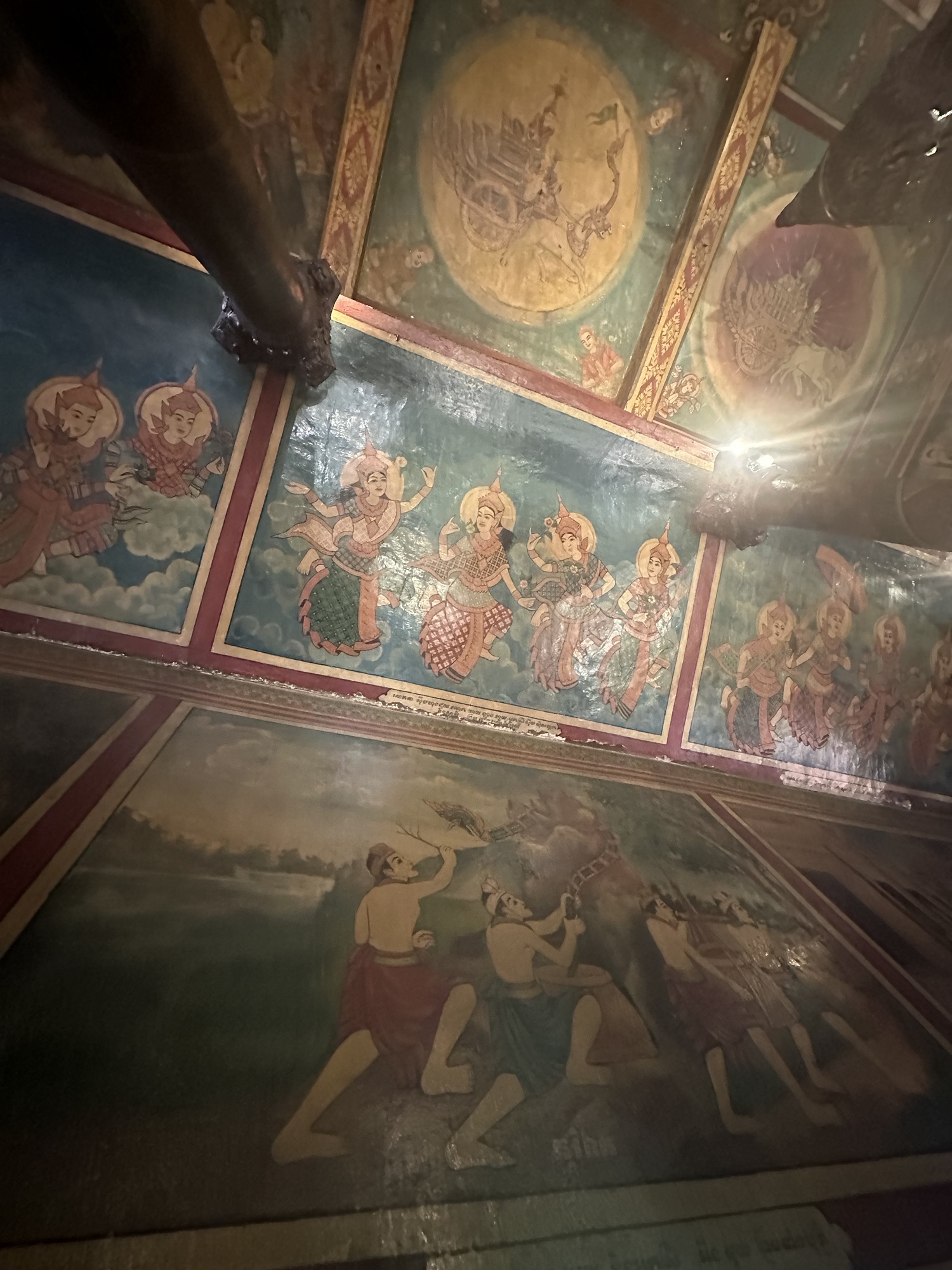
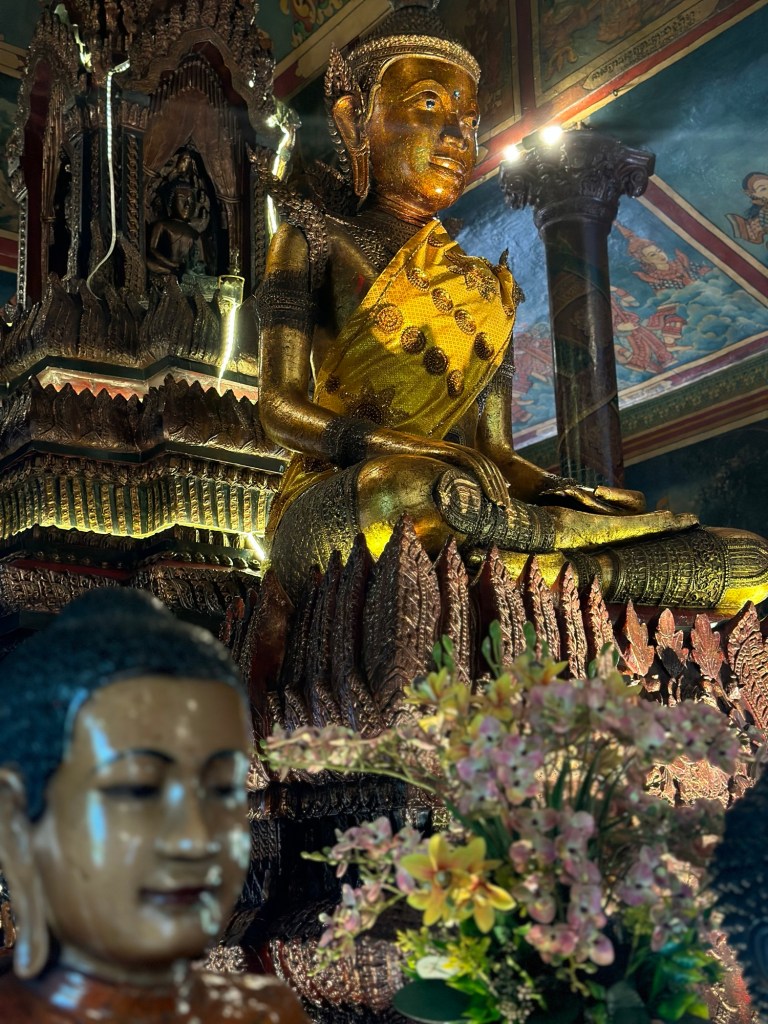
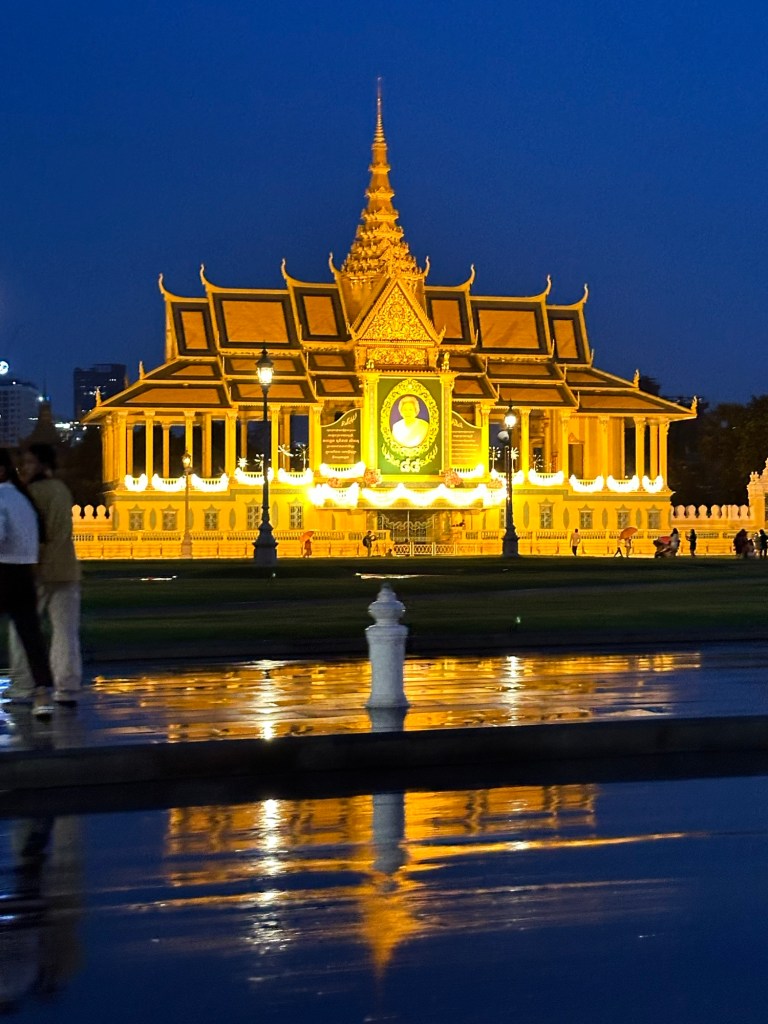
Our next stop was the Royal Palace, partially under restoration. As night fell, the palace dazzled with numerous lights, making the ‘gold’ portions sparkle. We decided to skip visiting it the next day, unlike Gavin and Louise, who later expressed their disappointment over dinner due to the extensive scaffolding erected for renovations during slow season.
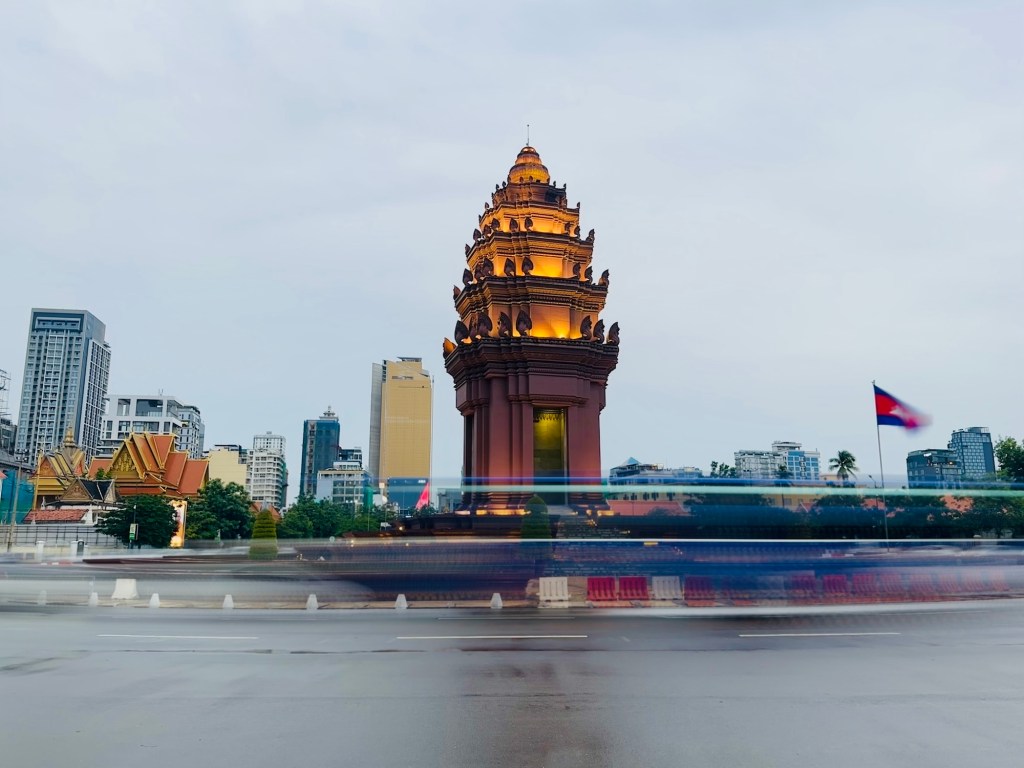
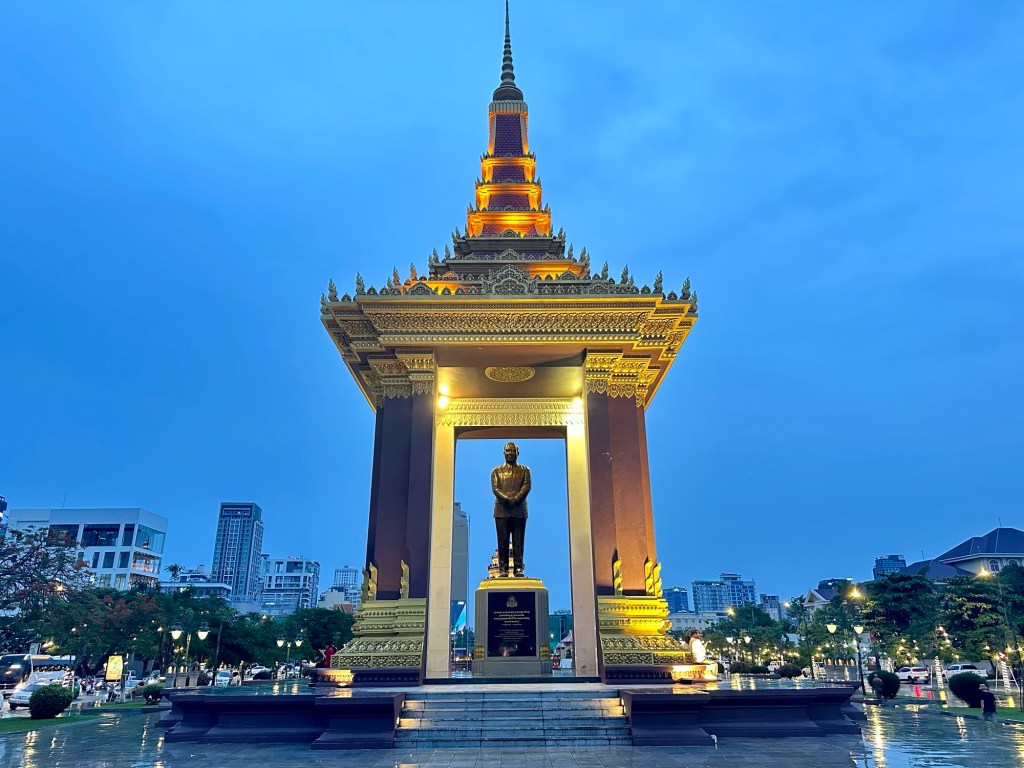
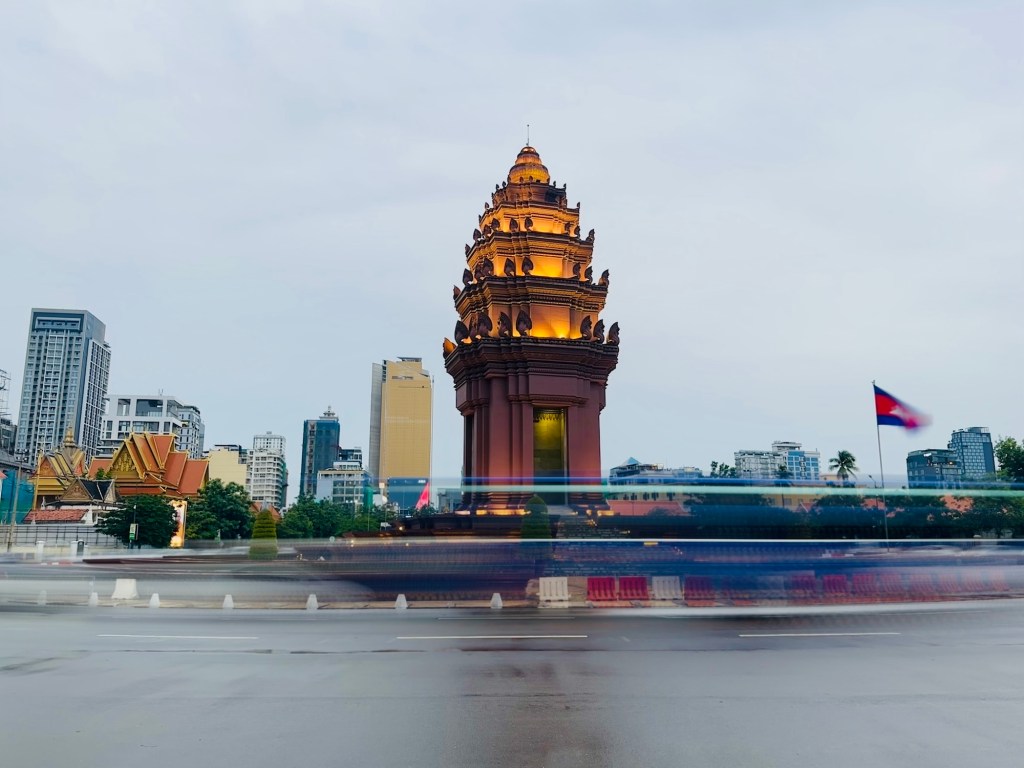
The final stop of the cyclo tour was Independent Square, a grand promenade in the city center. Here, a large stupa housing a statue dominated the skyline. Before reaching the statue, we circled the Independence Monument, symbolizing Cambodia’s independence from France in 1953, mimicking Angkor Wat’s central tower. We then learned about the Statue of King Father Norodom Sihanouk, housed in a 27-meter-high stupa. He liberated Cambodia from French rule on November 9, 1953. Ending the cyclo tour, Puna took us to a local restaurant to try traditional dishes—Beef Lok Lak and Amok—before heading back to the hotel for a heavy day ahead.
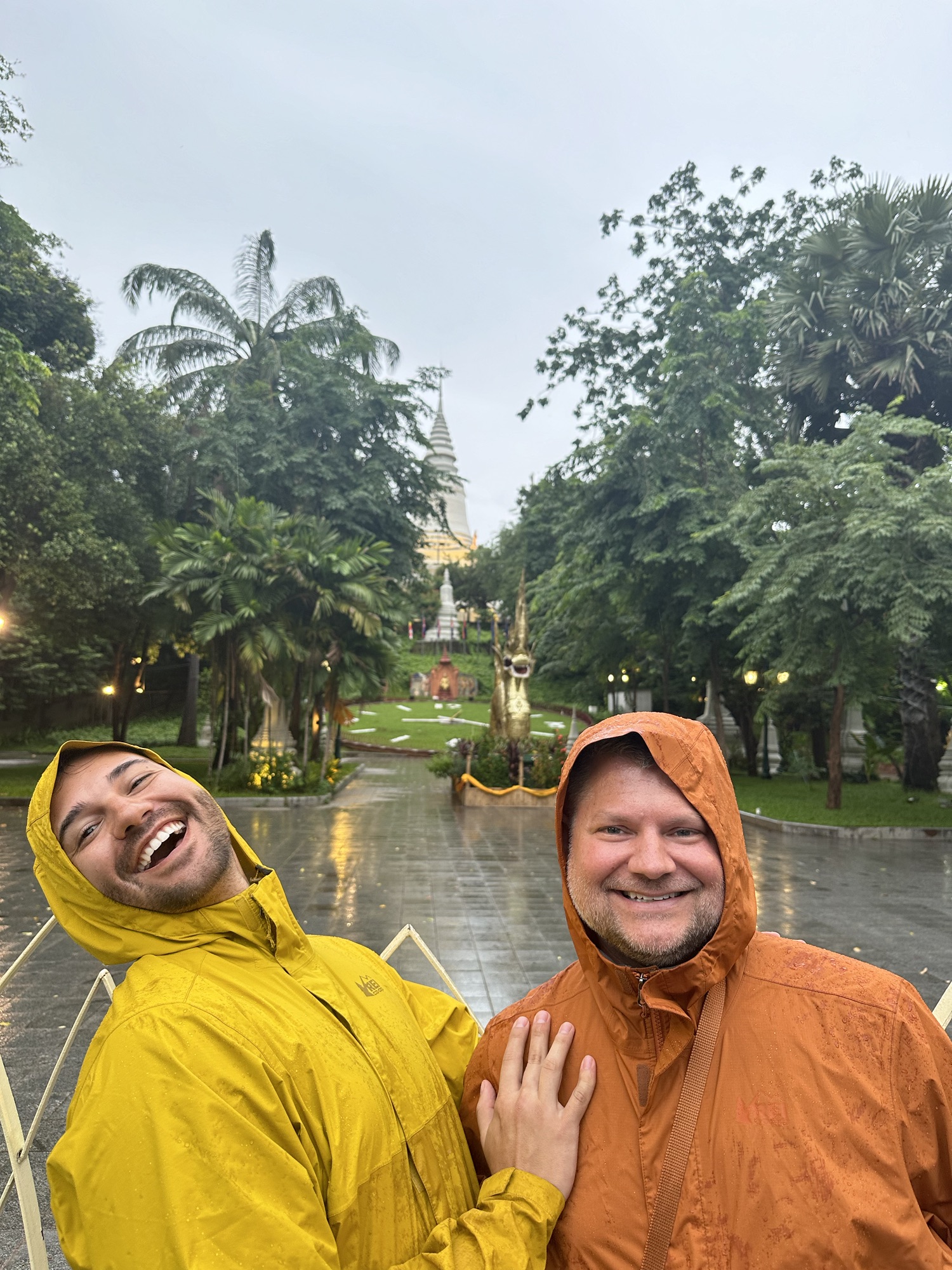
The bright side to the rain is that we finally got to use our rain jackets we bought specifically for this trip and have lugged across four countries. Behind us you’ll see the Wat Phnom
**Another warning: This next section covers Cambodia’s genocide and may contain graphic details.**
American history lessons taught me about Pol Pot and the Khmer Rouge, the communist party responsible for horrific violence in Cambodia. However, those history lessons didn’t convey the full extent of this violence and its impact on Cambodia. To understand this, we visited The Killing Field outside Phnom Penh.

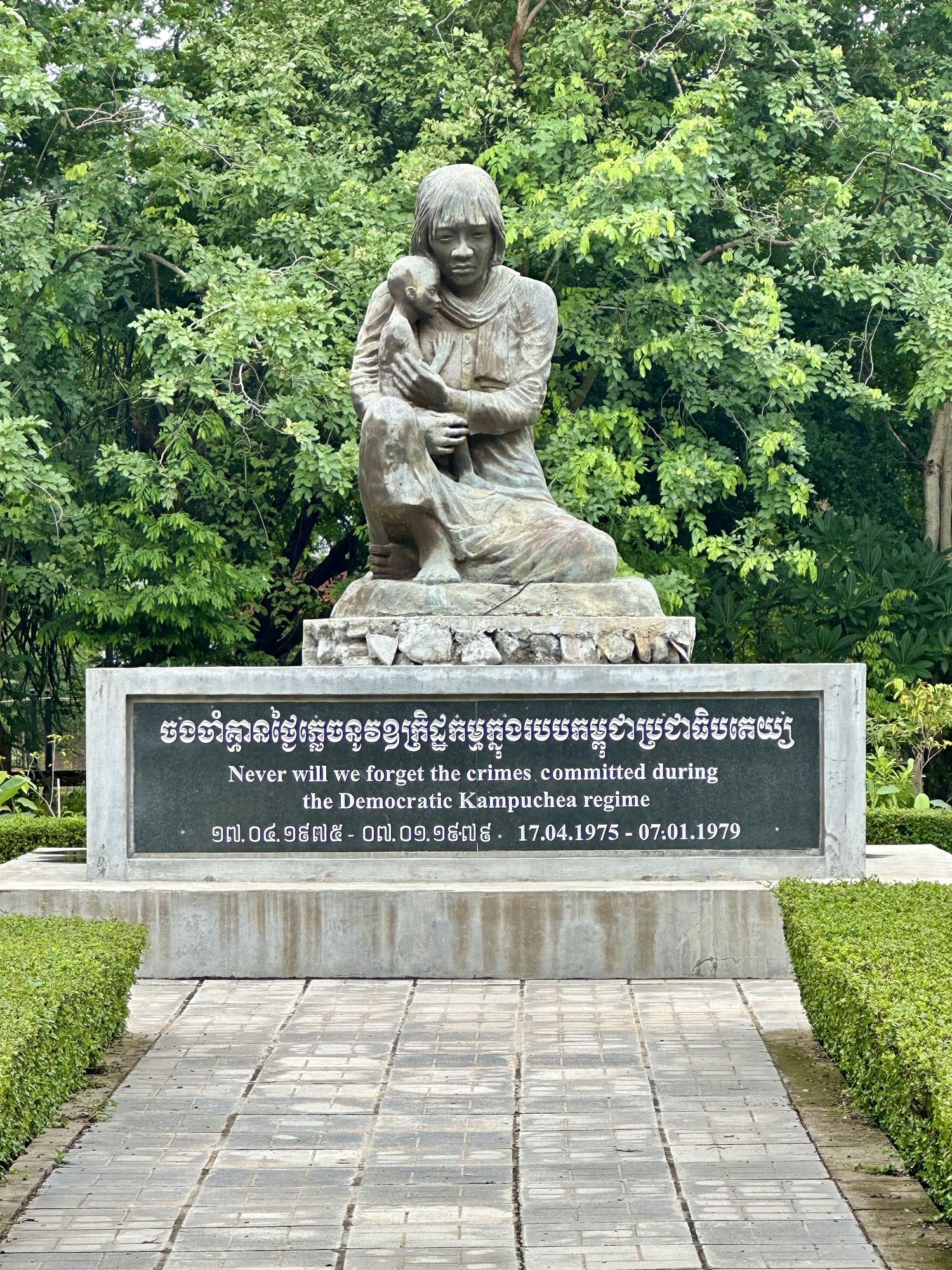
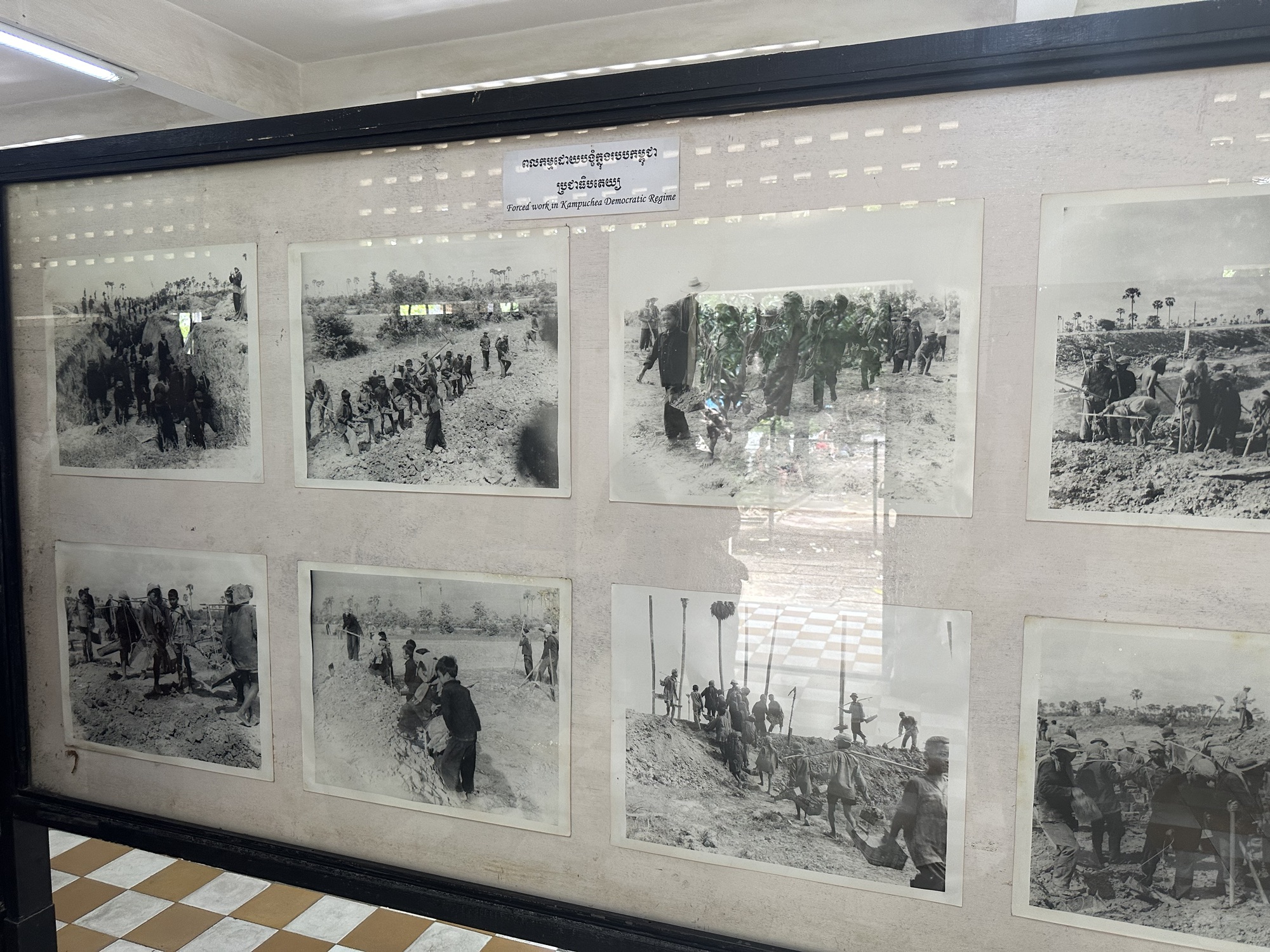
Our guide Ran, who lost five brothers to the genocide, shared the tragic history. Nearly 25% of Cambodia’s population (~2 million people) were killed. I won’t delve into the rise of the Khmer Rouge under Pol Pot, but in 1975, they overthrew the US-backed Khmer Republic, marking the end of the Cambodian Civil War. Initially celebrated with ending war for the Cambodian people, the Khmer Rouge soon began exiling city dwellers under the pretext of rooting out enemies, starting a campaign of mass genocide, corruption, and violence. They aimed to create a utopian society of equals, erasing anyone who didn’t fit their vision. I highly suggest this read, Worms from Our Skins, which is written by a survivor named Teeda Butt Mam and gives context to firsthand how quickly Khmer Rouge turned Cambodia into despair.
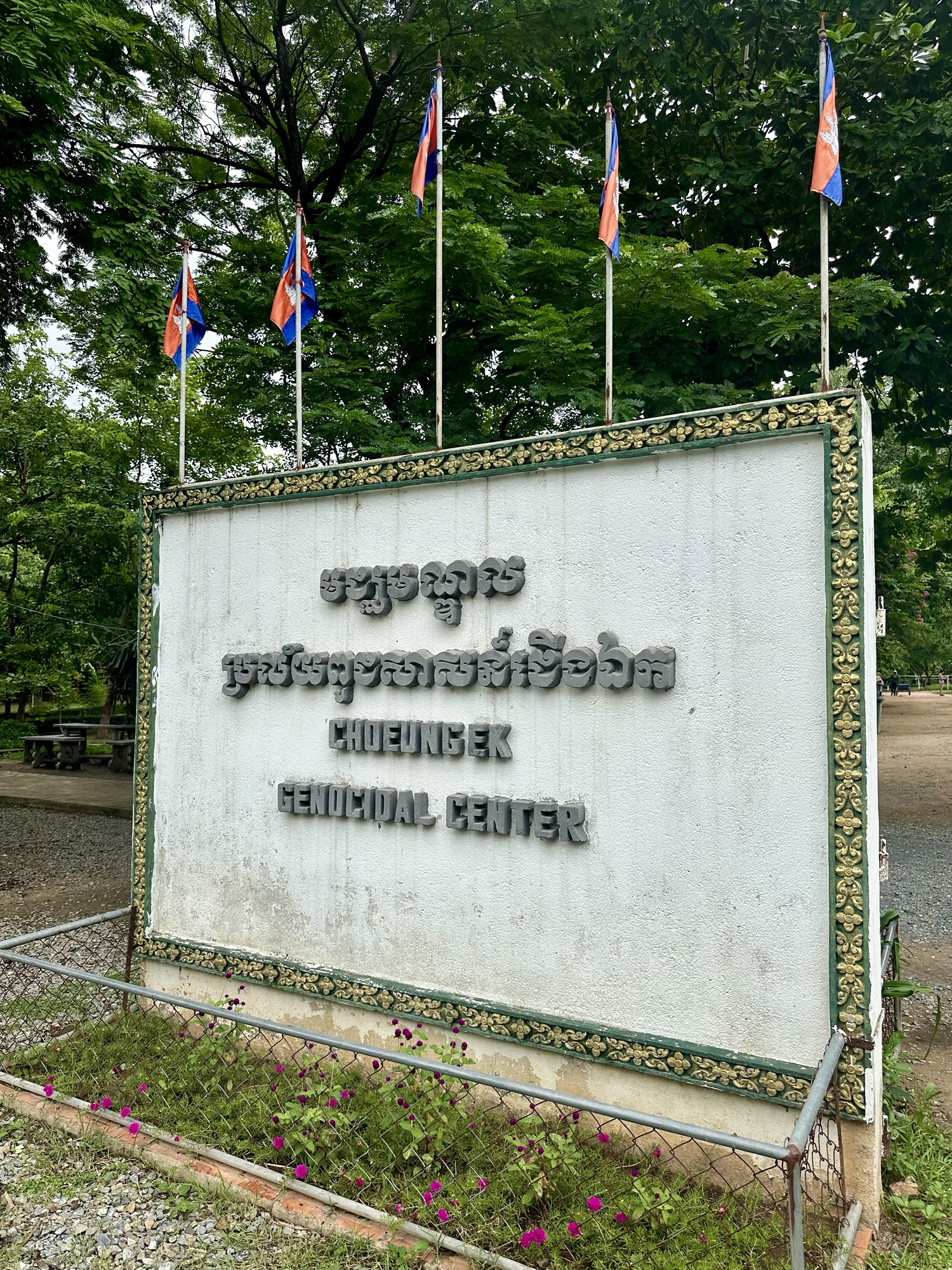
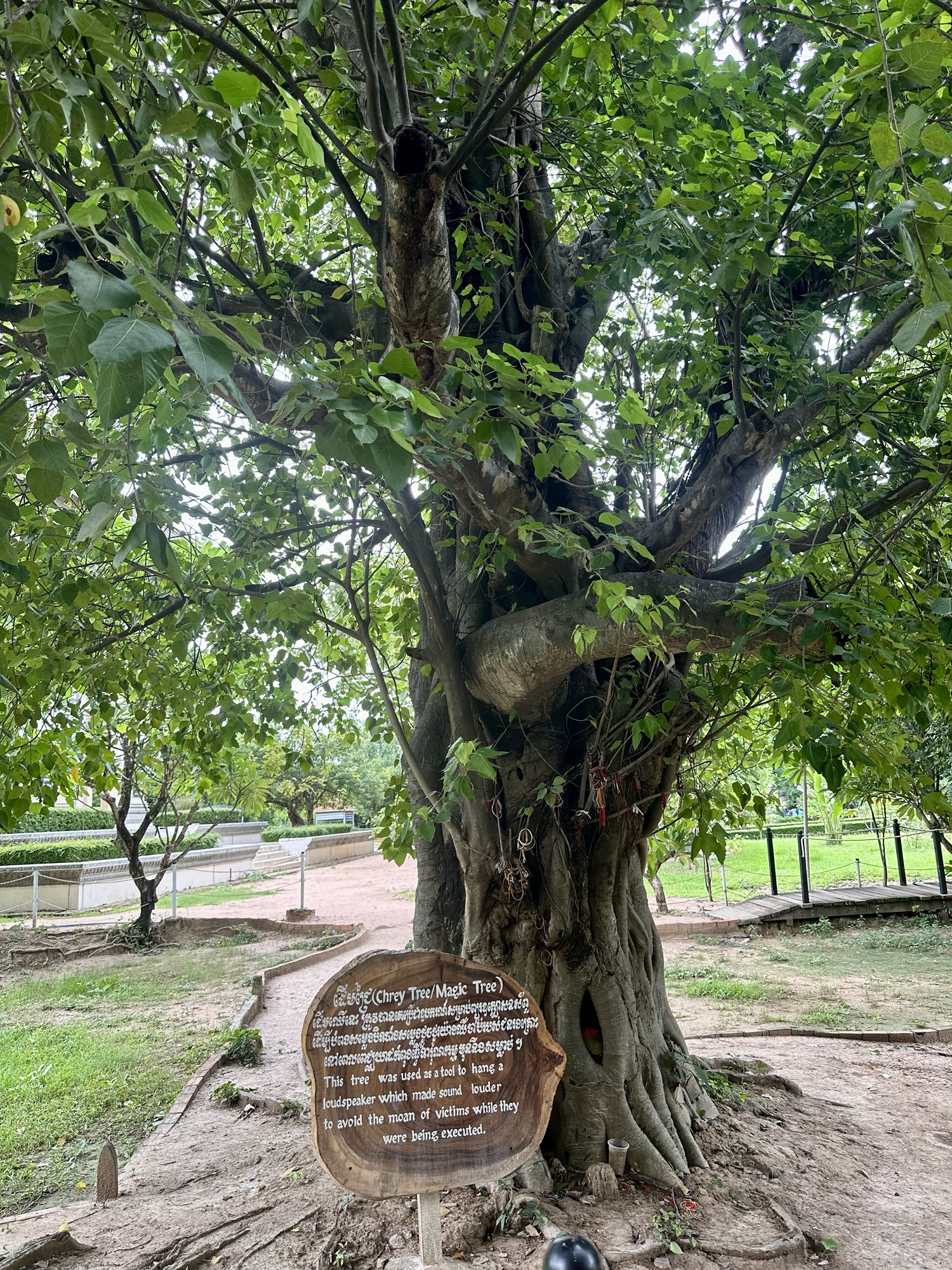
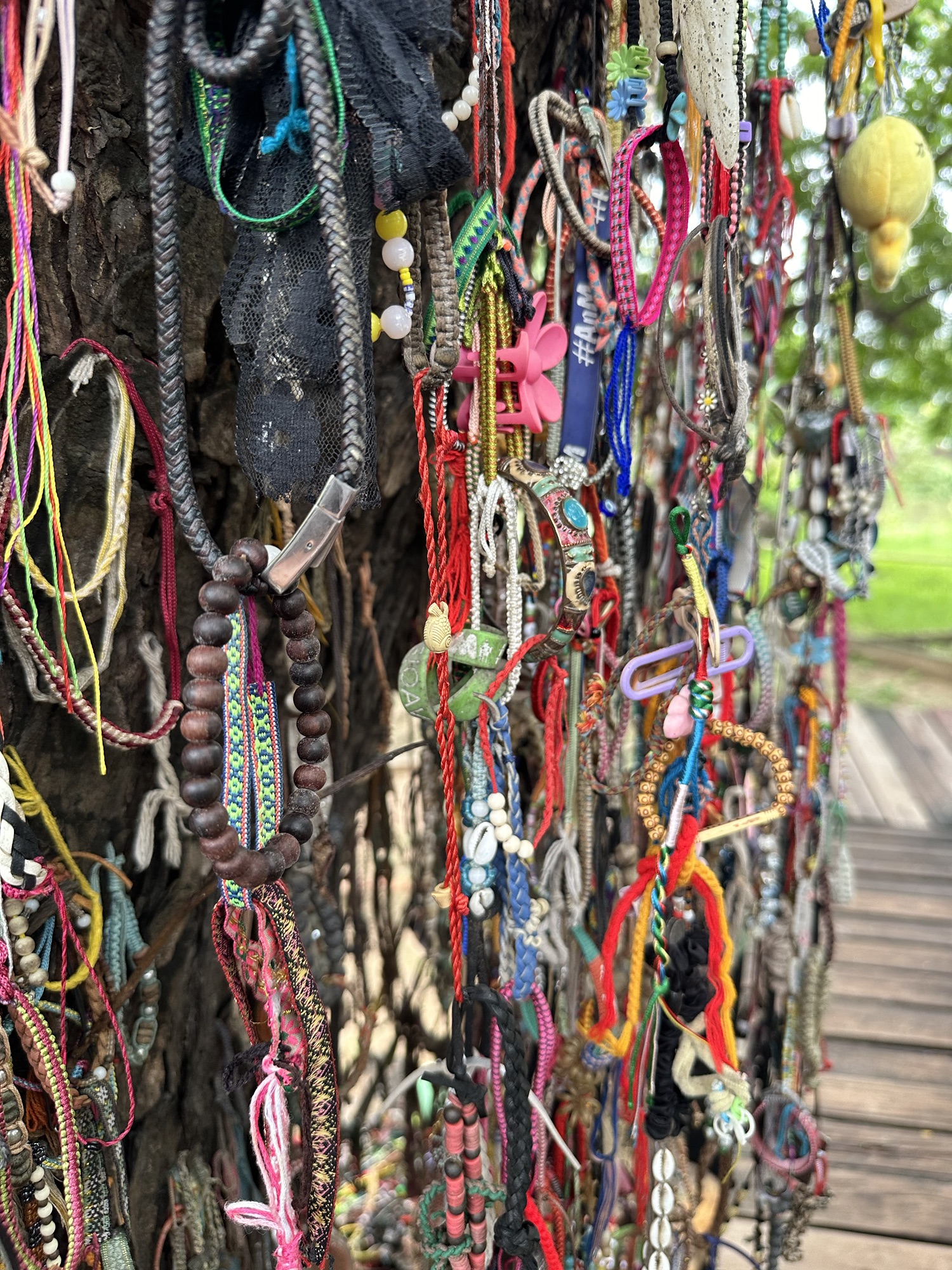
At Choeung Ek Genocidal Center (The Killing Field), Ran detailed the atrocities. Over 1.3 million people were brutally murdered here, and other fields across Cambodia. Prisoners from Tuol Sleng (S21) Prison and other prisons were brought to these fields for execution. The Khmer Rouge used loudspeakers hung from a Chrey tree (dubbed the Magic Tree) to mask the victims’ screams. Chemicals like lye were used on the bodies, dead or partially alive, to cover the stench from mass graves, hiding the crimes from nearby residents. The most harrowing sight was a tree used to kill infants by smashing them against it, with a nearby mass grave containing hundreds of thousands of bones. That tree now a place where tourists leave tokens of love and peace – it was covered in bracelets, fake flowers and more.
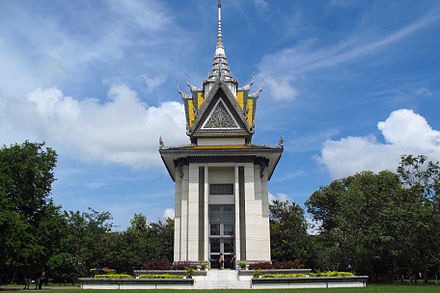
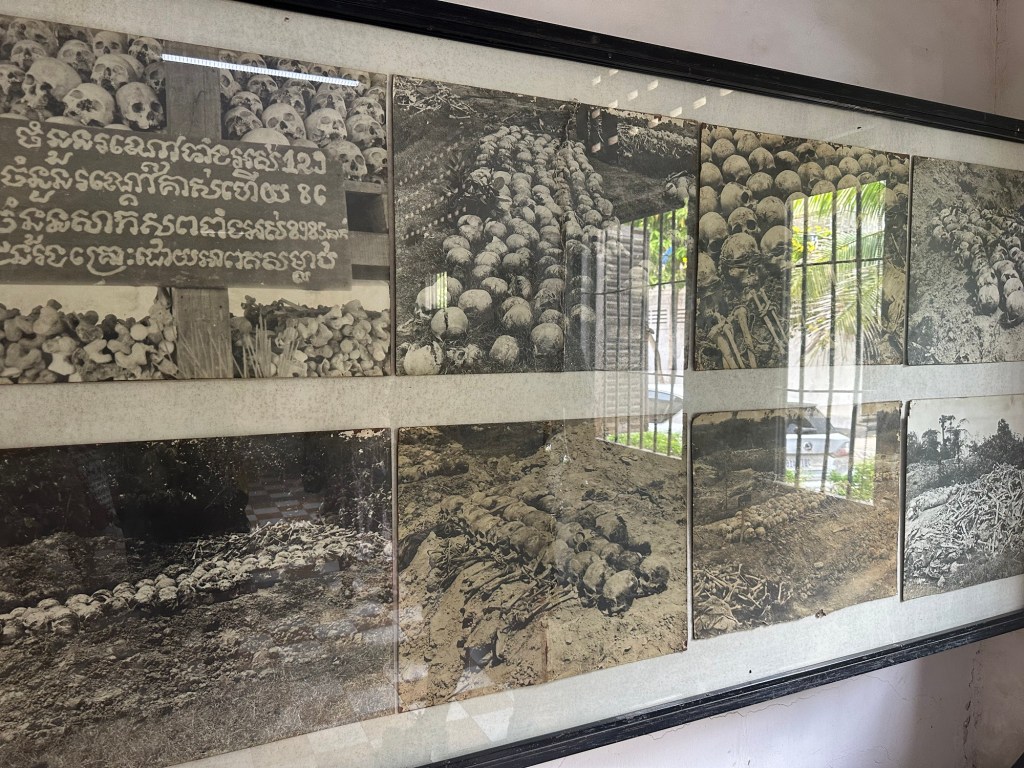
Walking through the fields, we saw fragments of clothes and skeletal remains surfacing due to heavy rains. This is a common sight during the rainy season and are later collected by the government for preservation. Although many graves were exhumed at the killing field, some remain undisturbed to preserve the victims’ peace. Around 9,000 remains are enshrined in a stupa, with 5,000 human skulls stacked inside, each layer representing different skeletal parts and tattered clothes. The tools of death varied from bamboo stakes to hatchets or axes and knives – no guns to keep the deaths silent and limit the impact on bullet resources. All of these weapons wielded by the young adult soldiers tasked with killing their fellow Cambodians; Ran detailed soldiers as young as 8 years old. And they stayed loyal to their task because if not, they would be beheaded and join a mass grave themselves. The killing fields were among hundreds throughout Cambodia, but Choeung Ek’s significance lies in its victim count, proximity to the capital, and its ties to S21 prison. The silence that fell upon us all in the group was apparent by Ran with a few of us getting emotional while making our way through. Our next stop was Tuol Sleng Genocide Museum (S21 Prison) to understand what happened to these victims prior to their unjustly death.

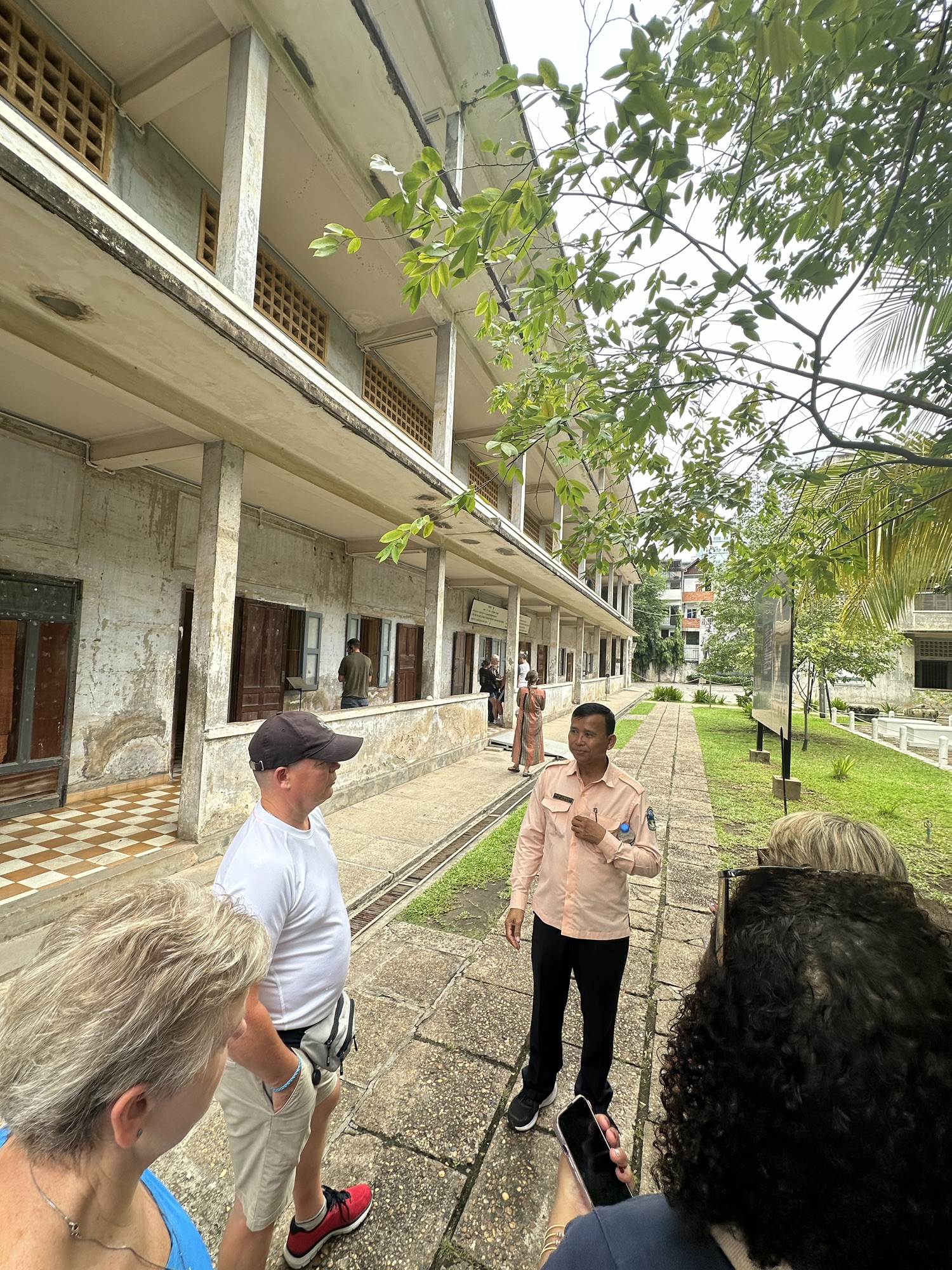
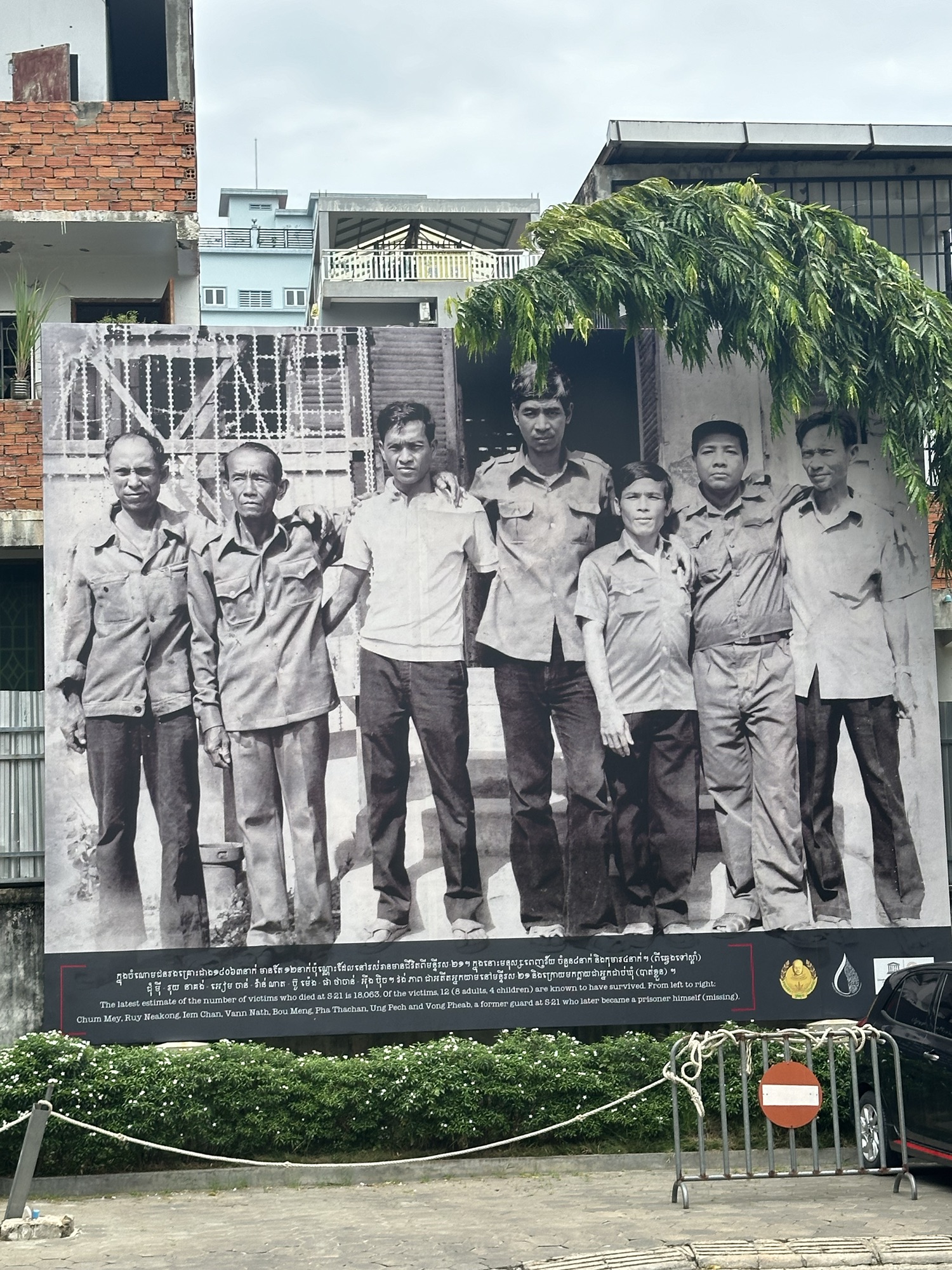
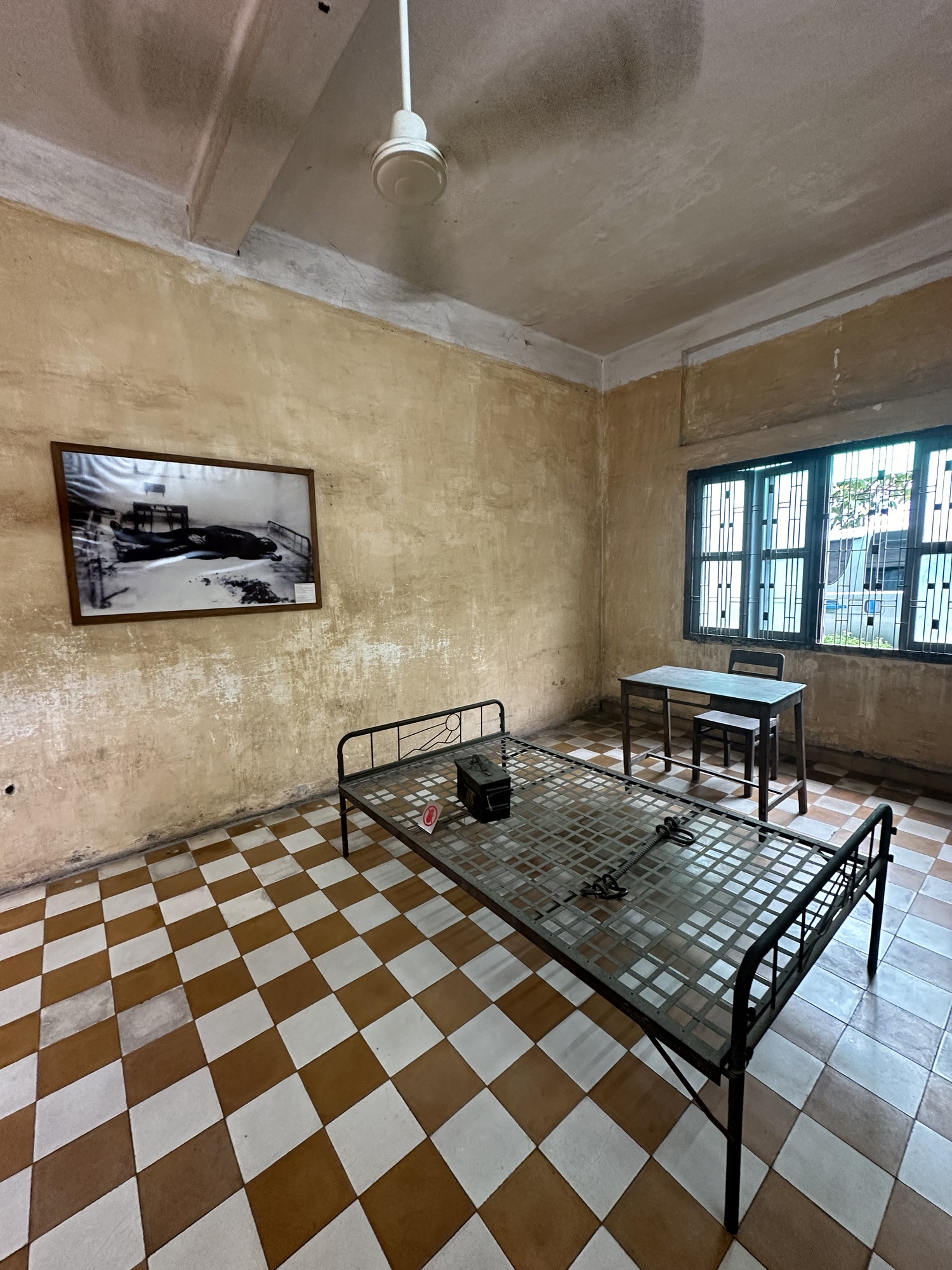
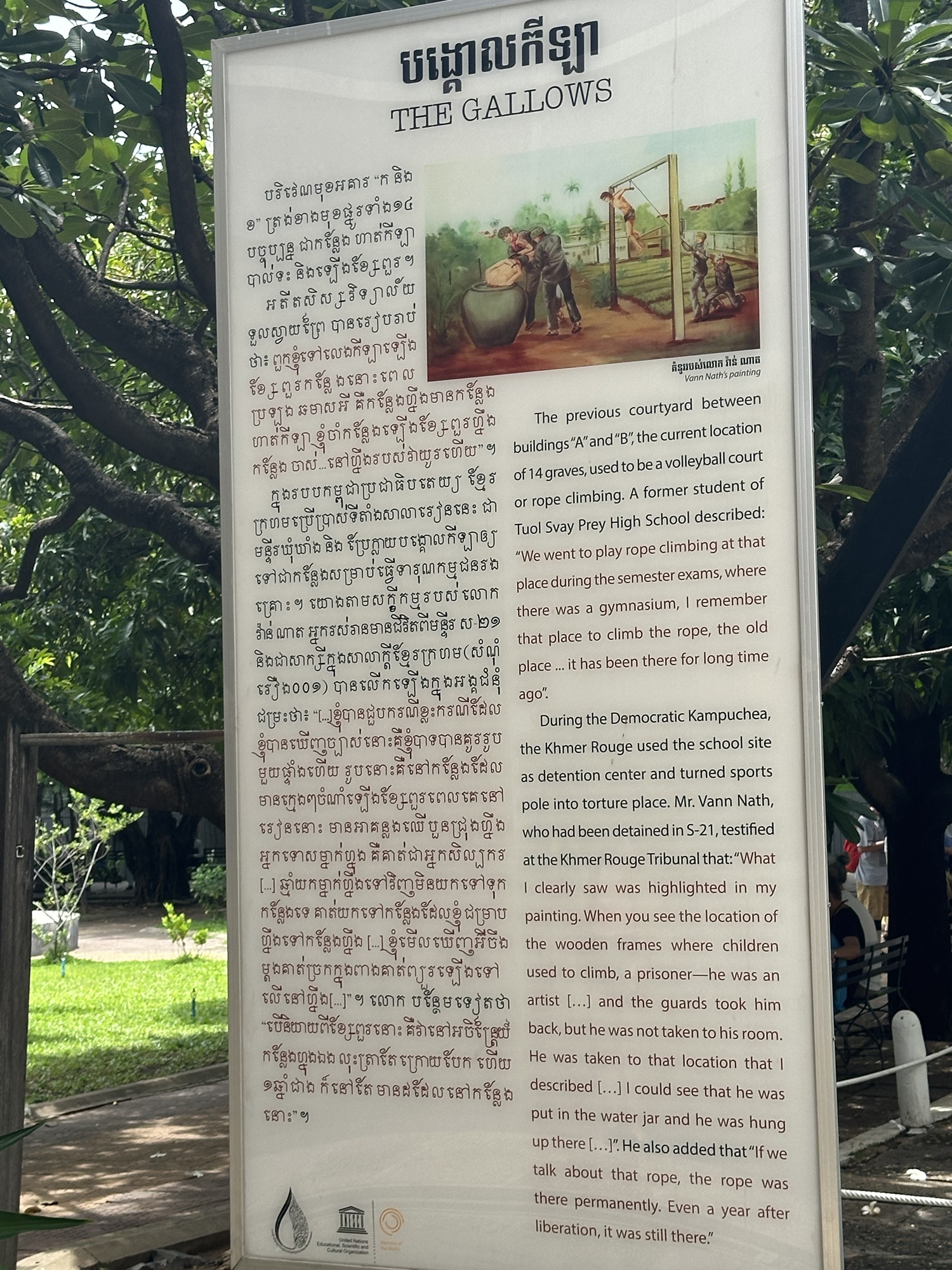
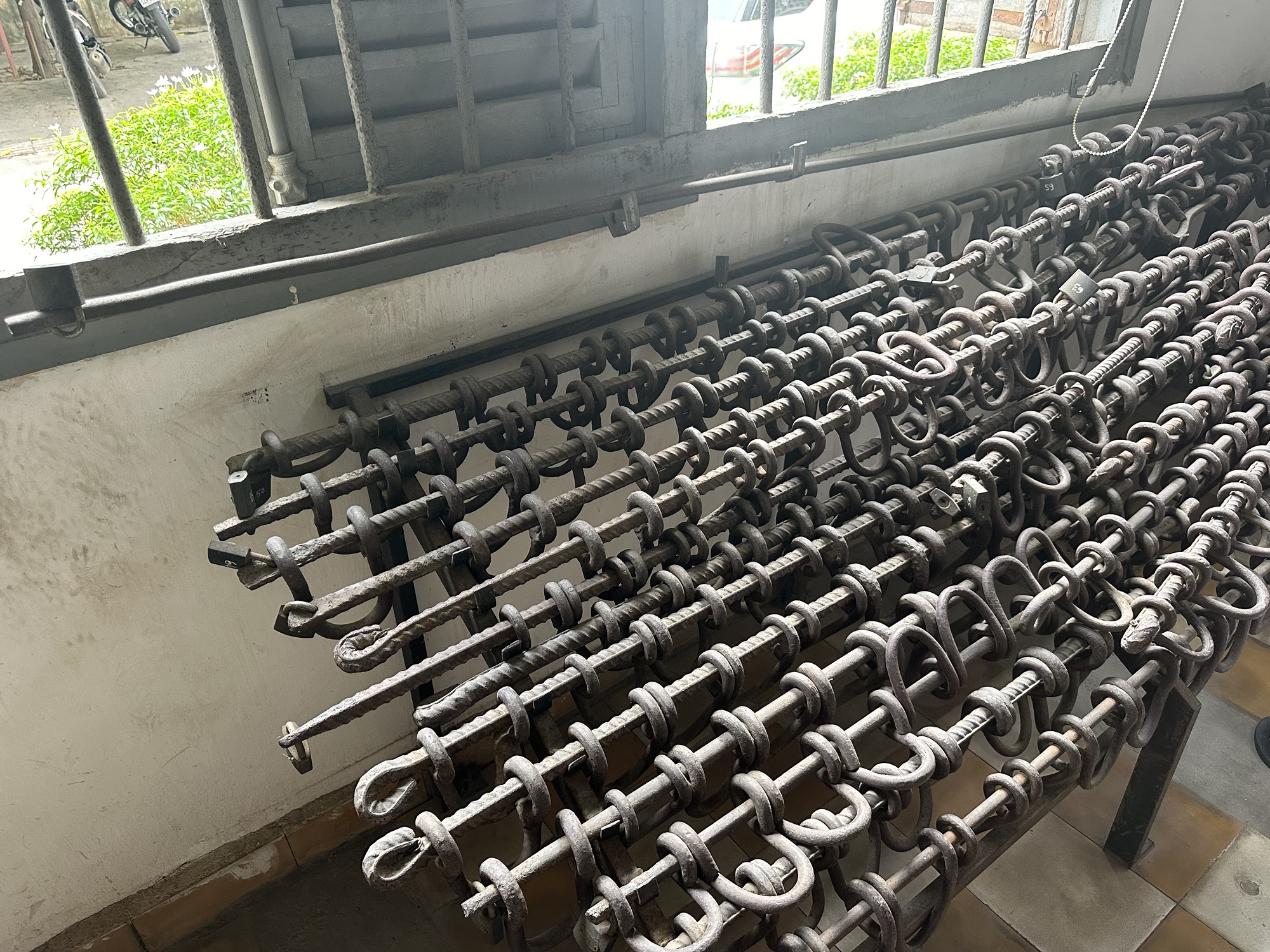
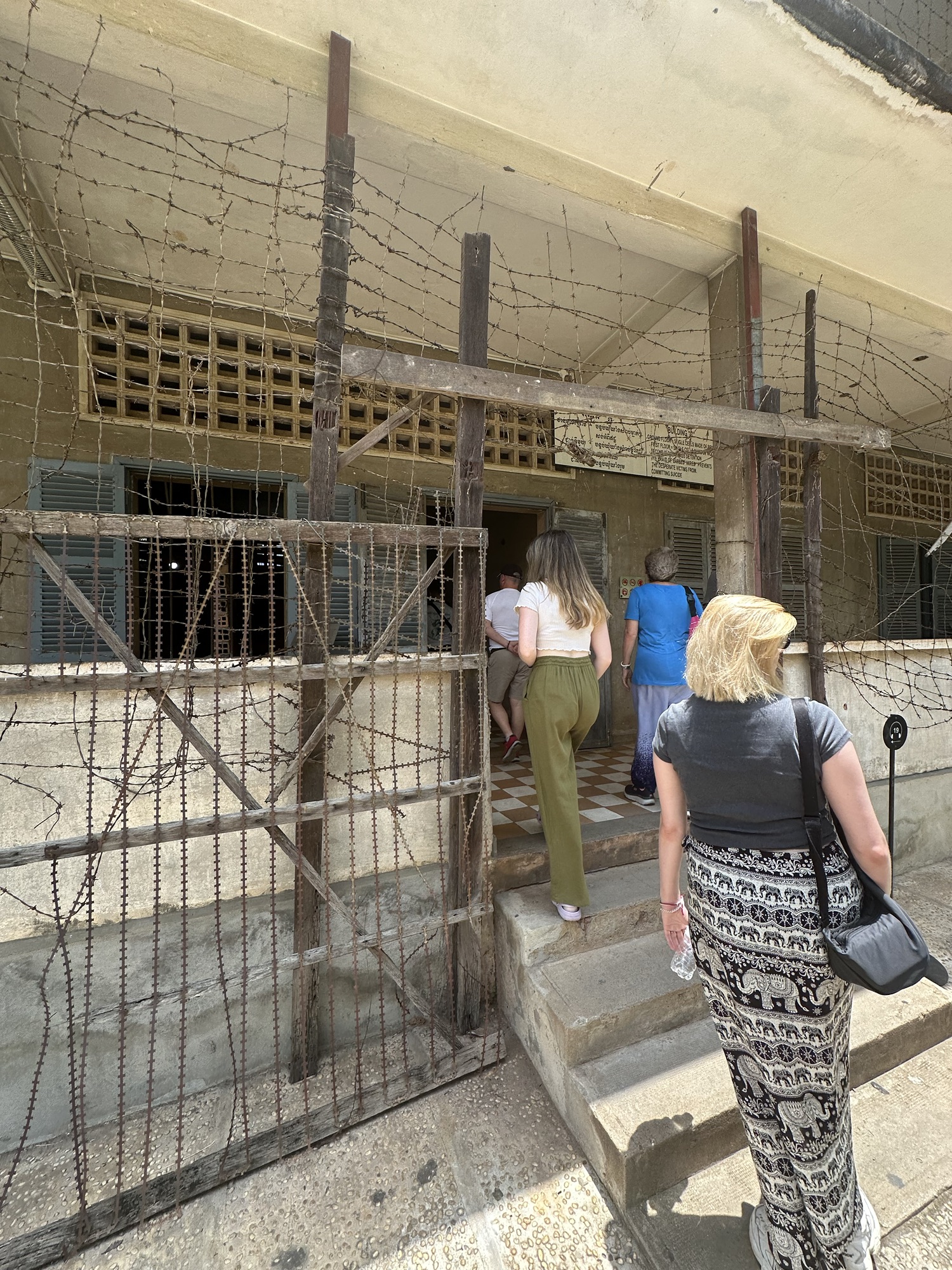
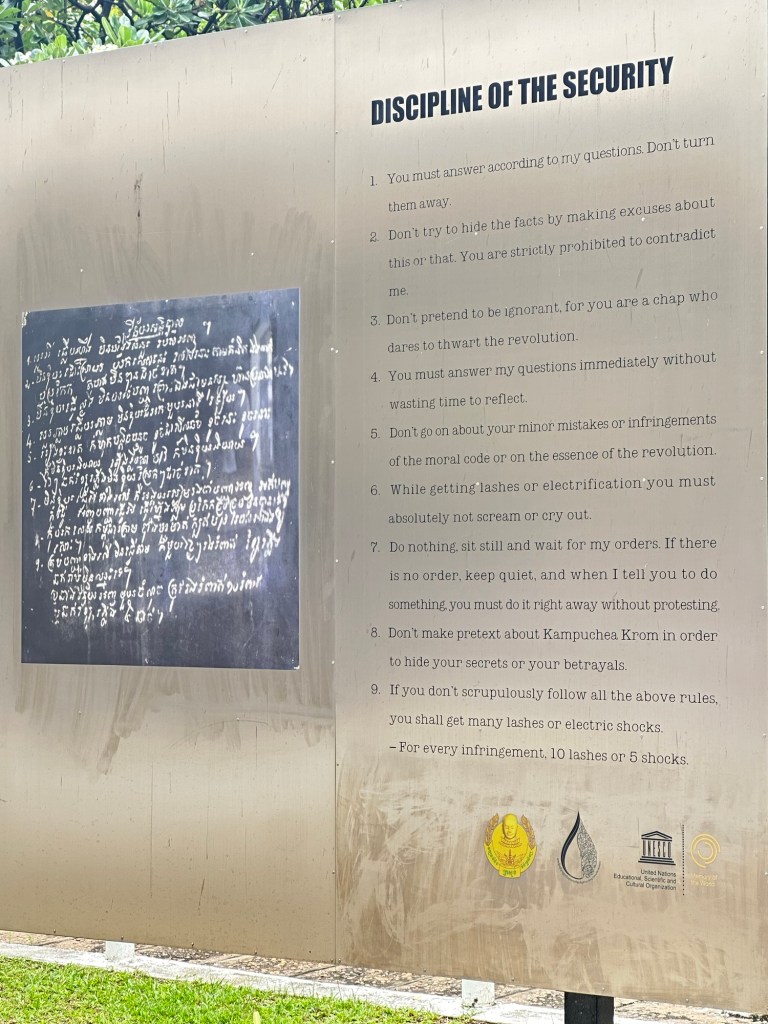
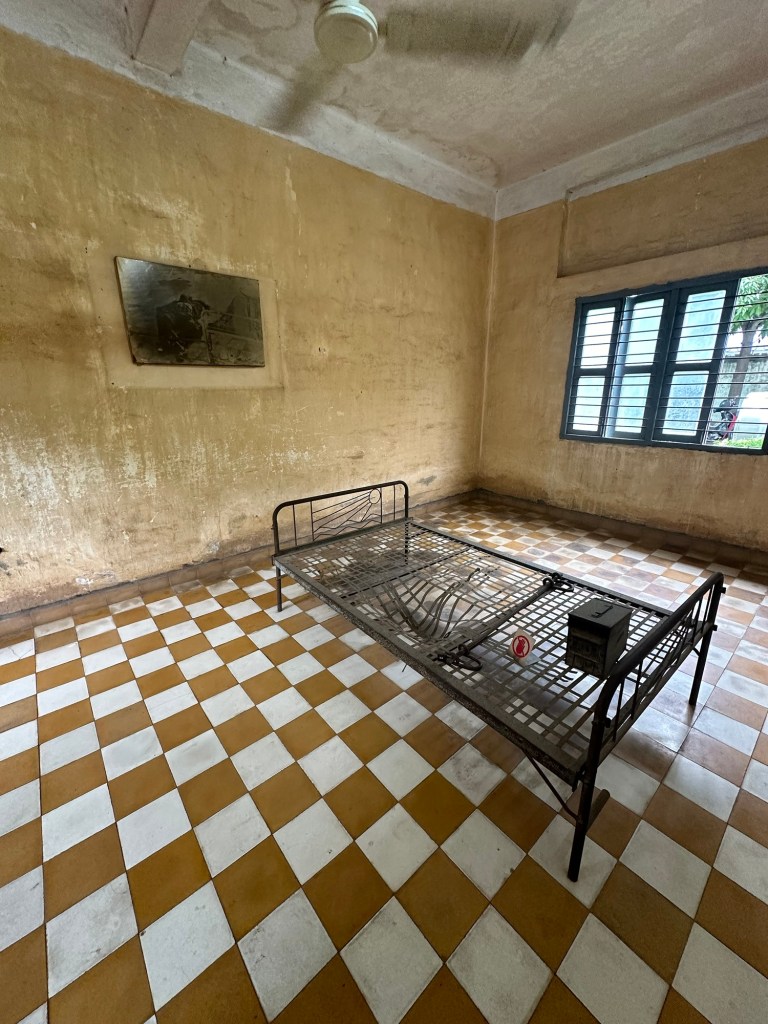
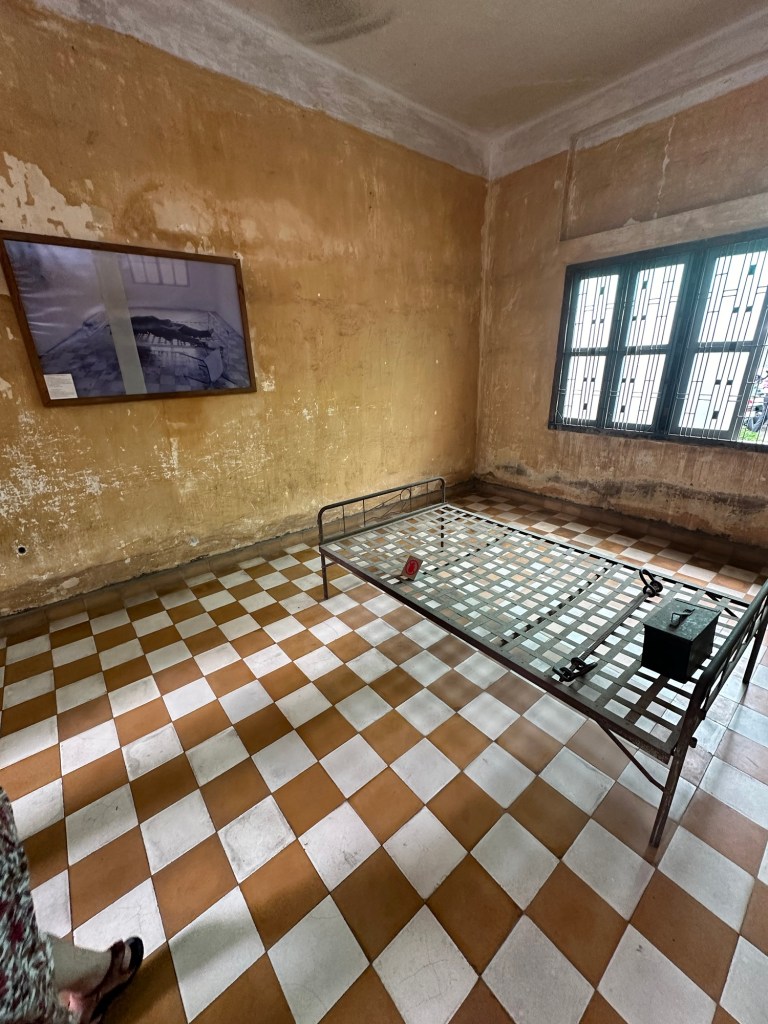
Originally a high school, S21 was converted into a prison to house Khmer Rouge enemies. The complex consisted of four main buildings, A, B, C, and D, with floors reaching four stories. The central playfield and gymnasium became intake and torture areas. Only seven prisoners, deemed useful by the Khmer Rouge, survived. Ran explained that during the regime’s fall, guards were ordered to destroy evidence and kill remaining prisoners. Journalists discovered S21 after the fall of Khmer Rouge, exposing the atrocities and uncovering the victims in the place of their murders. Bodies were found shackled to metal beds, in tiny masonry prisons, and scattered across the grounds. Not all documents were destroyed, and those remaining are on display. The Khmer Rouge meticulously documented prisoners’ confessions and details of their brutal acts alongside photographs of each prisoner. Bloodstains still marked the floors, walls, and ceilings. Tools of torture, such as rebar shackles and water torture devices, were displayed. One building, still wrapped in rusted barbed wire, showed how every building similarly looked prior to it being converted to a museum. Former classrooms were filled with makeshift masonry cells, chains still bolted to the ground that bound prisoners. Every corner bore evidence of grief and despair.
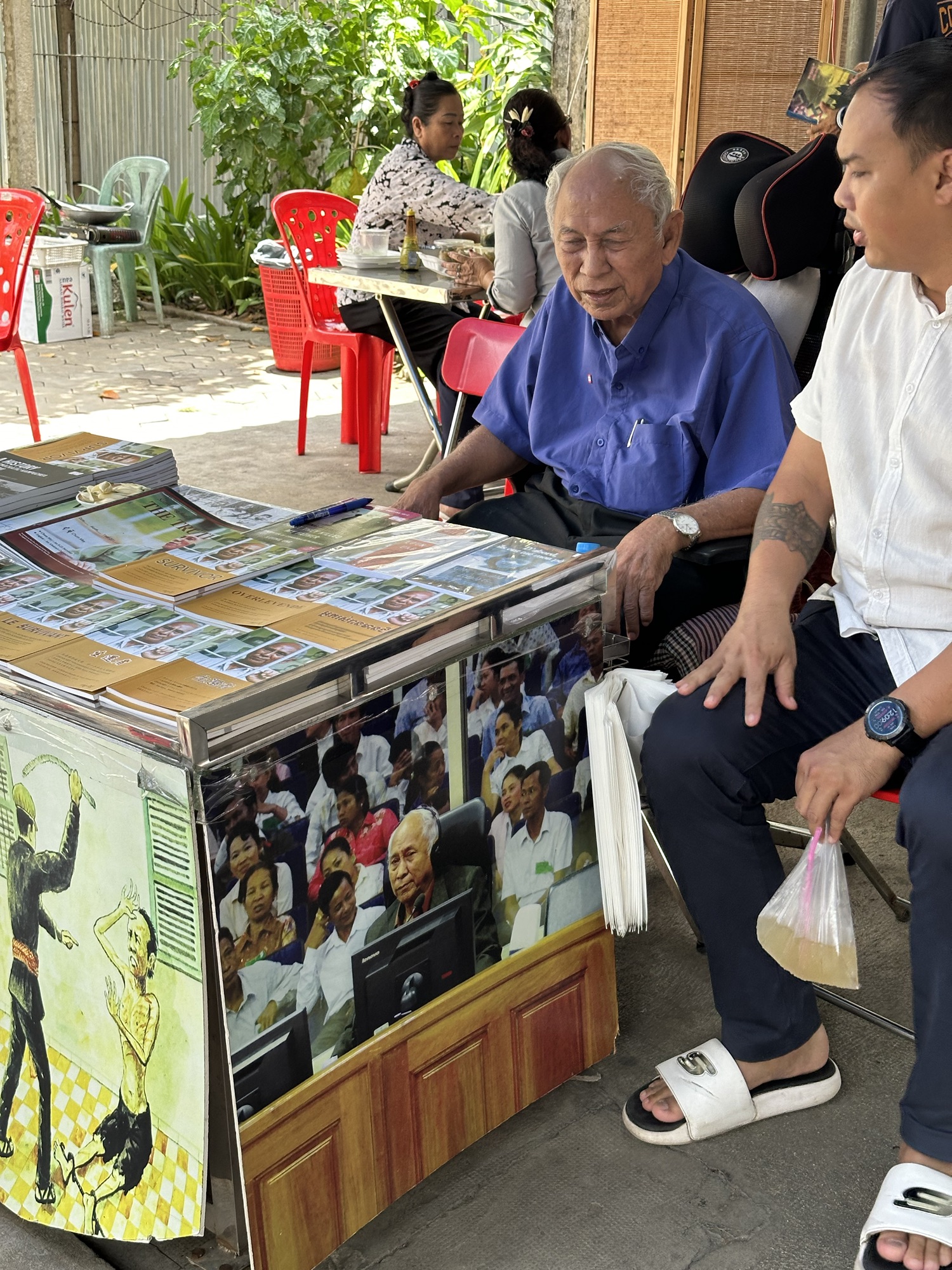
The museum also houses two survivors who share their stories whenever possible. One, a mechanic forced to repair typewriters for the guards, wrote a book called “Survivor” detailing his experiences. The other, a painter suffering from dementia, depicted S21 in his artworks and accounted the acts of violence with imagery. Their testimonies provide rare insights into the Khmer Rouge’s atrocities, ensuring future generations remember and resist similar regimes. For those wanting to know more, there is a movie titled First They Killed My Father that can be streamed on Netflix.





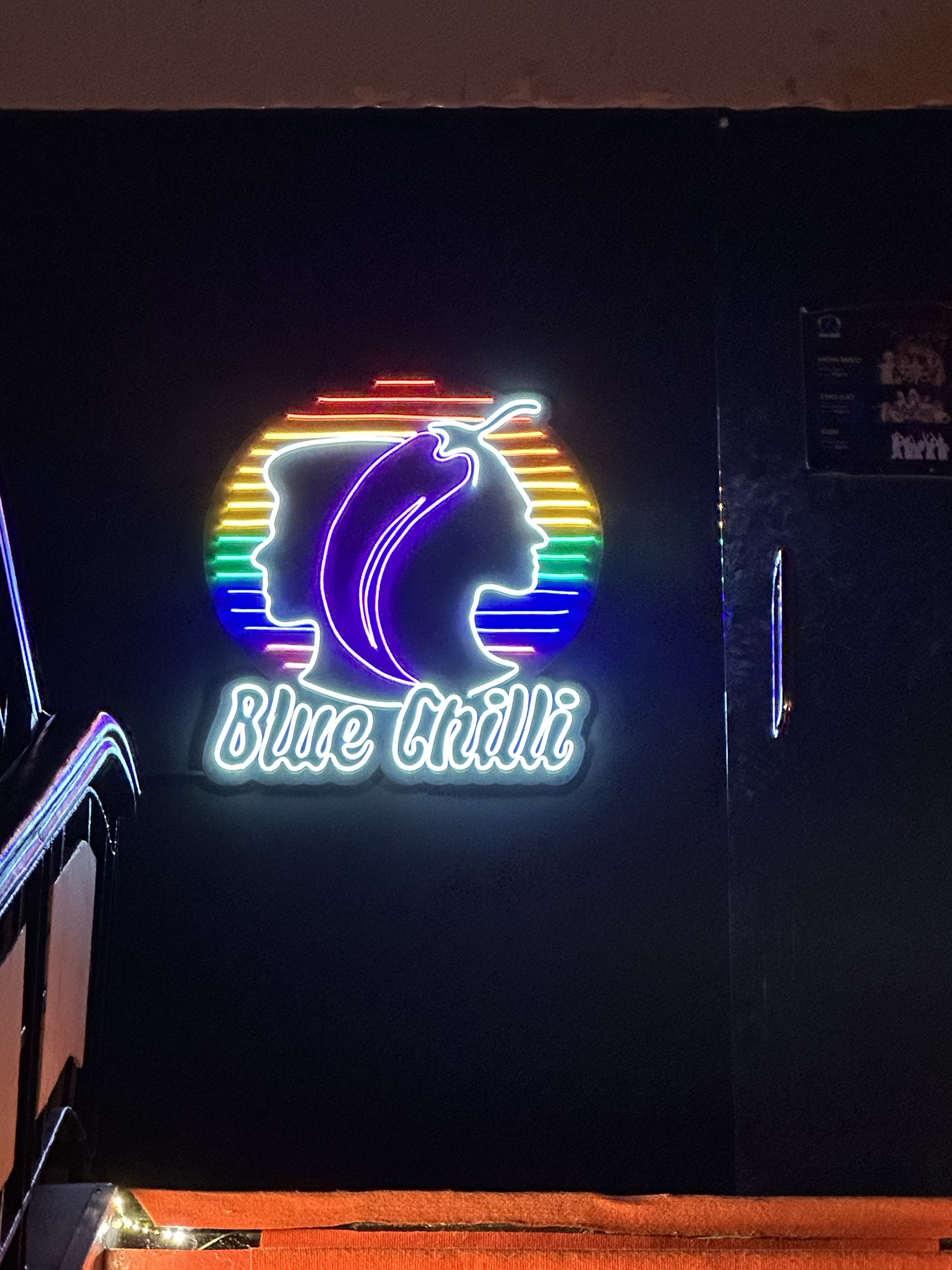
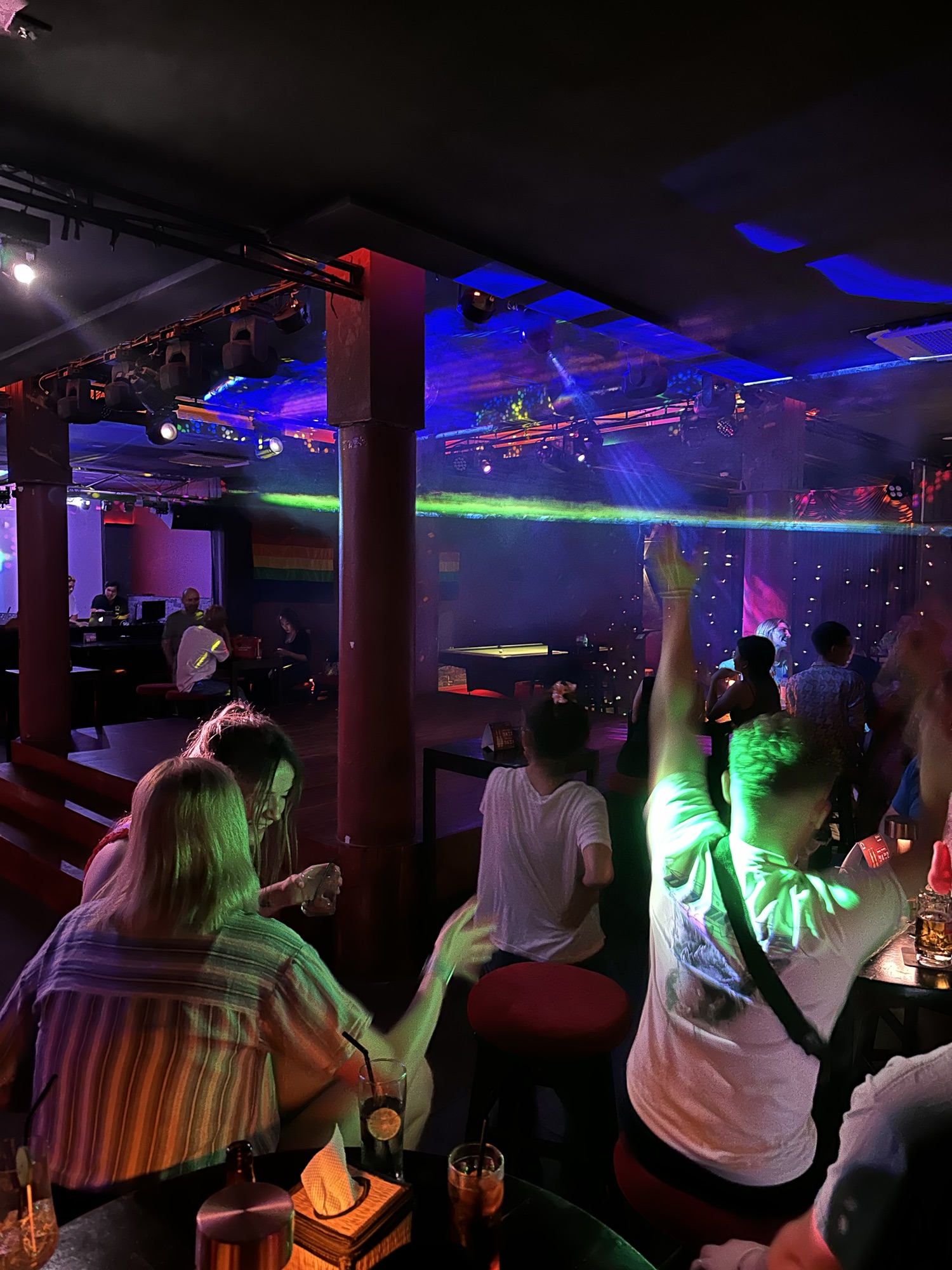
After such a somber day, we had lunch and revisited the cyclo tour sights. Some joined Puna for a ringside fight in the evening, but Jeff and I, having seen enough with Muay Thai, opted for a nap before enjoying a delicious Indian dinner with Joanne and Daniel. That evening, the group rejoined so we could visit Cambodia’s first gay bar, Blue Chilli, for a drag show and (many) cocktails. For many, including Charlie, the teenage son of Chris and Lyn, it was their first drag show. Watching a drag queen jump split from the stage, jaws dropped all around. The staff were friendly, keeping the drinks flowing as the club filled up. The show featured five drag queens with backup dancers, making for an entertaining and fun night, even more so than our night out in Bangkok.

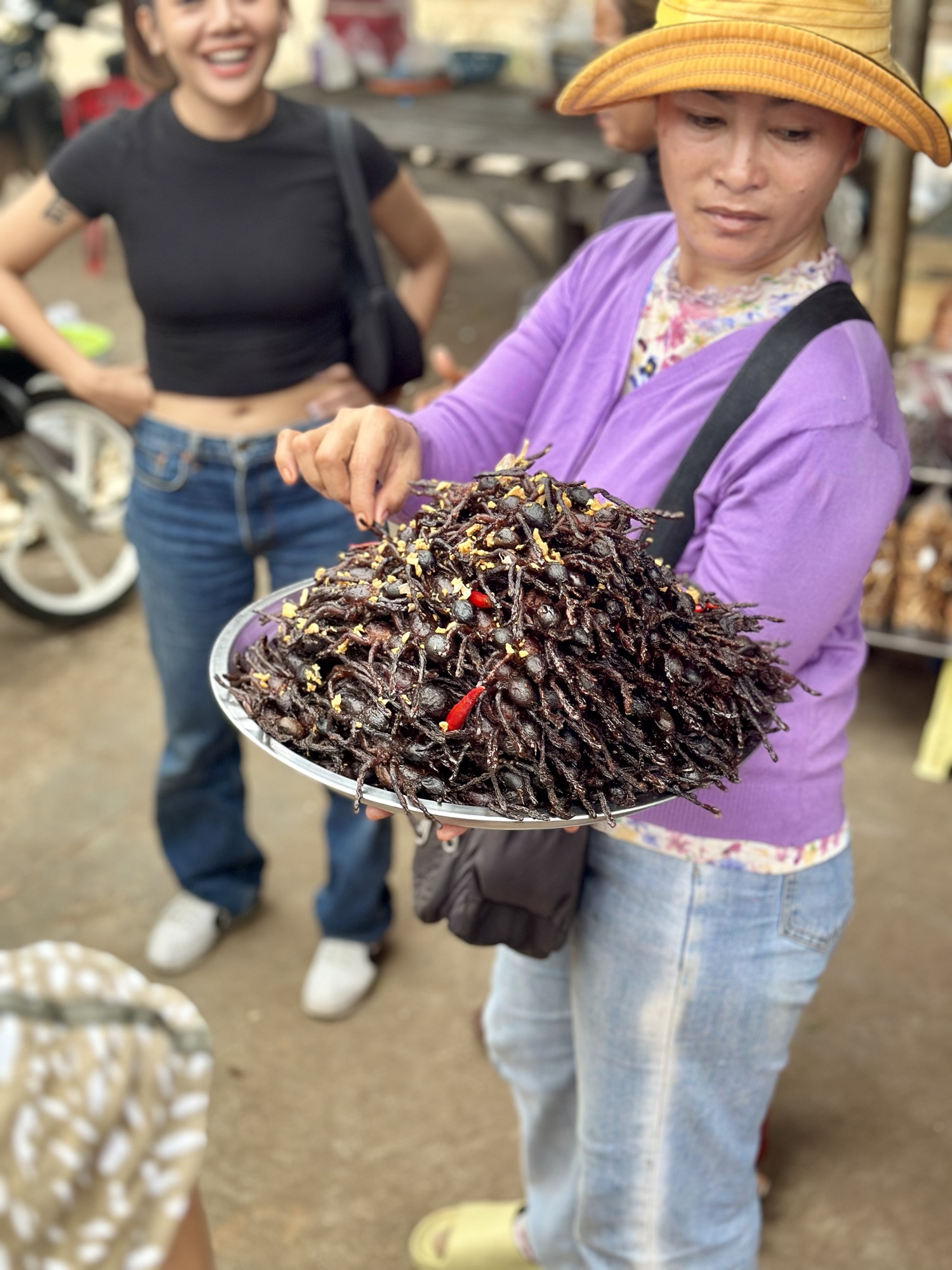
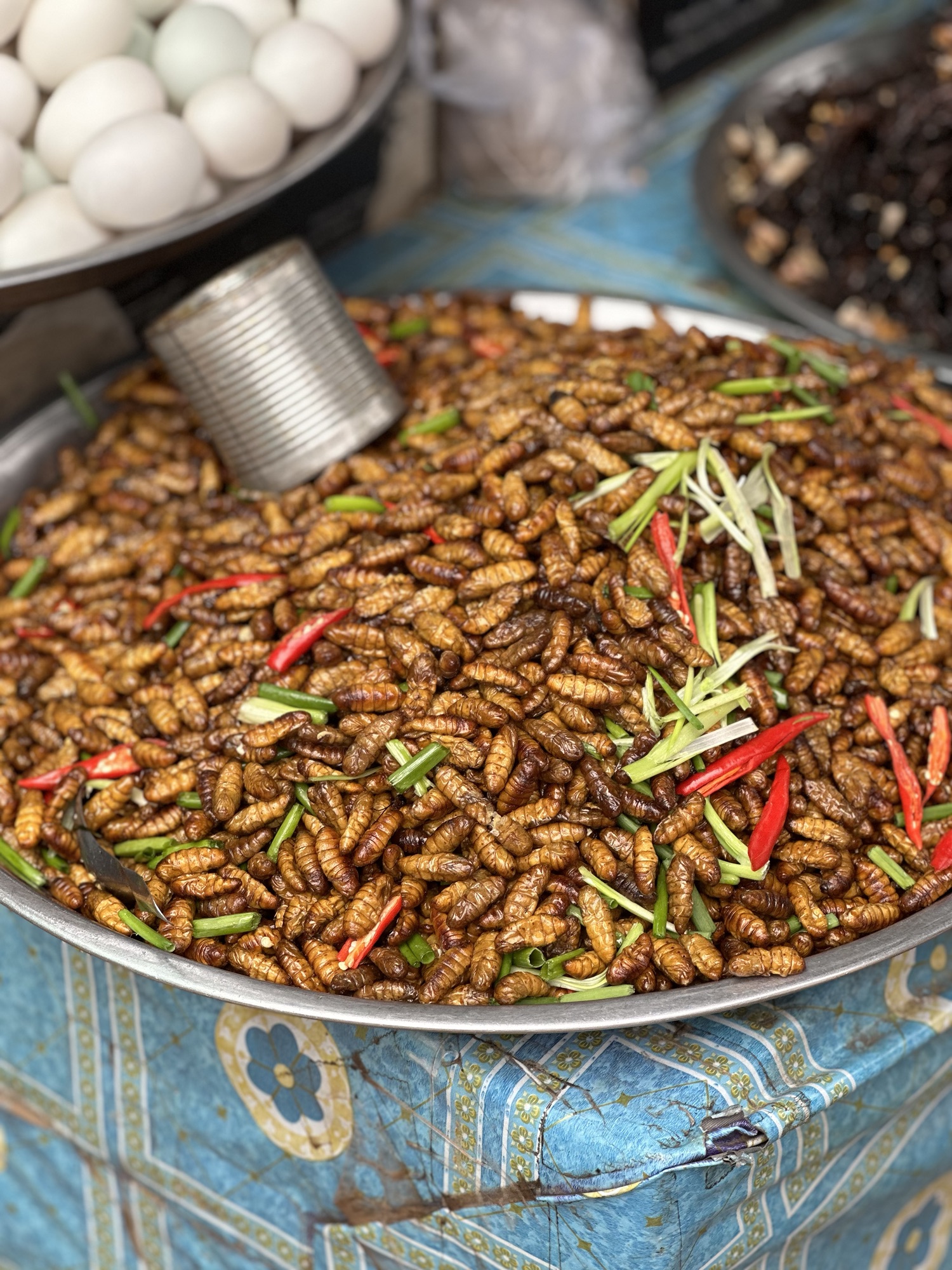
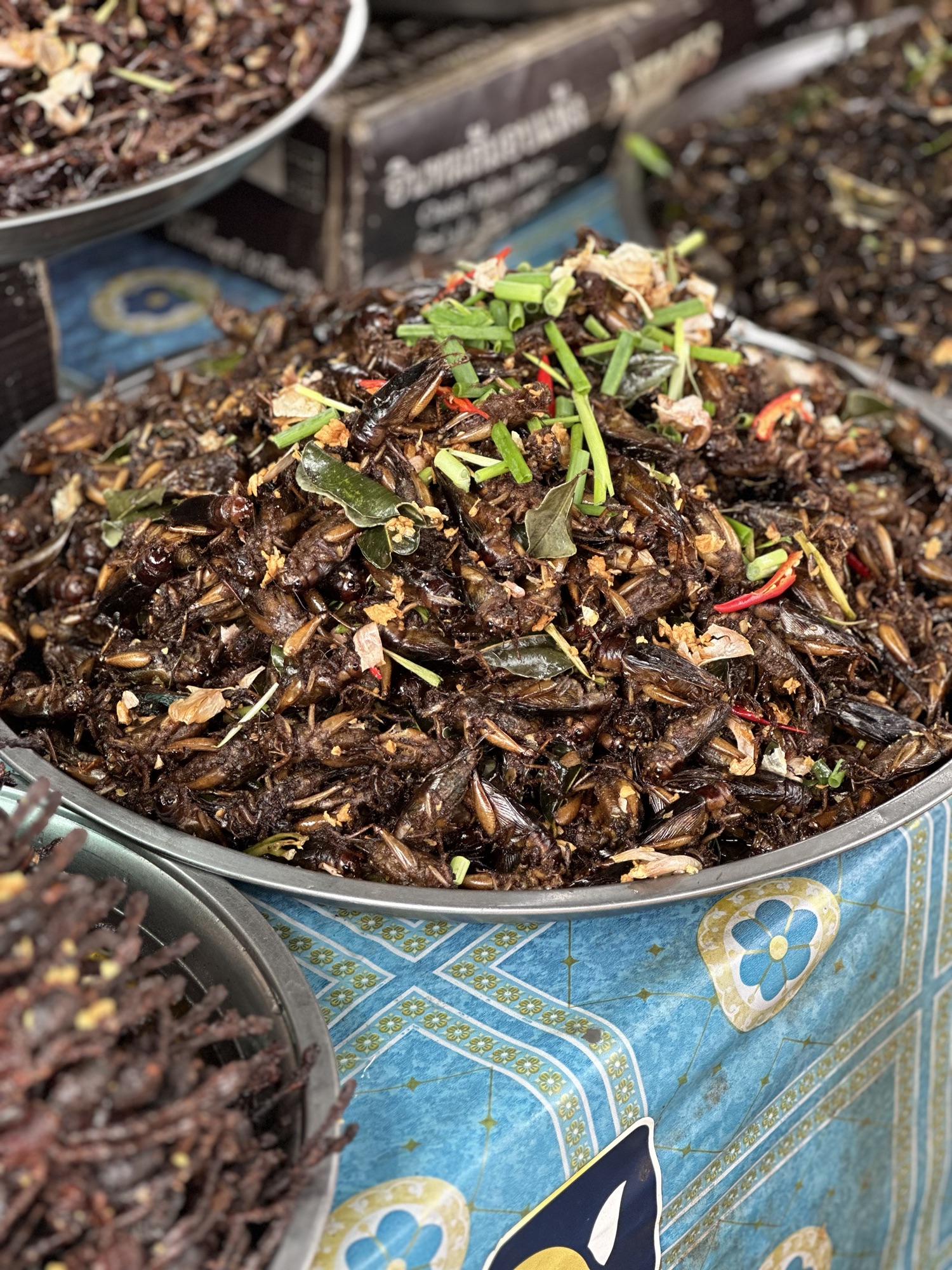
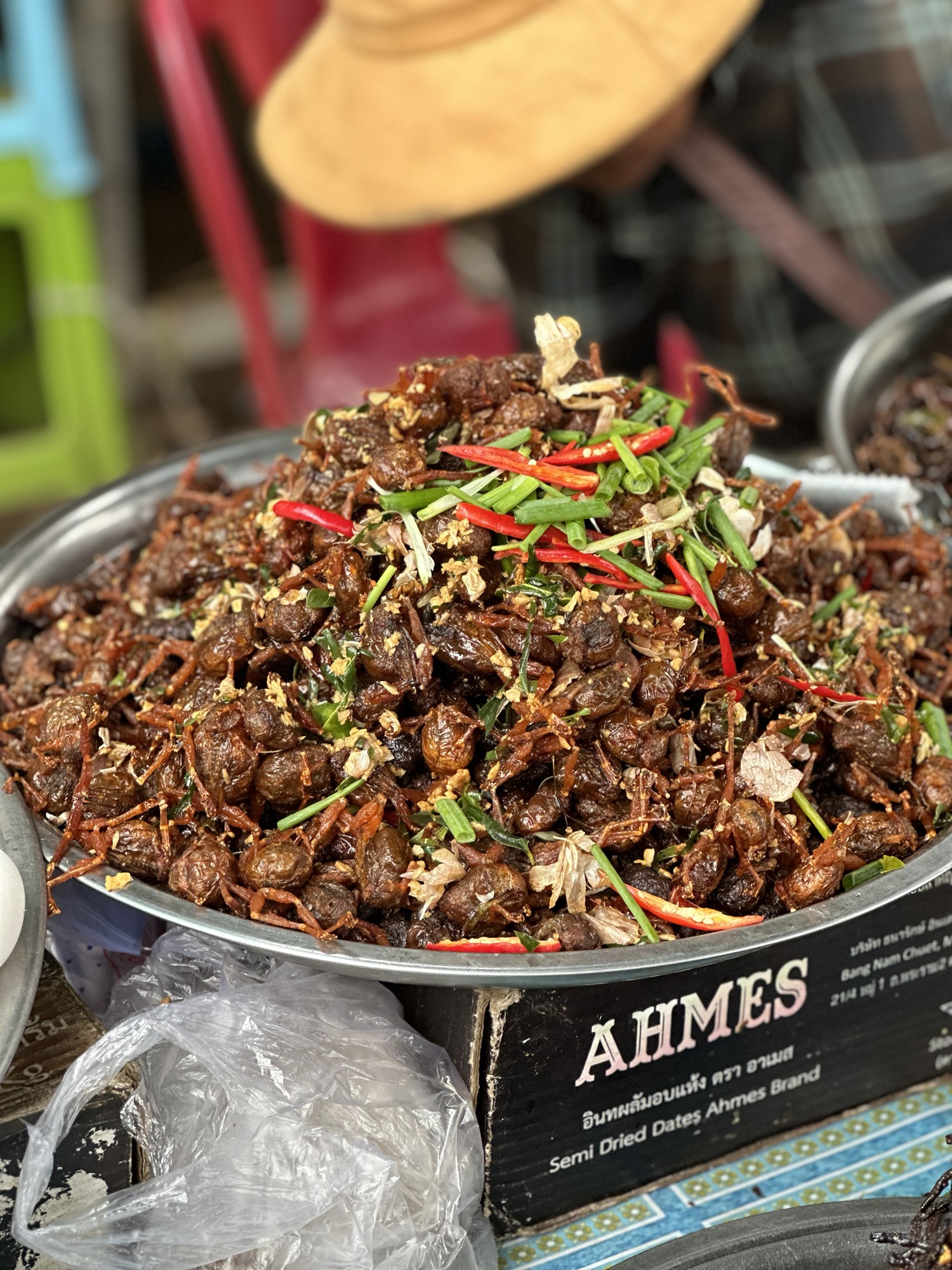
The next day, we embarked on a hungover bus journey to Siem Reap, which Jeff will cover next. Let’s say for some that Zofran came in handy — I was thankfully spared. Along the way, we stopped at an insect farm where locals offered fried tarantulas, silk worms, crickets, red ants, and more. It was a sight to see women balancing baskets of fried insects above their heads, offering them to us on the bus. Puna bought enough for us to try, and I can now add tarantula and silk worms to the list of unusual foods I’ve eaten. Jeff chose to be vegan for that part of the trip. Some opted to handle live tarantulas for a dollar, with Daniel hilariously flinging one into the air, much to Lyn’s dismay who tried to record it. After our insect adventure, we continued to Siem Reap, arriving in the afternoon and meeting up for a group dinner. An early bedtime was essential for our 4 am departure to see the sunrise at Angkor Wat—the main reason of our trip’s ideation and something I have wanted to see since learning about the temples of Angkor.
Much Love — Andrew
P.S. – We visited the Hard Rock Cafe in Phnom Penh, where Jeff added another shot glass to his collection. Joanne continues to test her dedication to Hard Rock cosmopolitans, with one more in Siem Reap, and still not liking the results.



 Jeff + Andrew Travel the World
Leave a reply to sbrowning020f28c52a Cancel reply